Cyclone Murasu weakens to depression, dry weather in West Bengal till Kali Puja

Synopsis
Cyclone Murasu has weakened into a depression, sparing West Bengal from direct impact and clearing the skies just in time for Kali Puja on 8 November. But the season's back-to-back cyclones — Arnab and Murasu — are already drawing comparisons to the unprecedented triple-cyclone stretch of 2013 over the Bay of Bengal.
Key Takeaways
Cyclone Murasu has weakened into a depression , with dry weather expected across West Bengal from 5 November .
Dry conditions are forecast to hold through Kali Puja on 8 November , covering both south and north Bengal.
Light rainfall may return briefly around 9 November before dry weather resumes around 12 November .
A gradual temperature drop is expected, though the Met office has not yet declared the onset of winter.
Coastal Andhra Pradesh has reportedly sustained significant damage from Cyclone Murasu.
Back-to-back Cyclones Arnab and Murasu have drawn comparisons to the unusual triple-cyclone season of 2013 over the Bay of Bengal.
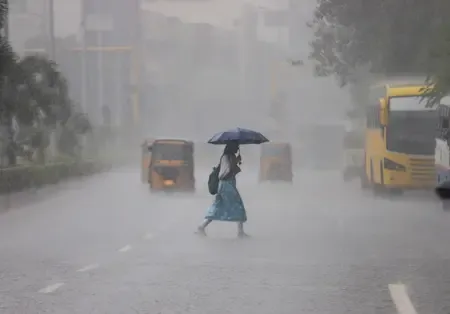
Cyclone Murasu has weakened into a depression, paving the way for dry weather across West Bengal from Thursday, 5 November, according to the Regional Meteorological Centre in Kolkata. The system, while not directly striking the state, triggered scattered rainfall in Kolkata and several south Bengal districts on Wednesday morning before losing intensity.
Weather Outlook for West Bengal
Eastern Region Director Habibur Rahaman Biswas confirmed that dry conditions will prevail across the state from Thursday through Kali Puja on 8 November. North Bengal's eight districts are equally expected to remain rain-free until at least Sunday, 9 November, with no significant precipitation forecast in the region.
Meteorologists have, however, flagged a brief return of light rainfall around 9 November, before another spell of dry weather sets in around 12 November. A gradual drop in temperatures is anticipated during this window, particularly in interior districts where mercury levels already run lower than in Kolkata. Despite the anticipated cooling, the Met office has not yet officially signalled the onset of winter in West Bengal.
Murasu's Coastal Impact on Andhra Pradesh
While Bengal largely escaped direct damage, Cyclone Murasu has reportedly caused significant damage to coastal areas of Andhra Pradesh. Full damage assessments from the affected districts are still being compiled by state authorities.
Comparisons with 2013's Unusual Cyclone Season
Weather officials noted that the back-to-back influence of Cyclones Arnab and Murasu this season has drawn comparisons with 2013, when three cyclones — Helen, Lehar, and Madi — formed over the Bay of Bengal within weeks of each other. That remains one of the more unusual stretches of cyclonic activity on record for the region, and forecasters are watching whether the current season follows a similar pattern.
Kolkata's Current Temperature Reading
On Tuesday, 4 November, Kolkata recorded a maximum temperature of 31.04 degrees Celsius — marginally above the seasonal norm — while the minimum stood at 26.04 degrees Celsius, more than four degrees above the seasonal average. Relative humidity ranged between 62% and 96%, keeping conditions muggy despite the absence of heavy rain.
With the festive season of Kali Puja now expected to pass under clear skies, residents across Bengal can anticipate drier, gradually cooler days ahead, though a full winter onset remains some weeks away according to forecasters.
Point of View
A season that caught forecasters off guard. With sea-surface temperatures in the Bay remaining elevated well into November, the question forecasters must answer is whether this represents a statistical outlier or a new seasonal norm driven by warming waters. Bengal's festive calendar got lucky this time; next season's planning should not rely on luck.
NationPress
4 Nov 2026
Frequently Asked Questions
What happened to Cyclone Murasu?
Cyclone Murasu has weakened into a depression as of Wednesday, 4 November 2026, according to the Regional Meteorological Centre in Kolkata. While it did not make a direct landfall in West Bengal, it triggered scattered rainfall in Kolkata and south Bengal before losing intensity.
Will Kali Puja 2026 see rain in West Bengal?
No significant rainfall is expected during Kali Puja on 8 November 2026, with dry weather forecast to prevail across West Bengal from 5 November onward. Forecasters say clear skies are likely to hold through the festival.
When will rain return to West Bengal after Kali Puja?
Light rainfall could return around 9 November, before another dry spell sets in around 12 November. A gradual cooling of temperatures is also expected during this period, though winter onset has not yet been officially declared.
Has Cyclone Murasu caused damage anywhere in India?
Yes, Cyclone Murasu has reportedly caused significant damage to coastal areas of Andhra Pradesh, though full damage assessments are still being compiled. West Bengal largely escaped direct impact from the system.
How does this cyclone season compare to previous years?
Weather officials have drawn comparisons with 2013, when three cyclones — Helen, Lehar, and Madi — formed over the Bay of Bengal within weeks. The back-to-back occurrence of Cyclones Arnab and Murasu this season mirrors that unusually active stretch.