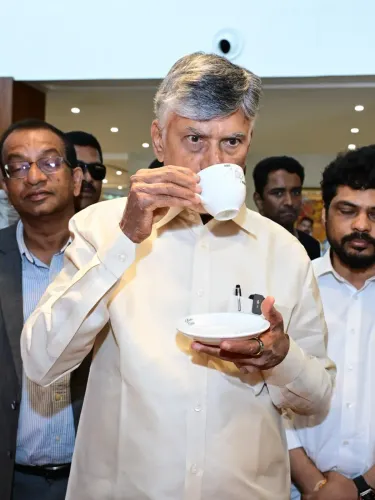
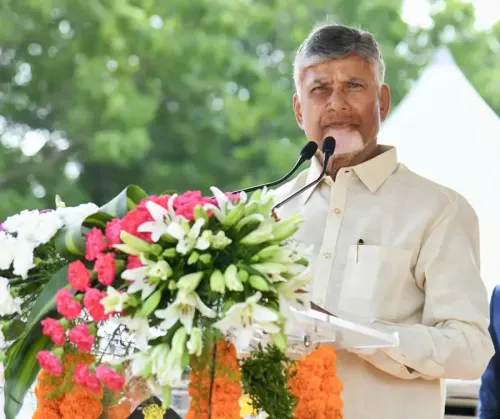
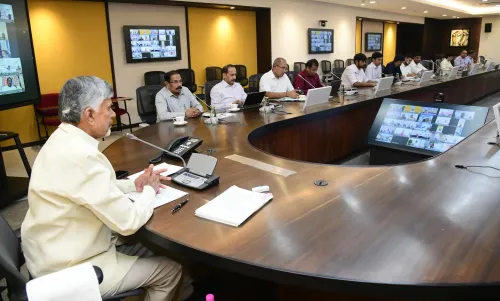
CM Naidu Hails Naandi Foundation's 28-Year P4 Legacy
Synopsis
Andhra Pradesh CM N. Chandrababu Naidu, responding to Anand Mahindra on X, revisited the 1998 founding of Naandi Foundation, championing P4 partnerships and citing Araku Coffee and Nanhi Kali as proof that community empowerment drives lasting poverty reduction.
Key Takeaways
Naandi Foundation was co-founded in 1998 by CM N.
Chandrababu Naidu and the late Dr.
Anji Reddy on the principle that development needs more than government action.
Naidu's P4 model (Public-Private-People Partnership) is the governing philosophy behind the foundation and his broader welfare approach.
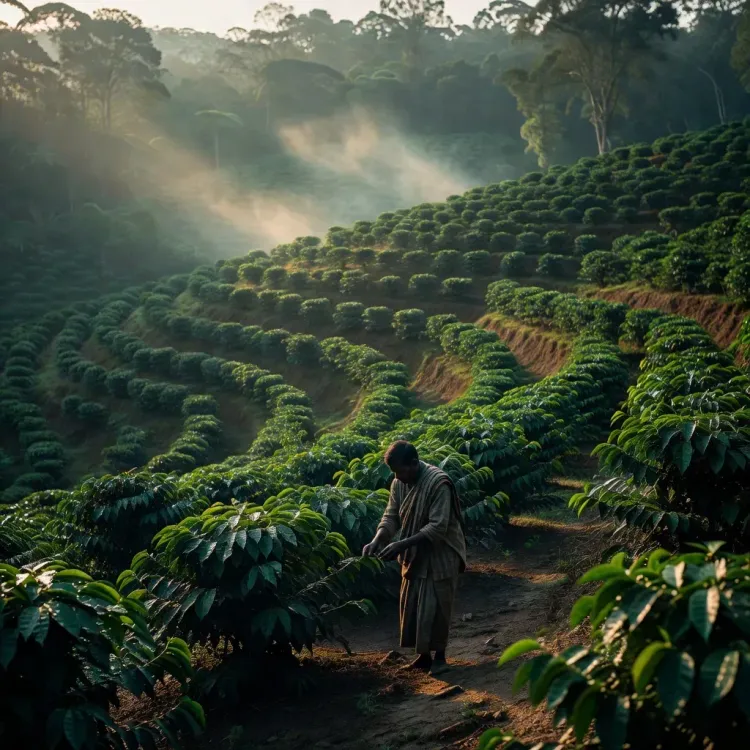
Araku Coffee in tribal Andhra Pradesh uses regenerative farming to restore livelihoods, and has become a proof-of-concept for grassroots empowerment.
Nanhi Kali provides education support to underprivileged girls across multiple states, embodying the social equity dimension of the P4 model.
Naidu distinguished between World Bank statistics (encouragement) and community stories (direction) in the pursuit of a zero-poverty nation.
The post signals that the P4 framework remains a live governance philosophy likely to influence future AP budgets and welfare policy.
Twenty-eight years after co-founding an institution rooted in the belief that government alone cannot end poverty, Andhra Pradesh Chief Minister N. Chandrababu Naidu revisited that founding conviction on Wednesday, 4 November 2026 — and found it vindicated in the coffee terraces of Araku and the classrooms reached by Nanhi Kali.
The 1998 wager on private and people power
Naidu responded to a post by Mahindra Group Chairman Anand Mahindra, using the moment to trace the intellectual origin of the Naandi Foundation, which he co-founded in 1998 alongside the late Dr. K. Anji Reddy, founder of Dr. Reddy's Laboratories. The core premise, Naidu wrote, was simple: 'true development cannot rely solely on government action.' What he calls the P4 model — Public-Private-People Partnership — was the answer. It was a bold institutional bet at a time when development policy in India leaned heavily on state machinery.
Dr. Anji Reddy, who passed away in 2013, never saw the full flowering of that model. But Naidu credited Mahindra, Naandi CEO Manoj Kumar (known as @manoj_naandi), and the broader Naandi team with carrying the founder's legacy forward. 'Seeing how Dr. Anji Reddy's legacy was carried forward fills me with immense pride,' Naidu wrote.
Araku Coffee and Nanhi Kali: proof-of-concept, not just projects
Naidu pointed to two flagship Naandi programmes as the strongest evidence that the P4 model delivers. Araku Coffee, grown by tribal farming communities in the Araku Valley of Andhra Pradesh through regenerative farming practices, has become an internationally recognised brand built on grassroots empowerment — not corporate farming. Naidu described regenerative farming 'restoring both livelihoods and birdsong to Araku' as the 'ultimate proof of sustainable progress.'
Nanhi Kali, the Naandi-run programme that provides education support to underprivileged girls across multiple Indian states, represents the social equity dimension of the same model. Together, Naidu argued, these two projects demonstrate that when farmers, daughters, and youth are empowered at the grassroots, 'prosperity naturally follows.'
Poverty as an absence, not a statistic
Naidu echoed what Mahindra had written — that poverty is 'not merely a stat' but 'the absence of opportunity and dignity.' He acknowledged encouragement from World Bank poverty-reduction data while insisting that community stories, not spreadsheets, give the zero-poverty mission its direction. The framing is consistent with a philosophy Naidu has championed across his multiple tenures as Andhra Pradesh Chief Minister: that measurable outcomes matter, but human dignity is the actual north star.
His closing call — to 'collaborate, innovate, and empower every citizen so that the freedom to dream is accessible to all' — was less a policy announcement than a restatement of the founding covenant. But coming from the sitting Chief Minister of Andhra Pradesh, it also signals that the P4 framework is not a nostalgia exercise. It is a live governance philosophy that could yet shape state-level budgets and welfare architecture in AP's next policy cycle.
The Araku Valley's coffee farmers, Nanhi Kali's schoolgirls, and the architects of India's next poverty-reduction plan all have a stake in what that philosophy produces next.
Point of View
He is signalling that Andhra Pradesh's post-bifurcation development strategy will continue to lean on institutional philanthropy and community enterprise, not just central transfers. The reference to 'zero poverty' alongside World Bank data, without asserting specific figures, is a careful political move: claiming momentum without overcommitting to a number. Watch for whether this philosophy crystallises into formal P4 frameworks in AP's next annual budget or state welfare programmes.
NationPress
4 Nov 2026
Frequently Asked Questions
What is the Naandi Foundation and who founded it?
The Naandi Foundation is a non-profit organisation established in 1998 by then Andhra Pradesh Chief Minister N. Chandrababu Naidu and pharmaceutical entrepreneur Dr. K. Anji Reddy , focused on education, livelihoods, and sustainable agriculture.
What is the P4 model that Chandrababu Naidu talks about?
The P4 model stands for Public-Private-People Partnership — a governance framework Naidu has championed since the late 1990s, where government, corporations, and citizens collaborate to deliver development outcomes rather than leaving the state as the sole actor.
What is Araku Coffee and why is it significant?
Araku Coffee is a brand grown by tribal farming communities in the Araku Valley of Andhra Pradesh using regenerative agriculture practices promoted by the Naandi Foundation. It is recognised as a model of community empowerment and sustainable livelihoods.
Who is Dr. K. Anji Reddy?
Dr. K. Anji Reddy was the founder of Dr. Reddy's Laboratories and co-founder of the Naandi Foundation alongside Chandrababu Naidu. He passed away in 2013 , but his legacy is credited with shaping the foundation's community-first development model.