Rajasthan CM Bhajanlal Orders Alert in Sensitive Areas
Synopsis
The Chief Minister's Office of Rajasthan has publicly directed authorities to identify communally sensitive areas and enforce special vigilance, tagging CM Bhajan Lal Sharma in a 4 November 2026 post — placing the state's law-and-order machinery on formal, visible alert.
Key Takeaways
The Rajasthan CMO issued a public directive on 4 November 2026 ordering identification of communally sensitive areas and special vigilance.
The post was tagged to Chief Minister Bhajan Lal Sharma , signalling top-level ownership of the instruction.
Bhajan Lal Sharma has been Chief Minister since December 2023 , following the BJP's assembly election victory.
District Collectors and Superintendents of Police are the primary agencies responsible for implementing such directives on the ground.
Implementation orders from Rajasthan's Home Department and district administrations are the key next step to watch.
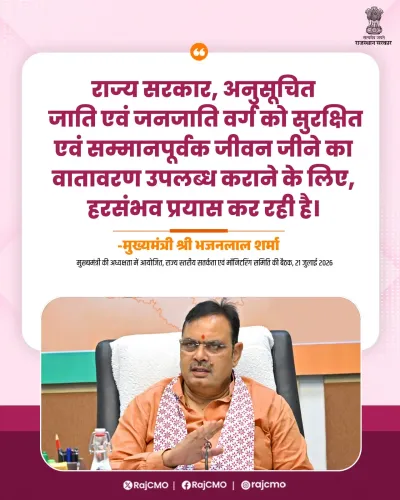
Rajasthan's state machinery has been put on heightened watch. The Chief Minister's Office of Rajasthan posted a directive on Wednesday, 4 November 2026, instructing authorities to identify communally sensitive zones across the state and exercise special vigilance — a pointed message in a state that has historically required careful law-and-order management during periods of heightened social tension.
The post, tagged to Chief Minister Bhajan Lal Sharma and carrying the hashtag #आपणो_अग्रणी_राजस्था ('Our Leading Rajasthan'), reads in translation: 'साम्प्रदायिक रूप से संवेदनशील क्षेत्रों की पहचान कर, विशेष सतर्कता बरती जाए' — 'Identify communally sensitive areas and exercise special vigilance.' Short. Direct. Official.
What the directive signals for Rajasthan's districts
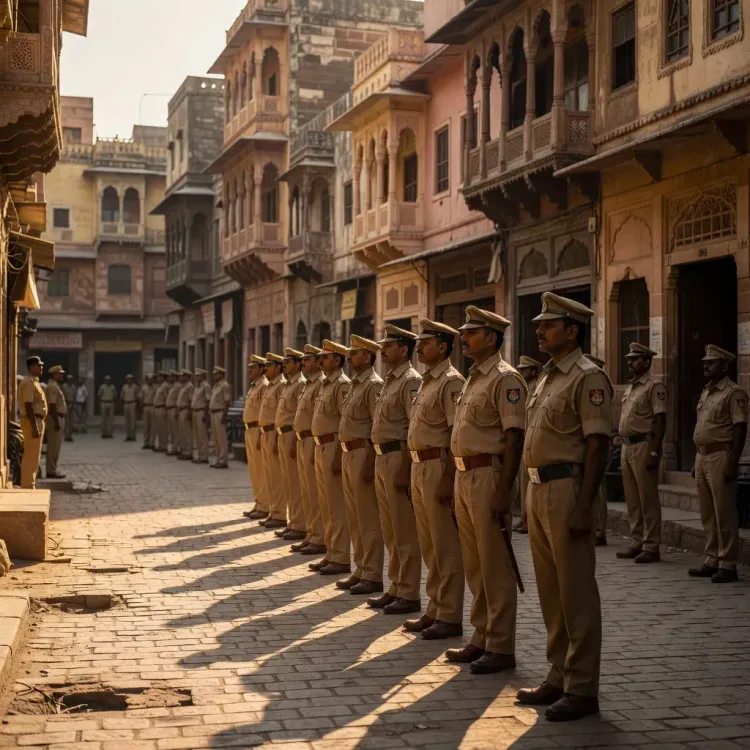
Communal sensitivity mapping is a standard tool in India's law-and-order playbook, typically activated ahead of religious festivals, processions, or electoral cycles. District Collectors and Superintendents of Police are the primary executors — they are expected to flag vulnerable localities, deploy additional forces, and coordinate with local intelligence units. The directive from the CMO places that responsibility squarely and publicly on the administrative machinery.
Bhajan Lal Sharma, who was sworn in as Chief Minister in December 2023 after the Bharatiya Janata Party secured a majority in Rajasthan's assembly elections, has consistently positioned law and order as a priority of his administration. A public directive of this nature — issued through the CMO's official X account rather than a routine departmental circular — carries a signal: that the government wants visible accountability at every level of the state apparatus.
The administration's next move
The practical follow-through now rests with Rajasthan's Home Department and district-level administrations. Watch for implementation orders specifying which areas have been classified as sensitive, the scale of additional force deployment, and any coordination with central paramilitary units. The public framing of this directive also creates an accountability trail — a double-edged instrument that keeps field officials on notice while giving the government a visible record of preemptive action.
Rajasthan has 33 districts, several with complex communal histories. The speed and specificity of the district-level response will determine whether this directive moves from announcement to action on the ground.
Point of View
Which came to power partly on a strong-on-security platform, this kind of preemptive framing serves a dual purpose: operational alertness and political optics. The broader pattern across BJP-governed states has been to centralise and publicise security directives, making governance visible in real time. Whether this remains a directive or translates into measurable ground-level deployment will be the real test of the administration's intent.
NationPress
4 Nov 2026
Frequently Asked Questions
Why has the Rajasthan CMO asked for identification of communally sensitive areas?
The Rajasthan CMO directed authorities to map communally sensitive zones and maintain special vigilance as a law-and-order precaution. Such measures are standard practice in Indian states, typically activated ahead of festivals, processions, or other periods of heightened social tension.
Who is Bhajan Lal Sharma and why was he tagged in this post?
Bhajan Lal Sharma is the Chief Minister of Rajasthan from the BJP, sworn in December 2023 after the party's assembly election victory. He was tagged because the directive is issued under his administration and he holds ultimate responsibility for the state's law and order.
Which agencies will implement the Rajasthan CMO's communal vigilance order?
District Collectors and Superintendents of Police are the primary implementers. They are expected to identify sensitive localities, deploy additional forces, and coordinate with local intelligence units, guided by orders from the Rajasthan Home Department.
What does 'communally sensitive area' mean in the Indian governance context?
In Indian administrative parlance, a communally sensitive area is a locality with a history of or potential for inter-community tension. Authorities monitor such zones more closely, especially around religious events, and may deploy additional police or paramilitary forces as a preventive measure.
What is the hashtag #आपणो_अग्रणी_राजस्था used by the Rajasthan CMO?
The hashtag translates from Rajasthani as 'Our Leading Rajasthan' and is a branding phrase used by the Bhajan Lal Sharma government to associate its governance initiatives with a vision of a progressive, well-administered state.