DAC clears ₹52,000 crore defence procurement for Army, Navy, Air Force
Synopsis
India's Defence Acquisition Council has greenlit ₹52,000 crore in military hardware in a single sitting — spanning kamikaze drones, anti-tank missiles, naval mines, shipborne UAVs, and a stratospheric surveillance satellite. The breadth of the approvals signals a deliberate push to close multi-domain capability gaps across all three services simultaneously.
Key Takeaways
The Defence Acquisition Council (DAC) , chaired by Rajnath Singh , cleared proposals worth ₹52,000 crore on 4 July 2025 .
The Indian Army gains AKASH TARANG anti-drone EW system, MPATGM , MRSAM , V-SHORADS , Active Protection System for tanks, and a Jet-Based Kamikaze Drone System.
The Indian Navy receives the Multi Influence Ground Mine (MIGM) , Naval Shipborne UAV (NSUAS) , and a Land Based Testing Facility for electric propulsion.
The Indian Air Force gets the Fixed-Wing High Altitude Pseudo Satellite (FW-HAPS) for persistent ISR and remote sensing.
AoN is in-principle approval only; formal tendering and vendor selection processes follow separately for each platform.
The Defence Acquisition Council (DAC), chaired by Defence Minister Rajnath Singh, on Friday, 4 July 2025, accorded Acceptance of Necessity (AoN) for capital acquisition proposals worth approximately ₹52,000 crore to strengthen the operational capabilities of the Indian Army, Navy, and Air Force. The approvals span anti-drone systems, missiles, kamikaze drones, naval unmanned aerial systems, and high-altitude surveillance platforms, according to the Ministry of Defence.
What the Indian Army Gets
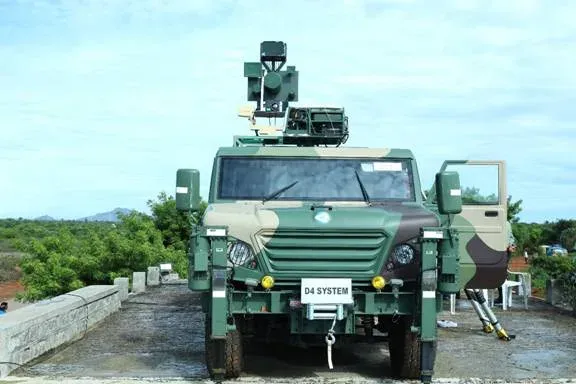
The DAC cleared six major procurement proposals for the Army. These include the Anti-UAV Electronic Warfare System 'AKASH TARANG', which will provide protection against unmanned aerial threats to Army formations, and the Man Portable Anti-Tank Guided Missile (MPATGM) system, designed to strengthen infantry capability against enemy armoured and mechanised forces.
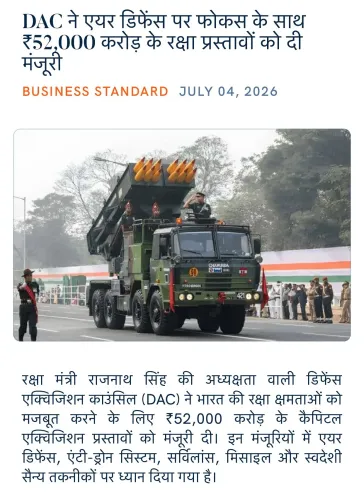
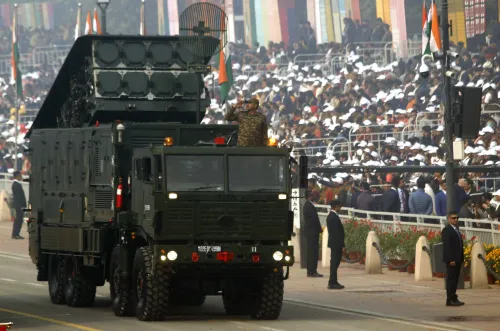
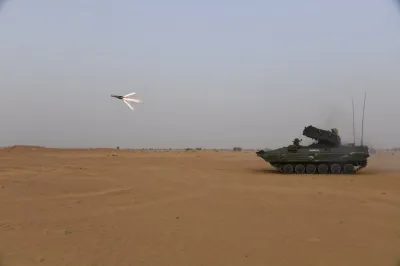
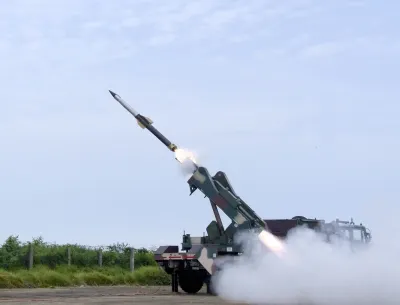
Also approved were the Medium Range Surface-to-Air Missile (MRSAM) weapon system for medium-range air defence, the Very Short Range Air Defence System (V-SHORADS) — equipped with multi-spectral sensing to improve resilience against countermeasures — and an Active Protection System to enhance tank survivability. Rounding out the Army package is a Jet-Based Kamikaze Drone System, intended to deliver greater lethality and electronic warfare capability in a cost-effective manner.
Naval Capabilities Being Strengthened
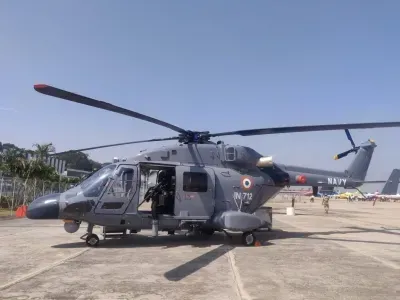
For the Indian Navy, the council approved three proposals: the Multi Influence Ground Mine (MIGM), the Naval Shipborne Unmanned Aerial System (NSUAS), and a Land Based Testing Facility (LBTF) for electric propulsion systems.
According to the Ministry of Defence, the MIGM will enhance the Navy's ability to deny freedom of manoeuvre to adversaries. The NSUAS, equipped with advanced sensors, will improve maritime surveillance and situational awareness. The proposed LBTF will support development and validation of propulsion motors for naval platforms — a critical step as the Navy transitions toward electric propulsion architectures.
Air Force's High-Altitude Surveillance Push
The Indian Air Force received approval for the procurement of a Fixed-Wing Based High Altitude Pseudo Satellite (FW-HAPS). The platform will provide persistent intelligence, surveillance, and reconnaissance (ISR) capabilities, alongside telecommunications and remote sensing functions — effectively extending the Air Force's eyes well beyond conventional aircraft altitudes.
What AoN Means and What Comes Next
The AoN is the in-principle approval granted by the DAC before the formal acquisition process is initiated. It does not constitute a final contract; tendering, vendor selection, and financial negotiations follow. Notably, the scale of Friday's clearances — at ₹52,000 crore — reflects continued prioritisation of domestic defence manufacturing under the 'Aatmanirbhar Bharat' framework, with several of the approved systems sourced from Indian industry. The procurement pipeline will now move to the Request for Proposal stage for each platform, with timelines varying by system complexity.
Point of View
000 crore single-session AoN sweep is not routine housekeeping — it is a signal. The mix of systems approved tells the real story: anti-drone layering for the Army, sea-denial mines for the Navy, and a pseudo-satellite for the Air Force point to a tri-service doctrine recalibration shaped by the lessons of recent conflicts in Ukraine and the Middle East. The inclusion of kamikaze drones and shipborne UAVs in the same tranche also underscores how rapidly India is normalising autonomous and unmanned platforms across domains. The harder question is execution: AoN approvals have historically outpaced actual deliveries, and several of these systems — particularly FW-HAPS and NSUAS — involve nascent domestic industrial bases. Whether this translates into fielded capability or remains a procurement headline will depend on how rigorously the Ministry of Defence enforces delivery timelines in the contracts that follow.
NationPress
2 Oct 2026
Frequently Asked Questions
What is the ₹52,000 crore defence procurement cleared by the DAC?
The Defence Acquisition Council cleared Acceptance of Necessity for capital acquisition proposals worth approximately ₹52,000 crore on 4 July 2025, covering anti-drone systems, missiles, kamikaze drones, naval mines, shipborne UAVs, and a high-altitude pseudo satellite for the Army, Navy, and Air Force respectively.
What is the AKASH TARANG system approved for the Indian Army?
AKASH TARANG is an Anti-Unmanned Aerial Vehicle Electronic Warfare System approved for the Indian Army to provide protection against drone threats to Army formations. It is one of six Army-specific platforms cleared in the latest DAC round.
What does Acceptance of Necessity (AoN) mean in defence procurement?
AoN is the in-principle approval granted by the Defence Acquisition Council before the formal acquisition process begins. It does not constitute a final contract — tendering, vendor evaluation, and financial negotiations all follow separately.
What did the Indian Navy receive in this procurement round?
The Navy was cleared for the Multi Influence Ground Mine (MIGM) to deny adversary manoeuvre, the Naval Shipborne Unmanned Aerial System (NSUAS) for maritime surveillance, and a Land Based Testing Facility for electric propulsion system development.
What is the FW-HAPS approved for the Indian Air Force?
The Fixed-Wing Based High Altitude Pseudo Satellite (FW-HAPS) is a high-endurance platform approved for the Indian Air Force to provide persistent intelligence, surveillance, reconnaissance, telecommunications, and remote sensing capabilities at high altitudes.