Is Delhi's Air Pollution Approaching Severe Levels Amid Dense Smog?
Click to start listening
Synopsis
As Delhi grapples with worsening air pollution levels nearing the 'severe' category, the implications for public health are alarming, especially for vulnerable groups. The persistent smog and cold weather conditions compound the situation, raising urgent calls for effective solutions to improve air quality in the capital.
Key Takeaways
- Delhi's AQI reached 410, nearing severe levels.
- Health risks are particularly high for vulnerable groups.
- Dense smog and cold weather are exacerbating the pollution crisis.
- Urgent need for effective air quality management strategies.
- Public health implications demand immediate attention.
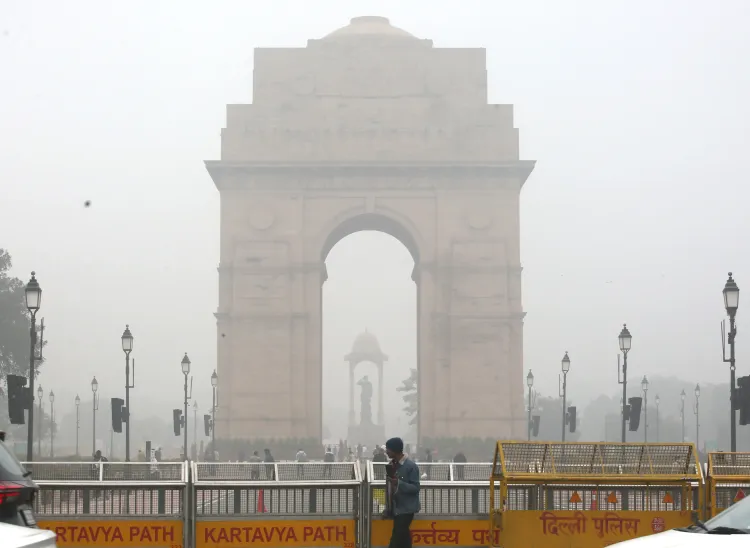
New Delhi, Dec 21 (NationPress) The air quality in the capital has seen a significant decline on Sunday, with levels precariously nearing the “severe” classification as heavy smog, dropping temperatures, and thick fog enveloped extensive regions of northern India.
This alarming air quality situation has once again sparked health worries for the city's inhabitants, particularly affecting children, the elderly, and individuals with respiratory conditions.
Data from the Air Quality Early Warning System for Delhi, managed by the Ministry of Earth Sciences, indicated that the city’s Air Quality Index (AQI) steadily increased, reaching 410 by 11 pm, officially surpassing the “severe” mark.
Despite a slight improvement overnight, pollution levels remained dangerously elevated, with the AQI noted at 396 around 6:30 a.m. on Sunday, still classified within the near-severe range.
Monitoring from the Central Pollution Control Board’s Sameer app showed that various areas across the city faced extremely poor air quality in the early morning.
Among the most severely impacted regions were Chandni Chowk (455), Wazirpur (449), Rohini (444), Jahangirpuri (444), Anand Vihar (438), and Mundka (436), all firmly categorized under “severe” pollution levels.
The decline in air quality coincided with adverse weather conditions. The India Meteorological Department (IMD) issued warnings of dense to very dense fog, which further reduced visibility and exacerbated the pollution effects. Orange alerts, the second-highest warning level, were declared for extensive areas of Delhi, Uttar Pradesh, Haryana, and Chandigarh, alerting residents and authorities to possible disruptions in road, rail, and air traffic.
Delhi experienced what weather experts defined as cold day conditions, with temperatures struggling to rise. The city’s maximum temperature was recorded at approximately 17 degrees Celsius, while the minimum plummeted to around 8 degrees Celsius, adding to the discomfort amidst the ongoing haze. Thick layers of smog persisted throughout the day, obscuring skylines and hindering outdoor activities.
Experts attribute the surge in pollution to a mix of unfavorable meteorological conditions, such as low wind speeds and temperature inversion, which trap pollutants near the surface.
As winter tightens its hold, Delhi continues to face recurring air pollution episodes, highlighting the urgent need for ongoing mitigation strategies and comprehensive solutions to enhance air quality in the area.
Point of View
It is evident that the ongoing air pollution crisis in Delhi is not merely an environmental concern but a public health emergency. The recurring episodes of severe air quality underscore the necessity for immediate and long-term strategies to combat pollution, ensuring the safety and well-being of our citizens.
NationPress
21/12/2025
Frequently Asked Questions
What is the current AQI level in Delhi?
As of December 21, the AQI in Delhi reached 410, indicating severe pollution levels.
What health impacts does air pollution have?
Air pollution can exacerbate respiratory illnesses, affect cardiovascular health, and pose severe risks to vulnerable populations such as children and the elderly.
What measures can be taken to improve air quality?
Implementing stricter emission controls, increasing green cover, and promoting the use of public transport are vital strategies for improving air quality.
Are there weather conditions contributing to the pollution?
Yes, low wind speeds and temperature inversions are trapping pollutants near the ground, worsening the air quality.
How can residents protect themselves from air pollution?
Residents are advised to stay indoors, use air purifiers, and wear masks when going outside during high pollution days.