Delhi AQI hits 376 'Very Poor' after Diwali as smog blankets capital
Synopsis
Delhi's post-Diwali air crisis is back — and this time residents say even the Sun is invisible. With the city's AQI touching 376 on 9 November, court orders on firecrackers reportedly ignored, and stubble smoke pouring in from Punjab, Haryana and UP, the capital is once again gasping for air in a pattern that repeats with grim regularity every November.
Key Takeaways
Delhi's AQI stood at 376 ('Very Poor') on 9 November 2026 , per the CPCB Sameer app.
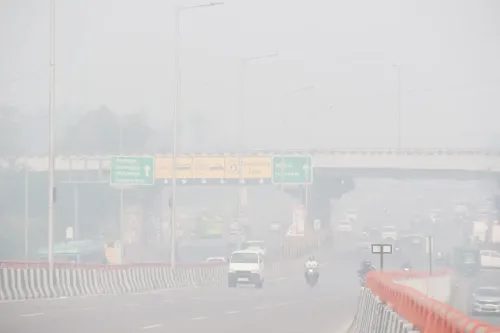
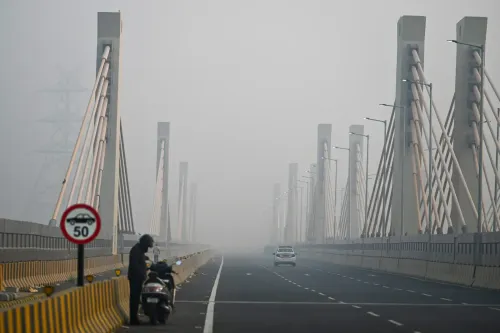
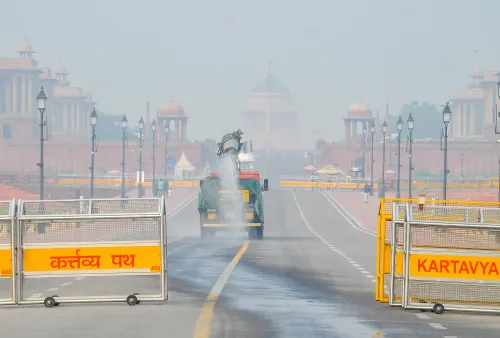
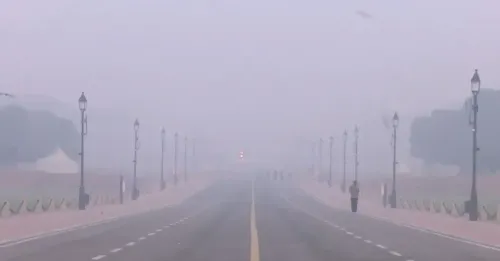
Dense smog blanketed the capital on the morning after Diwali , severely reducing visibility.
Residents alleged that firecrackers were burst well beyond the Supreme Court -mandated timeline, into the early hours of Monday.
Stubble burning in Punjab , Haryana , and Uttar Pradesh was cited as a major contributing factor.
Children, the elderly, and those with asthma or respiratory conditions face the highest health risk at current AQI levels.
Stricter GRAP enforcement measures are expected as authorities respond to the deteriorating air quality.
New Delhi woke to a thick blanket of smog on Monday, 9 November 2026, a day after Diwali celebrations, as the city's average Air Quality Index (AQI) climbed to 376 — firmly in the 'Very Poor' category, according to the Central Pollution Control Board's (CPCB) Sameer application. Residents across the national capital raised alarm over deteriorating visibility and health risks, pointing to a combination of firecrackers, stubble burning in neighbouring states, and cross-border pollution as the primary drivers.
Smog So Dense the Sun Disappeared
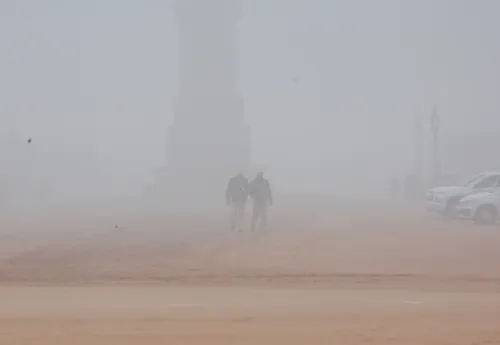
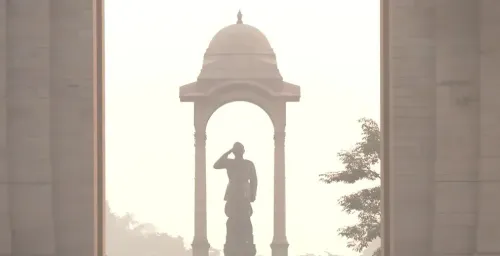
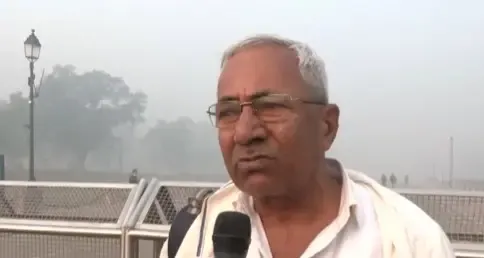
The severity of the post-Diwali pollution was starkly evident to those on the streets. An elderly resident described the conditions as alarming, noting that even sunlight was barely penetrating the smog. 'Pollution levels in Delhi are extremely high. I have noticed that even the Sun is not clearly visible. This is wrong, and stubble burning in Punjab, Uttar Pradesh, Haryana and other areas is contributing to the high pollution levels here,' the resident said.
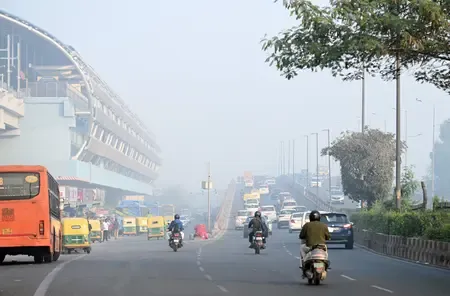
Dense smog covered several parts of the capital during the morning hours, significantly reducing visibility and prompting widespread concern among commuters, parents, and healthcare workers.
Firecracker Violations and Court Orders Ignored
Beyond stubble burning, residents alleged that Diwali revellers in Delhi flouted both Supreme Court guidelines on firecracker timing and a Delhi High Court-issued high alert. 'Despite this, people living here did not pay much attention or take precautions. Instead, they contributed to increasing pollution as much as possible by bursting crackers far beyond the prescribed timeline by the Supreme Court, right into the wee hours of Monday,' one resident said.
The allegations reflect a recurring pattern — court-mandated restrictions on fireworks have consistently been difficult to enforce across the city, with complaints of violations surfacing each year in the post-Diwali period.
Vulnerable Groups at Heightened Risk
Health concerns dominated community conversations, with multiple residents urging special care for children, the elderly, and those with pre-existing respiratory conditions. 'I would like to urge the people of Delhi to please take care of children and the elderly. Those who suffer from asthma and young children, whose lungs are very delicate, are particularly vulnerable,' one local appealed.
Doctors and public health advocates have long flagged that post-Diwali AQI spikes carry disproportionate risk for people with asthma, chronic obstructive pulmonary disease (COPD), and cardiovascular conditions. An AQI above 300 is classified as 'Very Poor', with the CPCB recommending that sensitive groups avoid all outdoor exposure.
Multi-State Pollution Cocktail
Residents and experts alike noted that Delhi's air crisis is never purely local. Stubble burning in Punjab, Haryana, and Uttar Pradesh — a seasonal agricultural practice that peaks in October and November — typically accounts for a significant share of particulate matter in the capital's air during this period, compounding the effect of local firecracker emissions. This is a pattern that has repeated itself each post-Diwali season for well over a decade, despite successive government interventions including Graded Response Action Plan (GRAP) activations and crop residue management schemes.
What Comes Next
With AQI levels in the 'Very Poor' range, authorities are expected to enforce stricter GRAP measures, potentially including restrictions on construction activity, diesel generator use, and certain categories of vehicles. Residents have been urged to wear masks outdoors, keep windows shut, and use air purifiers where available. Whether enforcement tightens sufficiently to prevent a further slide into the 'Severe' or 'Severe+' category will be closely watched in the coming days.
Point of View
Firecracker violations, and stalled inter-state coordination surfaces every November, yet the structural fixes remain elusive: crop residue management schemes are underfunded, GRAP enforcement is inconsistent, and court orders on fireworks go largely unenforced on the ground. An AQI of 376 is not just a data point — it is a governance failure that lands hardest on the city's most vulnerable, who have neither the means to relocate nor the resources for air purifiers. Until accountability is tied to outcomes rather than announcements, the smog will return on cue.
NationPress
9 Nov 2026
Frequently Asked Questions
What is Delhi's AQI after Diwali 2026?
Delhi's average Air Quality Index stood at 376 on 9 November 2026 — the day after Diwali — placing it in the 'Very Poor' category, according to the Central Pollution Control Board's Sameer application. Thick smog blanketed large parts of the city during morning hours, significantly reducing visibility.
What caused Delhi's air pollution to spike after Diwali?
Residents and observers pointed to three overlapping causes: firecrackers burst during and after Diwali celebrations, stubble burning in Punjab, Haryana, and Uttar Pradesh, and general cross-border pollution from neighbouring states. Reports also alleged that firecracker restrictions ordered by the Supreme Court were widely violated into the early hours of 9 November.
Who is most at risk from Delhi's current air quality?
Children, the elderly, and people with pre-existing conditions such as asthma or COPD face the greatest risk. At an AQI above 300, the CPCB recommends that sensitive groups avoid all outdoor exposure and that the general public limit prolonged outdoor activity.
What restrictions are expected as Delhi's AQI worsens?
With AQI in the 'Very Poor' range, authorities are expected to tighten Graded Response Action Plan (GRAP) measures, which can include restrictions on construction, diesel generator use, and certain vehicle categories. Residents are advised to wear masks outdoors and use air purifiers indoors.
Has this post-Diwali pollution pattern occurred before in Delhi?
Yes — post-Diwali air quality emergencies have recurred in Delhi for well over a decade, driven by the seasonal convergence of stubble burning and festive firecracker use. Despite court orders, government schemes, and annual warnings, enforcement has remained a persistent challenge every November.