Delhi AQI at 304 on Nov 10, stays 'very poor' despite slight dip after Diwali
Synopsis
A day after Diwali, Delhi's air remained firmly hazardous — AQI at 304 city-wide, with Pusa and Chandni Chowk touching 395. No rain is forecast until 15 November, winds are near-still, and GRAP Stage III is in force. The city is locked into its annual post-festival pollution trap, with no quick exit visible.
Key Takeaways
Delhi's AQI stood at 304 at 8.10 am on 10 November , remaining in the 'very poor' category, per CPCB data.
Pusa and Chandni Chowk recorded the highest readings at 395 each; NSUT Jaffarpur logged 382 .
The IMD has predicted no rainfall in Delhi from 10 to 15 November ; wind speeds are forecast at 5–15 kmph .
GRAP Stage III restrictions remain active across Delhi and adjoining districts of Haryana , Uttar Pradesh , and Rajasthan .
The emergency framework is coordinated by CAQM , CPCB , and state governments, with escalation triggers based on IMD and IITM forecasts.
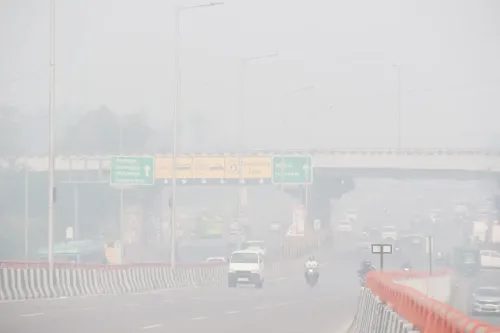
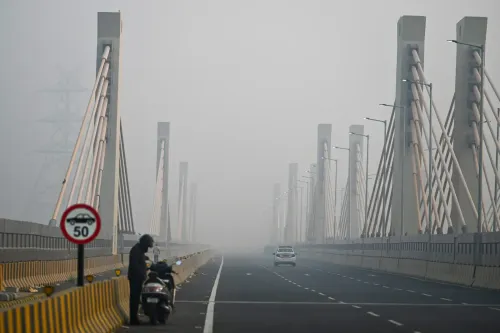
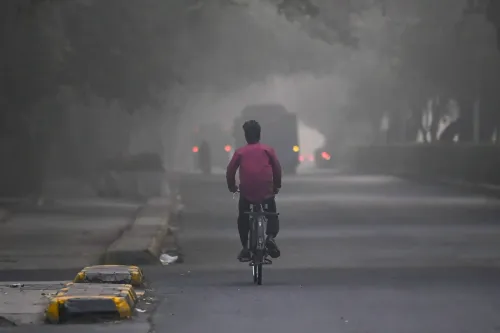
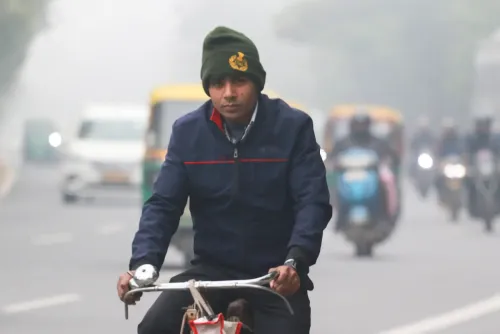
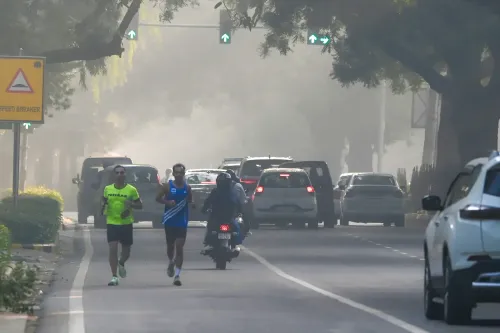
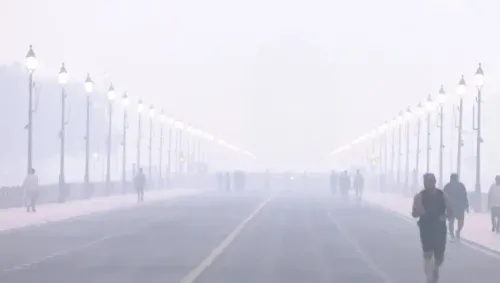
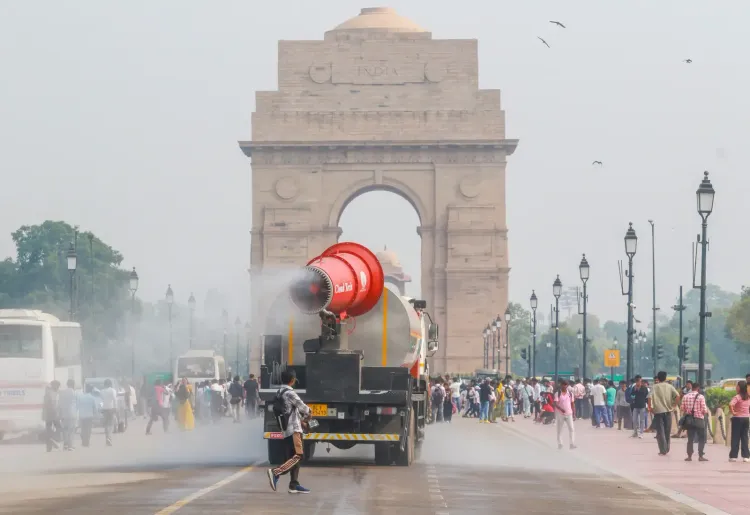
New Delhi's air quality remained firmly in the 'very poor' category on Tuesday, 10 November, even as a marginal improvement was recorded — with the city's Air Quality Index (AQI) clocking 304 at around 8.10 am, according to data from the Central Pollution Control Board (CPCB). The reading marked a slight decline from Monday's post-Diwali peak, but offered little relief to residents across the national capital.
Worst-Hit Monitoring Stations
Pusa and Chandni Chowk recorded the highest AQI readings in the city at 395 each, followed closely by NSUT Jaffarpur at 382 and the Commonwealth Sports Complex at 380 — all deep within the 'very poor' range.
Other stations also reported sharply elevated levels. Sirifort logged an AQI of 365, Aya Nagar stood at 349, Punjabi Bagh at 348, NIH Narela at 327, R.K. Puram at 329, and Talkatora Garden at 370. Stations including Burari (303), Jharoda Kalan (303), Shadipur (312), Bawana (314), Delhi Technological University (DTU) (323), Lodhi Road (327), and Rohini (301) also remained in the 'very poor' band. Karala at 236, Ghoga at 272, and Nangloi at 266 were comparatively lower but still in the 'poor' zone.
No Immediate Weather Relief in Sight
The India Meteorological Department (IMD) has predicted no rainfall in Delhi between 10 and 15 November, removing one of the most effective natural mechanisms for dispersing pollutants. An approaching Western Disturbance is expected to affect the western Himalayan region from Tuesday night onward, but its influence is unlikely to extend rainfall to the national capital.
Wind speeds are forecast to stay relatively subdued, ranging between 5 and 15 kmph — insufficient to disperse the thick pollutant blanket hanging over the city. This combination of calm winds and dry weather is expected to keep air quality stagnant through much of the week.
GRAP Stage III Restrictions in Force
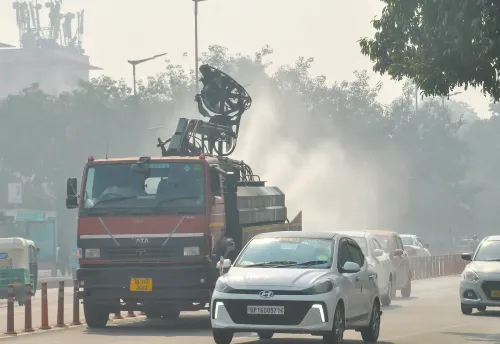
Stage III restrictions under the Graded Response Action Plan (GRAP) remain in effect across Delhi and adjoining districts of Haryana, Uttar Pradesh, and Rajasthan, following a directive from the Commission for Air Quality Management (CAQM). Authorities have been asked to intensify pollution-control measures, strengthen enforcement, and ensure compliance to prevent conditions from deteriorating further into the 'severe' category.
Notably, GRAP operates as a four-stage escalating emergency framework, coordinated by the CAQM, CPCB, and state governments. Stage III is activated based on forecasts from the IMD and the Indian Institute of Tropical Meteorology (IITM), enabling pre-emptive restrictions before the worst levels are reached.
Context: A Recurring Annual Crisis
Delhi's post-Diwali air quality deterioration is a well-documented annual pattern — a convergence of stubble burning in neighbouring states, reduced wind speeds, lower temperatures, and fireworks emissions. This year's readings follow a familiar trajectory, raising questions about the long-term effectiveness of seasonal restrictions. With no rain forecast and weak winds persisting, air quality is unlikely to improve significantly before mid-November at the earliest.
Point of View
Predictable to the week. GRAP Stage III activations and enforcement drives have become routine responses to a structural problem that seasonal orders alone cannot solve. The absence of rain and near-still winds are natural factors, but the annual recurrence of these readings reflects the limits of reactive governance. The harder conversation — about stubble-burning incentives, urban vehicle density, and industrial emission caps in the NCR belt — rarely gets the same urgency as the AQI ticker. Until it does, Stage III will keep returning on schedule.
NationPress
10 Nov 2026
Frequently Asked Questions
What is Delhi's AQI today, 10 November 2026?
Delhi's citywide AQI was recorded at 304 at around 8.10 am on 10 November 2026, placing it in the 'very poor' category according to CPCB data. Several individual monitoring stations, including Pusa and Chandni Chowk, reported even higher readings of 395.
Which areas in Delhi have the worst air quality right now?
Pusa and Chandni Chowk recorded the highest AQI readings at 395 each on 10 November, followed by NSUT Jaffarpur at 382 and Commonwealth Sports Complex at 380. Talkatora Garden (370), Sirifort (365), and Aya Nagar (349) also reported severely elevated levels.
Will Delhi's air quality improve soon?
No immediate improvement is expected. The IMD has forecast no rainfall in Delhi between 10 and 15 November, and wind speeds are likely to remain low at 5–15 kmph, limiting natural dispersion of pollutants. A Western Disturbance approaching the Himalayas is not expected to bring rain to the capital.
What is GRAP Stage III and what does it mean for Delhi residents?
GRAP Stage III is the third level of the Graded Response Action Plan, a four-stage emergency pollution-control framework coordinated by the CAQM, CPCB, and state governments. It triggers stricter restrictions on vehicles, construction, and industrial activity in Delhi and adjoining districts of Haryana, Uttar Pradesh, and Rajasthan, and is activated when air quality is forecast to reach the 'very poor' or higher range.
Why does Delhi's pollution spike after Diwali every year?
The post-Diwali period combines multiple pollution sources: fireworks emissions, residual stubble burning from neighbouring agricultural states, lower temperatures that trap pollutants near the ground, and reduced wind speeds that limit natural dispersal. This convergence reliably produces 'very poor' to 'severe' AQI readings each November.