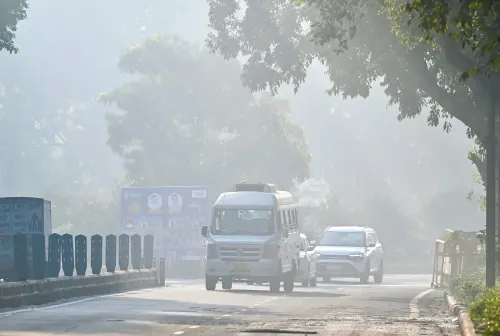
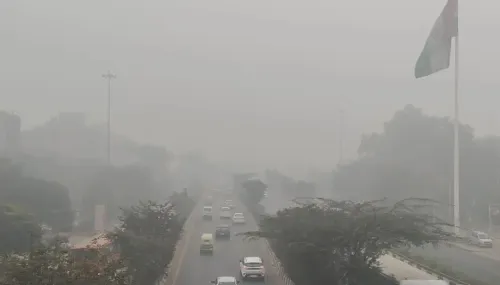
Delhi AQI at 236 on Sunday, 'poor' air persists as winter sets in
Synopsis
Delhi's air eased from 'very poor' on Saturday — AQI 327 — to a still-harmful 'poor' at 236 on Sunday, even as GRAP Stage I and II stayed active across NCR. With the CAQM's construction ban now lifted and stricter winter measures due on 10 December, the city is bracing for the worst months of its annual pollution cycle.
Key Takeaways
Delhi's AQI averaged 236 on Sunday, 22 November , placing it in the 'poor' category per CPCB .
ITO recorded 292 and Anand Vihar recorded 251 — both in the 'poor' band.
On Saturday, the AQI peaked at 327 ('very poor'), with Sirifort hitting 368 .
GRAP Stage I and Stage II remain active across Delhi-NCR; stricter measures due from 10 December .
The CAQM's construction ban (5–20 November) was lifted on Friday; Delhi's own winter restrictions continue until 31 January .
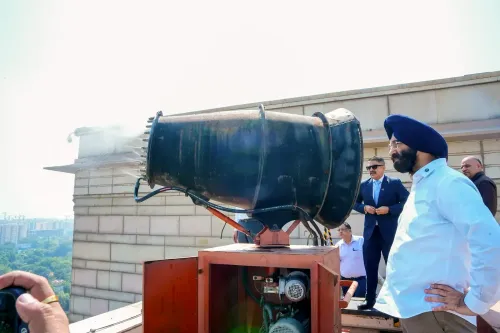
The Delhi government has deployed 108 MRS machines and conducted nearly 80 lakh plantation activities .
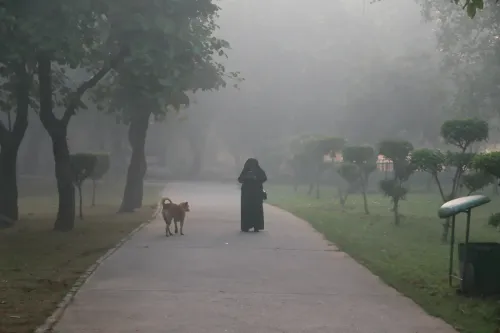
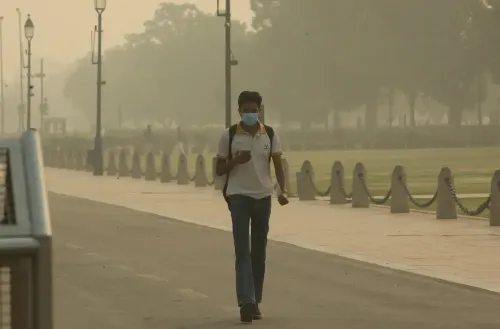
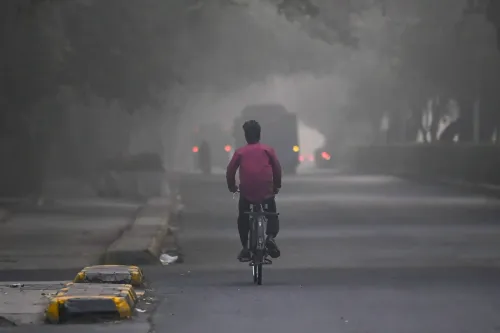
Delhi's air quality remained in the 'poor' category on Sunday, 22 November 2026, with the city logging an average Air Quality Index (AQI) of 236, according to the Central Pollution Control Board (CPCB). The reading marks a marginal improvement from the previous day but keeps the national Capital well inside hazardous territory as winter conditions deepen.
Hotspots Across the City
Pollution levels varied sharply across monitoring stations. The AQI near ITO stood at 292, while Anand Vihar recorded 251 — both within the 'poor' band as per CPCB data. The minimum temperature on Sunday dipped to around 14 degrees Celsius, signalling the gradual onset of winter, a season that historically amplifies air pollution in the Delhi-NCR region.
On Saturday, conditions were considerably worse. Delhi's AQI touched 327 at 8:20 am, pushing it into the 'very poor' category. Sirifort recorded the highest reading of 368 that day, followed by Chandni Chowk at 366, Commonwealth Sports Complex at 362, Punjabi Bagh at 360, CRRI Mathura Road at 355, and Pusa at 353.
GRAP in Force, Construction Ban Partially Lifted
Stage I and Stage II measures under the Graded Response Action Plan (GRAP) continue to remain in effect across Delhi-NCR. The Commission for Air Quality Management (CAQM) lifted a construction ban — in place from 5 to 20 November — on Friday. However, restrictions under the Delhi government's separate winter pollution-control framework remain active until 31 January, with stricter measures set to kick in from 10 December.
The CAQM has also issued separate directions on dust-generating demolition and outdoor construction activities, as well as physical office attendance requirements, under its 30 October order.
What the Government Is Doing
The Delhi government has deployed 108 Mechanical Road Sweeping (MRS) machines across the National Capital Territory to tackle dust accumulation. Authorities have also carried out nearly 80 lakh plantation activities and completed the redevelopment of 1,440.713 km of roads as part of longer-term pollution-mitigation efforts.
Why AQI Worsens in Winter
Lower temperatures during winter months cause a phenomenon known as temperature inversion, trapping pollutants close to the surface rather than allowing them to disperse upward. Combined with vehicular emissions, construction dust, and crop-residue burning in neighbouring states, Delhi's air quality routinely deteriorates between October and February. This is a recurring seasonal challenge that air quality authorities and urban planners have grappled with for years without a durable solution.
As stricter GRAP measures approach in December, residents — particularly those with respiratory conditions — are advised to limit outdoor exposure on high-AQI days. Authorities say monitoring and enforcement will continue through the winter season.
Point of View
Which in Delhi's population of over 32 million means millions of people. The annual cycle of emergency bans, partial lifts, and stepped restrictions has become ritual without resolution; the CAQM's construction ban was lifted barely days after AQI touched 327. The structural drivers — stubble burning in Punjab and Haryana, vehicular density, and inadequate public transport alternatives — remain unaddressed at scale. Until enforcement, source apportionment, and inter-state coordination happen simultaneously rather than sequentially, Delhi winters will keep breaking the same records.
NationPress
22 Nov 2026
Frequently Asked Questions
What is Delhi's AQI today, 22 November 2026?
Delhi recorded an average AQI of 236 on Sunday, 22 November 2026, placing it in the 'poor' category according to the Central Pollution Control Board (CPCB). ITO stood at 292 and Anand Vihar at 251.
What does an AQI of 236 mean for residents?
An AQI in the 'poor' range (201–300) can cause breathing discomfort to most people on prolonged exposure, and serious health effects for those with respiratory or cardiac conditions. Sensitive groups — children, the elderly, and people with asthma — are advised to limit outdoor activity.
What GRAP measures are currently in effect in Delhi-NCR?
GRAP Stage I and Stage II measures are currently in force across the Delhi-NCR region. These typically include restrictions on the use of coal and wood for heating, curbs on diesel generators, and enhanced traffic management. Stricter measures are scheduled from 10 December 2026.
Has the construction ban in Delhi been lifted?
The CAQM's construction ban, which was in place from 5 to 20 November, was lifted on Friday. However, the Delhi government's own winter pollution-control restrictions remain active until 31 January, with additional measures coming into effect from 10 December.
Why does Delhi's air quality worsen in winter?
Winter temperature inversions trap pollutants near ground level instead of allowing them to disperse. This combines with vehicular emissions, construction dust, and crop-residue burning in neighbouring states to create severe air quality deterioration between October and February each year.