Delhi AQI at 267 on Friday; Sirifort, JNU hit 'very poor' levels
Synopsis
Two days after CAQM lifted GRAP Stage III restrictions citing cleaner air, Delhi's AQI shot back toward 500 — with PM10 levels nearly 10 times the WHO safe limit and 16 monitoring stations in the 'very poor' band. The rapid reversal raises hard questions about whether the rollback was called too soon.
Key Takeaways
Delhi's average AQI stood at 267 on Friday, 20 November 2026 , with the city firmly in the 'poor' category.
Sirifort recorded the highest AQI at 348 ; at least 16 stations were in the 'very poor' band on Thursday afternoon per CPCB .
PM10 concentration hit 484 — nearly 10 times the WHO recommended safe limit — according to AQI.in data.
The rebound came just two days after CAQM revoked GRAP Stage III restrictions; Stages I and II remain in force.
Minimum temperature at Safdarjung dropped to 10.6°C on Thursday — the season's lowest so far, per IMD .
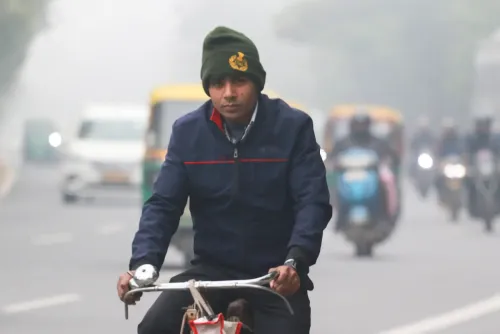
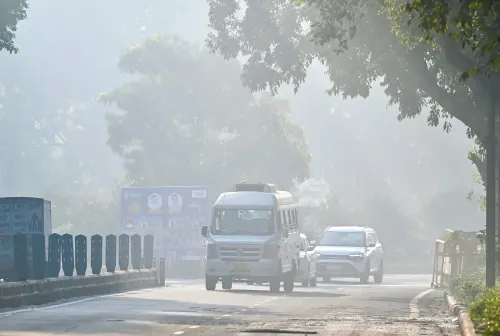
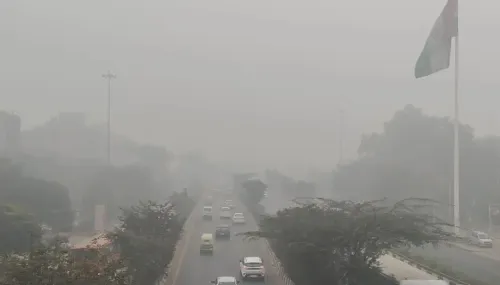
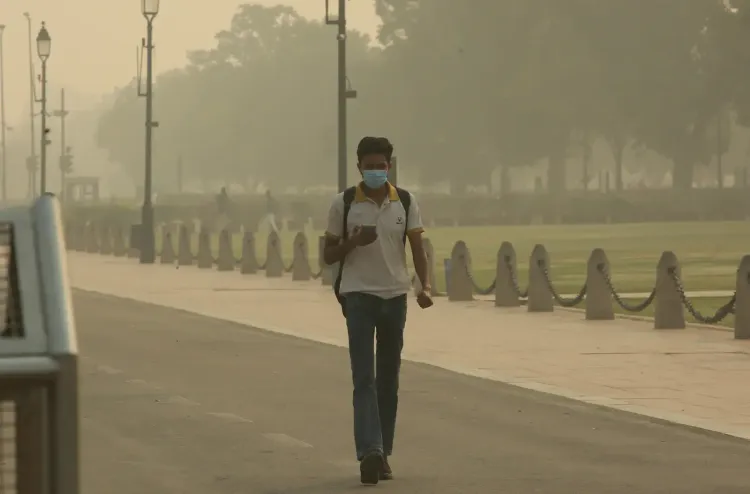
Delhi's air quality remained firmly in the 'poor' category on Friday, 20 November 2026, with the city's average Air Quality Index (AQI) recorded at 267, even as a chilly morning gripped the national capital. Several monitoring stations across the city pushed deeper into the 'very poor' zone, underscoring a worrying pollution rebound just days after key restrictions were eased.
Worst-Hit Monitoring Stations
Sirifort logged the highest reading among stations at 348, followed closely by JNU at 336, Pusa at 335, NSUT Jaffarpur at 329, and Burari Crossing at 333. Other stations in the severe band included Ghoga (321), ITO (321), DTU (319), Talkatora Garden (316), Punjabi Bagh (310), and Jahangirpuri (307).
A second tier of stations reported 'poor' air quality: Chandni Chowk (330), IIT Delhi (295), Bawana (293), Burari (290), Shadipur (280), Rohini (276), Vivek Vihar (277), NIH Narela (278), Anand Vihar (267), Chhawla (262), Karala (259), Tikri Kalan (214), and Pusa at 208.
How Fast the Air Deteriorated
Thursday's official 4 p.m. reading by the Central Pollution Control Board (CPCB) showed 16 monitoring stations in the 'very poor' category, with most remaining stations in the 'poor' band and only three in 'moderate'. The city's daily average AQI had already jumped 48 points on Thursday — from 232 to 280 — driven by unfavourable meteorological conditions that limited pollutant dispersion.
According to data from AQI.in, the situation was acutely worse in the early hours: Delhi's AQI reportedly touched 502 at 8:30 a.m. and stood at 485 at 9:31 a.m. on Thursday. PM10 concentration was recorded at 484 — nearly 10 times the World Health Organisation's (WHO) recommended safe limit.
GRAP Stage III Revocation Under Scrutiny
The rebound is particularly notable because it comes just two days after the Commission for Air Quality Management (CAQM) revoked restrictions under Stage III of the Graded Response Action Plan (GRAP), citing improved air quality. Preventive measures under GRAP Stages I and II continue to remain in force, but critics argue the rollback of Stage III was premature.
Delhi's average daily AQI, according to AQI.in, stood at 276 on 17 November — the day Stage III restrictions were withdrawn. It climbed to 340 by 18 November before approaching the 500 mark by Thursday morning, a trajectory that illustrates how rapidly conditions can reverse in late November.
Cold Wave Adds to Public Health Concern
The pollution surge coincides with the season's sharpest cold snap so far. The minimum temperature at Safdarjung observatory fell to 10.6 degrees Celsius on Thursday — 1.7 degrees below the seasonal average and 0.4 degrees lower than Wednesday's 11 degrees Celsius, according to the India Meteorological Department (IMD). Cold, stagnant air exacerbates pollution by trapping particulate matter close to the ground, making the combination of cold weather and poor AQI a compounded risk for vulnerable groups including children and the elderly.
With winter deepening and meteorological conditions unlikely to ease in the near term, air quality agencies will face pressure to revisit whether GRAP Stage III measures need to be reimposed.
Point of View
Threshold-based architecture of GRAP itself: restrictions are eased the moment numbers dip, but the conditions that caused them rarely disappear. Cold, stagnant air and stubble-burning season do not follow a weekly cycle. Until CAQM builds in a mandatory stabilisation window before revoking upper-stage restrictions, Delhi will keep cycling through this boom-and-bust pattern every winter.
NationPress
20 Nov 2026
Frequently Asked Questions
What is Delhi's AQI today, 20 November 2026?
Delhi's average AQI stood at 267 on Friday, 20 November 2026, placing it in the 'poor' category. Several stations including Sirifort (348) and JNU (336) recorded readings in the 'very poor' band.
Which areas in Delhi have the worst air quality today?
Sirifort recorded the highest AQI at 348, followed by JNU (336), Pusa (335), NSUT Jaffarpur (329), Burari Crossing (333), Chandni Chowk (330), Ghoga (321), and ITO (321). These stations all fall in the 'very poor' category.
Why did Delhi's air quality deteriorate so sharply after GRAP Stage III was lifted?
The Commission for Air Quality Management (CAQM) revoked GRAP Stage III restrictions on 17 November after a brief improvement, but unfavourable meteorological conditions — cold, stagnant air that traps pollutants — quickly reversed the gains. Delhi's AQI rose from 276 on 17 November to 340 by 18 November and approached 500 by the morning of 20 November.
How dangerous is Delhi's PM10 level right now?
According to AQI.in data, Delhi's PM10 concentration was recorded at 484 on Thursday morning — nearly 10 times the World Health Organisation's recommended safe limit. Elevated PM10 poses serious respiratory risks, especially for children, the elderly, and those with pre-existing lung or heart conditions.
What GRAP restrictions are currently active in Delhi?
As of 20 November 2026, GRAP Stages I and II remain in force across Delhi. Stage III restrictions, which include stricter curbs on construction and vehicle movement, were revoked by CAQM on 17 November but may come under review given the rapid pollution rebound.