Did the Delhi Assembly Take Action Against Punjab Police in the Atishi Video Controversy?
Synopsis
In a significant move, the Delhi Assembly Speaker, Vijender Gupta, has initiated an inquiry into the Punjab Police's actions related to the controversial Atishi video. This investigation, sparked by a complaint from Kapil Mishra, raises critical questions about the integrity of legislative proceedings and the responsibilities of law enforcement.
Key Takeaways
Investigation initiated : The Delhi Assembly is probing the Punjab Police's actions regarding the Atishi video.
Privilege breach alleged : A prima facie case of breach of privilege and contempt has been established.
Independent forensic report : A forensic report confirms Atishi's statements were accurately recorded.
Key figures involved : The inquiry will scrutinize several senior officials from Punjab Police.
Legislative privilege emphasized : The case underscores the importance of legislative privilege in democratic proceedings.
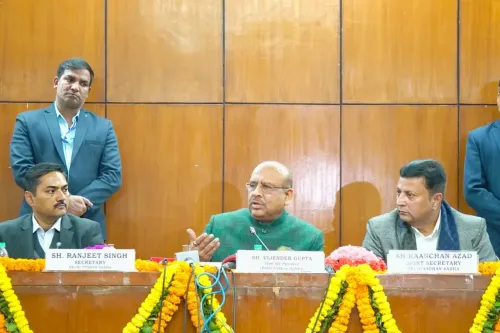
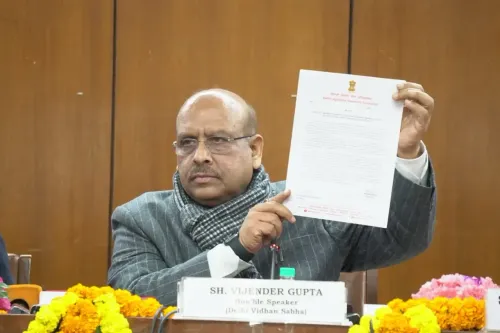
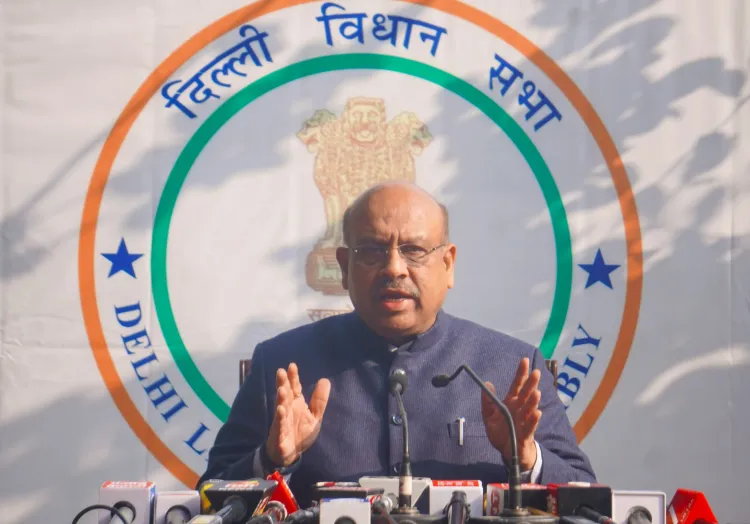
New Delhi, Feb 4 (NationPress) The Speaker of the Delhi Assembly, Vijender Gupta, has referred the actions of the Punjab Police regarding the Atishi video incident to the House Committee of Privileges for a comprehensive investigation, indicating that there exists a prima facie case of breach of privilege and contempt of the House.
In response to a complaint lodged by Delhi Cabinet Minister Kapil Mishra, Gupta stated that the conduct of the Punjab Director General of Police and the Jalandhar Police Commissioner would be scrutinized by the Privileges Committee.
This issue pertains to the filing of an FIR by the Punjab Police based on a complaint from Iqbal Singh concerning a video clip that allegedly misrepresented statements made by Leader of Opposition Atishi during a session of the Delhi Assembly on January 6, 2026.
After reviewing the Punjab Police's response and Mishra's complaint, the Speaker determined that the matter directly impacts the workings of the House, thus falling under legislative privilege.
The press release indicated that, although the Assembly Secretariat had informed the Punjab Police that the Speaker and the House had already acknowledged the situation, an FIR was still filed, and public claims were made regarding the tampering of Assembly proceedings.
The Speaker deemed the written explanations provided by the Punjab DGP and the Jalandhar Police Commissioner as inadequate, as they asserted that the Punjab Police acted lawfully and that the alleged offenses were committed by individuals outside the Assembly.
The statement also highlighted that despite repeated requests, the Punjab Police did not furnish crucial documents to the Delhi Assembly Secretariat, including the complaint, FIR, the report from the Punjab Police's social media expert, and the forensic examination report from the Punjab Forensic Science Laboratory (FSL).
Correspondence with the Punjab FSL Director indicated that the forensic report was only shared with relevant police personnel.
As previously announced in the House, the Speaker mentioned that an independent forensic evaluation was conducted by the Delhi FSL, confirming that the statements attributed to Atishi had indeed been made during the Assembly session as per the verbatim records.
The plea that the matter was sub judice was dismissed by the press statement, clarifying that the restrictions under the sub judice rule are self-imposed, limited in scope, and do not apply to cases involving breach of privilege.
The Speaker also acknowledged Mishra’s assertion of a violation of Article 361A of the Constitution, which grants immunity from criminal action for the publication of a substantially true report of legislative proceedings.
According to the press release, the Privileges Committee has been instructed to investigate the actions and behaviors of Iqbal Singh, the Punjab DGP, the Jalandhar Police Commissioner, the Additional Chief Secretary (Home) of Punjab, along with other relevant individuals, and submit its findings to the House in accordance with the established rules.
Point of View
The Delhi Assembly's decision to investigate the Punjab Police highlights the critical intersection of law enforcement and legislative privilege. This inquiry not only scrutinizes the actions of the police but also emphasizes the importance of maintaining the integrity of parliamentary proceedings. As this situation develops, it serves as a reminder of the checks and balances essential in a democratic society.
NationPress
22 Sept 2026
Frequently Asked Questions
What prompted the inquiry against Punjab Police?
The inquiry was prompted by a complaint from Delhi Cabinet Minister Kapil Mishra regarding the Punjab Police's actions related to an allegedly tampered video of Atishi's statements in the Assembly.
What was the Speaker's conclusion?
The Speaker concluded that there was a prima facie case of breach of privilege and contempt of the House, necessitating a detailed investigation.
Who will be investigated?
The inquiry will examine the conduct of Iqbal Singh, the Punjab DGP, the Jalandhar Police Commissioner, and other relevant officials.
Why was an independent forensic report obtained?
An independent forensic report was obtained to verify the authenticity of the statements made by Atishi during the Assembly session.
What is the significance of Article 361A?
Article 361A provides immunity from criminal proceedings for the publication of a substantially true report of legislative proceedings, which is central to this case.