CM Rekha Gupta Clears Draft Bill for Private Universities in Delhi

Synopsis
The Delhi Cabinet under Chief Minister Rekha Gupta approved a draft bill on 7 August 2026 to allow private universities in the capital, proposing 25% seat reservation for Delhi students, high-tech campuses, and a new regulatory authority to ensure quality and accountability.
Key Takeaways
The Delhi Cabinet approved a draft private universities bill on 7 August 2026 .
25% of seats in every course at new private universities will be reserved for Delhi students .
Universities must build multi-storey, high-tech, future-ready campuses under the proposed law.
A new body — the Delhi Private Universities Regulatory Authority — will oversee quality, transparency, and accountability.
The bill will be tabled in the Delhi Legislative Assembly in the near future.
The move aligns with the National Education Policy 2020 's push to expand private higher education access.
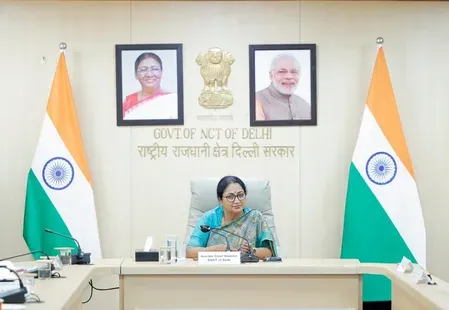
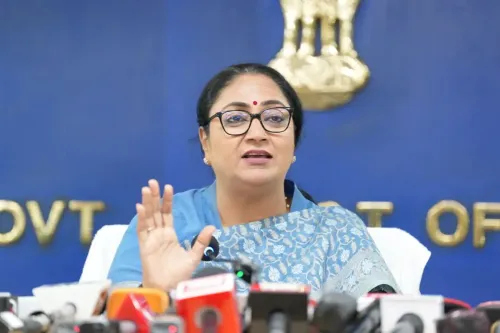
Every student has a dream college. Delhi Chief Minister Rekha Gupta wants that dream to be achievable without leaving the capital — and on Friday, 7 August 2026, her cabinet took a concrete step toward making it real.
The Delhi Cabinet approved a draft bill governing the establishment and operation of private universities in the city. The legislation will be tabled in the Delhi Legislative Assembly shortly, the Chief Minister announced on X.
What the Draft Bill Proposes
The bill carries three headline provisions. First, 25% of seats in every course at these private universities will be reserved for Delhi students — a direct attempt to ensure local youth are not crowded out of institutions in their own city. Second, the universities must develop multi-storey, high-tech, future-ready campuses, signalling that the government intends to attract serious institutional investment rather than low-quality entrants. Third, and perhaps most consequentially, a new body — the Delhi Private Universities Regulatory Authority — will be constituted to enforce quality, transparency, and accountability across all such institutions.Delhi's Bid to Reverse the Student Exodus
The ambition behind the bill is explicit in Rekha Gupta's own framing: 'dilli ke yuva apne sapnon ko apne hi shehar mein aakaar den' — 'Delhi's youth should be able to shape their dreams in their own city.' That line names a real problem. For decades, high-aspiring Delhi students have migrated to Pune, Bengaluru, Manipal, or abroad for quality private higher education, because Delhi's higher-education landscape has been dominated by central and state universities with limited seat capacity. Indian states have progressively enacted private university legislation — Rajasthan, Haryana, and Uttar Pradesh among them — to attract investment, raise gross enrolment ratios, and reduce exactly this kind of outward student migration. Delhi, despite being the national capital and one of the country's largest student populations, has lagged behind this curve. The National Education Policy 2020 explicitly encourages the expansion of private higher education to widen access, giving the bill a clear policy tailwind at the national level.The Regulatory Piece That Will Matter Most
The creation of the Delhi Private Universities Regulatory Authority is the provision that will determine whether this bill succeeds or becomes another paper reform. Private university legislation in several states has been undermined by weak oversight — fee gouging, infrastructure shortcuts, and degree mills operating behind respectable branding. A dedicated regulatory authority with genuine enforcement powers could be the differentiator. Whether it will have that power depends entirely on the final bill text that reaches the Assembly floor. The next test is the Legislative Assembly session. The bill's passage, the Authority's composition, and the timeline for granting the first university licences will reveal how quickly this ambition translates into actual classrooms. Delhi has long exported its best students. If this legislation lands right, the capital may finally start keeping them home — and drawing others in.Point of View
The BJP-led Delhi government is simultaneously addressing student outmigration and pre-empting the quality concerns that have dogged private university legislation in other states. The bill also lets the Rekha Gupta administration claim ownership of an education-reform narrative — a domain where the previous AAP government had staked considerable political identity. How robustly the regulatory authority is empowered in the final bill text will be the true measure of intent.
NationPress
22 Sept 2026
Frequently Asked Questions
What did the Delhi Cabinet approve on 7 August 2026?
The Delhi Cabinet approved a draft bill for the establishment and operation of private universities in Delhi, which will soon be introduced in the Delhi Legislative Assembly.
How many seats will be reserved for Delhi students in private universities?
The draft bill proposes that 25% of seats in every course at new private universities be reserved for students from Delhi.
What is the Delhi Private Universities Regulatory Authority?
It is a new regulatory body proposed under the draft bill to ensure quality, transparency, and accountability among private universities operating in Delhi.
Why does Delhi need a private universities law?
Delhi's higher education capacity has been constrained by limited seats in existing central and state universities, pushing students to study in other cities. A private university law aims to create more high-quality local options and reduce this outward migration.
When will the private universities bill be introduced in the Delhi Assembly?
Chief Minister Rekha Gupta stated the bill will be presented in the Delhi Legislative Assembly 'soon,' though a specific date has not been announced.