Delhi Private Universities Bill 2026: Cabinet clears landmark higher education law
Synopsis
Delhi has long been an outlier — a city of premier colleges but no standalone private universities. Chief Minister Rekha Gupta's Cabinet has now cleared a Bill to fix that, creating a statutory framework that most other states introduced years ago. If passed this session, it could reshape higher education investment in the capital.
Key Takeaways
The Delhi Cabinet approved the Delhi Private Universities Bill, 2026 on 7 August 2026 .
The Bill creates a dedicated legal framework for private universities — a provision most other Indian states already have.
Currently, private institutions in Delhi operate as deemed universities or colleges affiliated to GGSIPU .
The Bill is expected to be introduced in the Assembly during the Monsoon Session (7–11 August) .
Self-financing colleges with autonomous status are among the primary expected beneficiaries.
Speaker Vijender Gupta directed departments to submit Action Taken Notes on CAG observations in a time-bound manner.
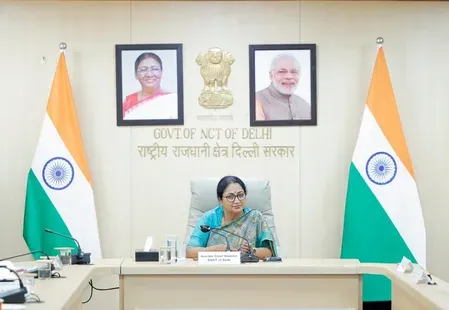
The Delhi Cabinet, chaired by Chief Minister Rekha Gupta, on 7 August 2026 approved the Delhi Private Universities Bill, 2026 — a statutory framework expected to open the national capital's higher education sector to private university investment and deepen industry-academia collaboration. The Bill is now set to be tabled in the Delhi Legislative Assembly during the ongoing Monsoon Session, according to official sources.
What the Bill Changes
Until now, private higher education institutions in Delhi have operated either as deemed universities or as private colleges affiliated to Guru Gobind Singh Indraprastha University (GGSIPU). The new legislation creates a dedicated legal pathway for fully independent private universities — a framework most other Indian states already have in place. Delhi has been a notable outlier in this regard.
The Bill is also expected to benefit self-financing colleges, several of which have already attained autonomous institution status, giving them the latitude to independently design curricula. The new law would allow such institutions to seek full university recognition under a clear statutory process.
Assembly Session Context
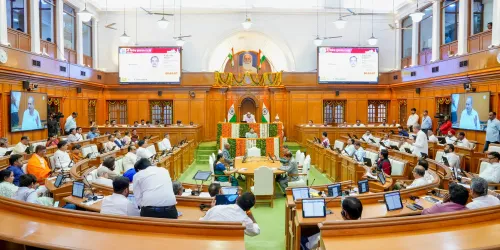
The Sixth Session of the Eighth Delhi Legislative Assembly, scheduled from 7 to 11 August, opened on Friday with a packed legislative agenda. The Business Advisory Committee confirmed that three additional Bills — covering time-bound delivery of public services, the Delhi Urban Shelter Improvement Board, and bed-and-breakfast establishments — will also be introduced during the session.
The session's opening day also saw the tabling of two reports of the Comptroller and Auditor General of India (CAG) and a notification related to the Delhi Electricity Regulatory Commission.
Speaker's Directive on CAG Accountability
Assembly Speaker Vijender Gupta on Friday directed Delhi government departments to acknowledge the Public Accounts Committee's (PAC) observations on last year's CAG reports and submit Action Taken Notes within a defined timeframe. Speaker Gupta noted that the PAC has been actively examining CAG reports that were not placed before the House during previous governments' tenures.
'Since last year, the Public Accounts Committee has been continuously examining those Comptroller and Auditor General reports that were not presented before the House during the tenure of previous governments,' Speaker Gupta said in his statement. 'I am confident that the examination of the CAG reports presented this year will also be completed by the end of the year.'
Significance and What Comes Next
The approval of the Delhi Private Universities Bill marks a significant policy shift for a city that hosts some of India's most prominent central universities and colleges but has lacked a framework for standalone private universities. Proponents argue the legislation could attract institutional investment, create new academic programmes, and reduce pressure on existing affiliated colleges.
The Bill must clear the Assembly floor before it becomes law. Given the current legislative calendar ending 11 August, its introduction this session appears likely, though passage may extend to a subsequent session depending on floor debate.
Point of View
Leaving the capital's higher education ecosystem structurally stunted for private institutional growth. The real question is whether the Bill includes robust regulatory safeguards: fee regulation, quality benchmarks, and grievance mechanisms. Without those, private university frameworks elsewhere have produced a mixed record of academic quality. The Gupta government's pitch of 'investment and industry collaboration' is the right ambition; the legislative details will determine whether this is genuine reform or a real-estate opportunity dressed as education policy.
NationPress
21 Sept 2026
Frequently Asked Questions
What is the Delhi Private Universities Bill 2026?
The Delhi Private Universities Bill, 2026 is a legislation approved by the Delhi Cabinet on 7 August 2026 that creates a statutory framework for establishing fully independent private universities in Delhi. Until now, private higher education institutions in the capital could only operate as deemed universities or colleges affiliated to Guru Gobind Singh Indraprastha University.
Why does Delhi need this Bill?
Delhi is one of the few states in India that lacked a dedicated law permitting standalone private universities. Most other states have had such legislation in place for years. The Bill aims to attract private investment in higher education and enable greater industry-academia collaboration.
When will the Bill be introduced in the Assembly?
The Bill is expected to be introduced during the ongoing Monsoon Session of the Delhi Legislative Assembly, scheduled from 7 to 11 August 2026, following Cabinet approval on 7 August.
Who benefits from the Delhi Private Universities Bill?
The legislation is expected to benefit self-financing colleges — many of which already hold autonomous institution status — by providing a pathway to seek full private university recognition. It also aims to attract new private institutional investment in Delhi's higher education sector.
What else was discussed at the Delhi Assembly's Monsoon Session opening?
The session opened with the tabling of two CAG reports and a Delhi Electricity Regulatory Commission notification. Three additional Bills — on time-bound public service delivery, the Delhi Urban Shelter Improvement Board, and bed-and-breakfast establishments — are also scheduled for introduction. Speaker Vijender Gupta directed departments to submit Action Taken Notes on PAC observations from last year's CAG reports.