CM Rekha Gupta Announces ₹15 Lakh Aid, Free Power for Kanwar Camps
Synopsis
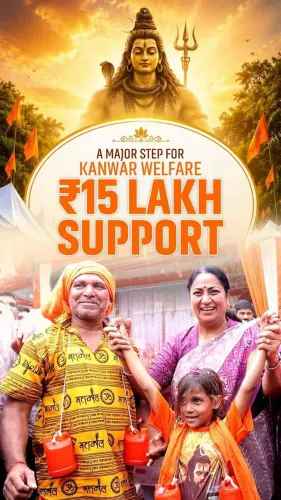
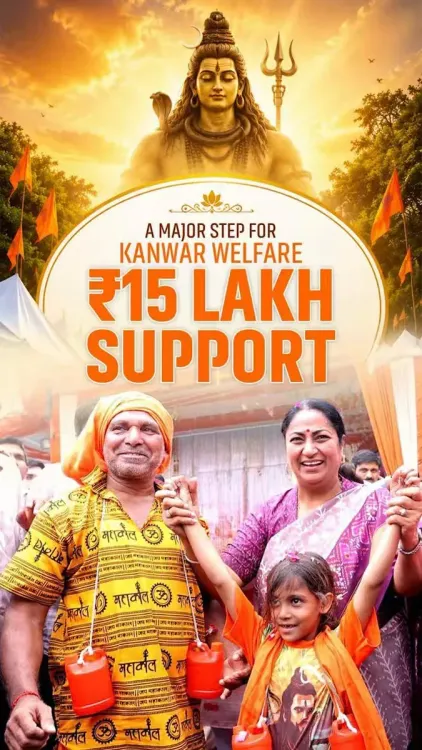
Delhi Chief Minister Rekha Gupta has announced up to ₹15 lakh in financial assistance for large Kanwar camps and free electricity up to 1,200 units for pilgrims during Shravan 2026, framing the government's support as an act of devotion and seva for Shiv Bhakts passing through the capital.
Key Takeaways
Delhi CM Rekha Gupta announced the support package on 30 July 2026 during the Shravan pilgrimage season.
Large Kanwar camps are eligible for financial assistance of up to ₹15 lakh .
Camp organisers will receive free electricity up to 1,200 units to run facilities for pilgrims.
The Kanwar Yatra brings hundreds of thousands of devotees through Delhi each Shravan as they carry Ganga water to Shiva temples.
Delhi's arrangements include coordination with neighbouring states on route management and basic amenities.
The announcement follows a broader BJP pattern of formal government support for major Hindu pilgrimages across northern India.
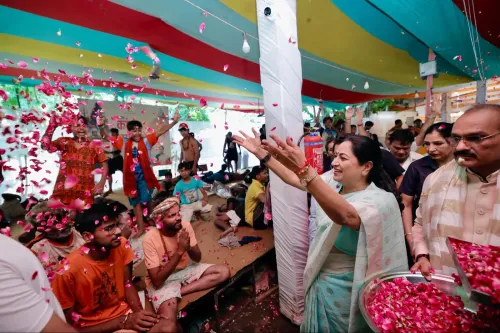
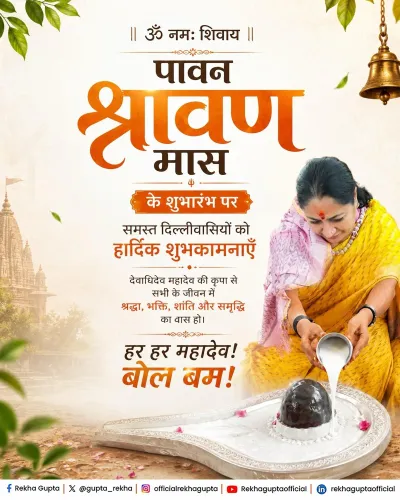
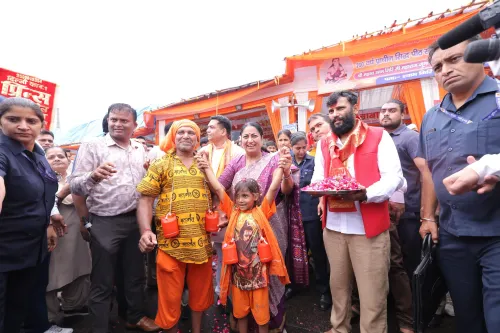
Every year, the month of Shravan transforms Delhi — saffron flags line the roads, chants of 'Har Har Mahadev' fill the air, and hundreds of thousands of Kanwariyas move through the capital on their sacred journey. This year, Delhi Chief Minister Rekha Gupta has announced a package of government support to host the pilgrims — including financial assistance of up to ₹15 lakh for large Kanwar camps and free electricity up to 1,200 units for the duration of the yatra.
What Delhi is offering Shiv Bhakts this Shravan
Posting on Thursday, 30 July 2026, CM Gupta described the capital's preparations in warm terms: 'The saffron, the chants of Har Har Mahadev, and the spirit of the Kanwar Yatra turn the city into one big family of devotees.' Beyond the sentiment, the announcement carries concrete commitments — financial grants for organisers running large camps, a power subsidy to keep lights and fans running through the summer heat, and what she described as 'comprehensive arrangements for every Shiv Bhakt.'
The free electricity provision — up to 1,200 units — is aimed at reducing the operational burden on camp organisers who typically run round-the-clock facilities for pilgrims: resting areas, langar (community kitchens), and medical stations. The ₹15 lakh ceiling for financial assistance targets the larger, more logistically complex camps that draw thousands of Kanwariyas at a time.
Kanwar Yatra in Delhi: a seasonal governance challenge
The Kanwar Yatra is one of northern India's largest annual pilgrimages. Devotees — known as Kanwariyas — travel, often on foot, to collect holy water from the Ganga and carry it back to Shiva temples in their home towns. Delhi sits at a crucial junction on several major yatra routes, making the capital a pressure point for crowd management, traffic, and basic amenities every Shravan season.
State governments across the region have historically set up temporary medical posts, traffic corridors, and rest camps to manage the surge. Coordination with neighbouring Uttar Pradesh and Uttarakhand — where many pilgrims originate and where key Ganga ghats are located — has been a recurring feature of yatra administration. The Delhi government's announcement signals that this year's arrangements are being formalised and funded at a higher scale.
BJP's pattern of pilgrimage welfare support
The Bharatiya Janata Party has made visible state support for major Hindu pilgrimages a consistent part of its governance identity in northern India. From infrastructure upgrades at temple towns to direct financial grants for religious events, the approach blends welfare administration with cultural signalling. CM Gupta's announcement fits that template — framing government logistics as an act of seva (devotional service) rather than routine crowd management.
With Shravan 2026 now underway, the immediate test will be in the rollout: whether camp registrations are processed smoothly, electricity subsidies reach organisers in time, and the capital's roads and services hold up under the annual pilgrimage surge.
For Delhi's Kanwariyas, the chants will rise regardless — but this year, the government has promised the infrastructure to match the devotion.
Point of View
The Delhi government raises the political stakes: the numbers are now on record, and so is the promise. The move also signals Delhi's intent to compete with UP and Uttarakhand — both BJP-governed — in projecting Shiv bhakti as a governance priority, not just a cultural backdrop. Whether the subsidy machinery delivers before Shravan ends will determine whether this is remembered as policy or poster.
NationPress
14 Sept 2026
Frequently Asked Questions
What support is the Delhi government giving for Kanwar Yatra 2026?
The Delhi government, under CM Rekha Gupta, is offering financial assistance of up to ₹15 lakh for large Kanwar camps and free electricity up to 1,200 units to help organisers run facilities for pilgrims during the Shravan season.
Who is Delhi Chief Minister Rekha Gupta?
Rekha Gupta is the Chief Minister of Delhi and a leader of the Bharatiya Janata Party (BJP).
What is the Kanwar Yatra?
The Kanwar Yatra is an annual Hindu pilgrimage during the month of Shravan in which devotees called Kanwariyas carry holy Ganga water on foot to Shiva temples in their home towns. It is one of the largest pilgrimages in northern India.
Why does Delhi set up special arrangements for the Kanwar Yatra?
Delhi sits on major yatra routes, making it a key transit and rest point for hundreds of thousands of Kanwariyas each year. The capital coordinates with Uttar Pradesh and Uttarakhand on traffic, medical posts, and rest camps to manage the seasonal surge.
How can Kanwar camp organisers in Delhi claim the ₹15 lakh assistance?
The Delhi government has announced the scheme but specific registration and claim procedures are expected to be rolled out during the Shravan period. Organisers should watch for official notifications from the Delhi government on camp registration processes.