Did a Delhi Court Acquit Sajjan Kumar in the 1984 Riots Cases?
Synopsis
In a surprising turn of events, a Delhi court acquitted former Congress MP Sajjan Kumar in connection with the 1984 anti-Sikh riots, where he faced allegations of inciting violence. The decision raises questions about justice and accountability in politically charged cases. Explore the implications of this ruling and its historical context.
Key Takeaways
Delhi court acquitted Sajjan Kumar of all charges in 1984 riots cases.
Accusations included inciting violence against Sikh community members.
The ruling has sparked discussions on political influence in judicial outcomes.
Kumar maintains his innocence, claiming no evidence links him to the incidents.
The case highlights ongoing concerns regarding justice and accountability in politically sensitive matters.
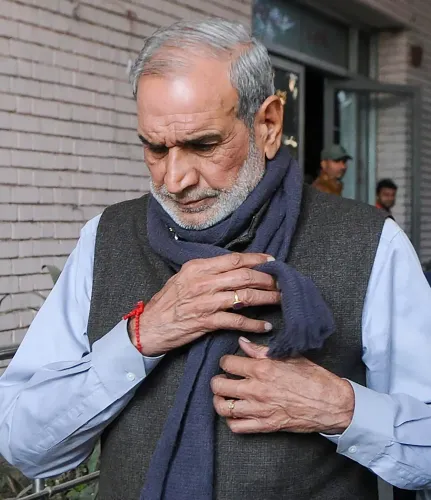
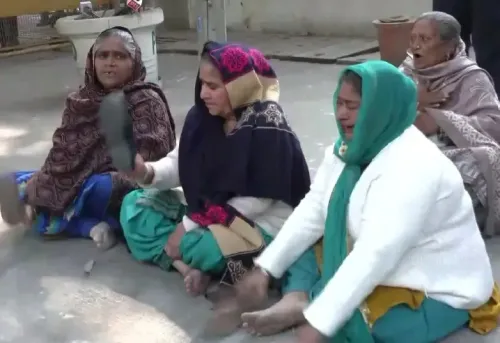
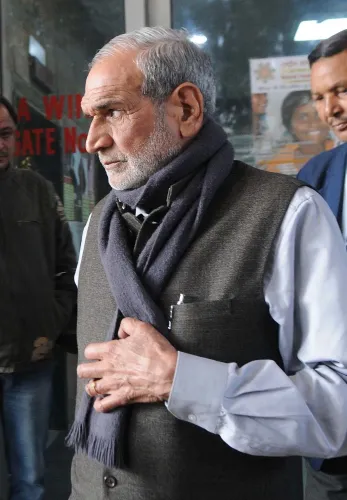
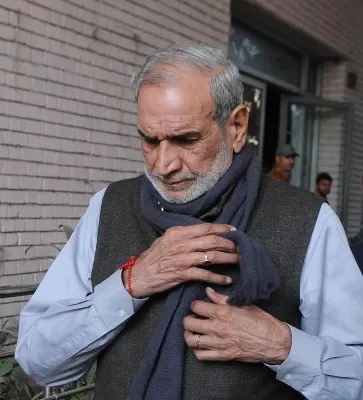
New Delhi, Jan 22 (NationPress) A Delhi court has declared that former Congress MP Sajjan Kumar is not guilty in connection with the alleged murders of two Sikhs, Sohan Singh and his son-in-law Avtar Singh, in Janakpuri, as well as another incident in Vikaspuri where Gurcharan Singh was reportedly set on fire during the 1984 anti-Sikh riots.
Special Judge Digvijay Singh of the Rouse Avenue Courts issued a brief order acquitting the 78-year-old Kumar.
The case involves accusations of violence that erupted after the assassination of then Prime Minister Indira Gandhi by her Sikh bodyguards on October 31, 1984.
In the years following, a Special Investigation Team (SIT) was formed based on the recommendations of the Justice G.P. Mathur Committee to revisit 114 cases.
In August 2023, the trial court officially charged Sajjan Kumar under various sections of the Indian Penal Code (IPC), though it decided to drop the murder charge under Section 302 initially applied by the SIT.
The trial concluded on September 23 last year, with the court reserving its verdict until December 22.
Kumar had previously asserted his innocence, claiming he could not have been involved in the alleged crimes “even in his wildest dreams.”
He maintained that there was no substantial evidence linking him to the incidents and stated he was not present at the violence scenes.
On November 9, 2023, the court heard from victim Manjeet Kaur, who testified she heard from mob members that Sajjan Kumar was present during the violence but clarified she did not witness him there.
Kumar, a Member of Parliament during the riots, has faced multiple accusations of inciting mobs against the Sikh community.
In a past ruling, the Delhi High Court had issued a harsh judgment against him in another case, stating he had evaded justice for decades due to political influence, resulting in a life sentence. His appeal against that conviction is still pending in the Supreme Court.
Point of View
I believe this ruling sheds light on the intricate relationship between politics and justice in India. The acquittal of Sajjan Kumar in such a sensitive case raises concerns about the mechanisms of accountability and the enduring impact of political patronage in the legal system. It's crucial for the nation to reflect on the implications of this decision and ensure that justice prevails for all communities.
NationPress
24 Sept 2026
Frequently Asked Questions
What were the main allegations against Sajjan Kumar?
Sajjan Kumar was accused of inciting violence during the 1984 anti-Sikh riots, leading to the deaths of two Sikhs in Janakpuri and an incident in Vikaspuri.
What was the outcome of the latest court ruling?
The Delhi court acquitted Sajjan Kumar of all charges in connection with the riots.
What is the historical context of the 1984 anti-Sikh riots?
The riots erupted following the assassination of then Prime Minister Indira Gandhi by her Sikh bodyguards, resulting in widespread violence against the Sikh community.
Is Sajjan Kumar facing any other legal challenges?
Yes, he is appealing a previous life sentence imposed by the Delhi High Court in another case related to the riots.
What was the role of the Special Investigation Team?
The SIT was formed to revisit and reopen cases related to the anti-Sikh riots based on recommendations from the Justice G.P. Mathur Committee.