Delhi HC initiates criminal contempt against Kejriwal, AAP leaders over judiciary campaign
Synopsis
The Delhi High Court's contempt action against Kejriwal and five AAP leaders is not a routine legal skirmish — it is a sitting judge on record saying she was subjected to psychological coercion, family harassment, and a coordinated social media campaign. That she simultaneously recused herself to avoid any perception of bias makes the order doubly significant: the court acted, then stepped aside.
Key Takeaways
The Delhi High Court initiated criminal contempt proceedings on 14 May against Arvind Kejriwal and five AAP leaders.
Contempt notices issued to Manish Sisodia , Sanjay Singh , Saurabh Bharadwaj , Vinay Mishra , and Durgesh Pathak .
Justice Swarana Kanta Sharma held that social media posts and videos amounted to a 'coordinated campaign' to scandalise the judiciary.
The judge noted that Kejriwal chose social media over the Supreme Court to contest her refusal to recuse.
Justice Sharma also recused herself from the excise policy case to avoid perception of bias; the matter will be heard by a fresh bench.
The case originates from a CBI revision plea challenging the trial court's discharge of all accused in the Delhi excise policy case — a judgment spanning over 1,100 paragraphs .
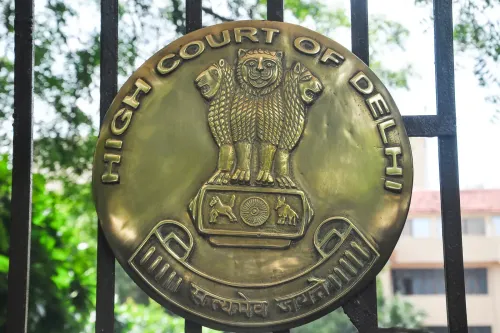
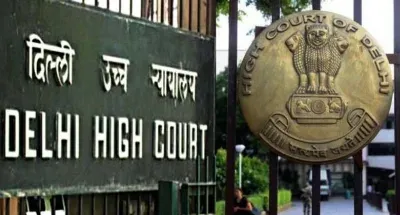
The Delhi High Court on Thursday, 14 May initiated criminal contempt proceedings against former Delhi Chief Minister Arvind Kejriwal and several senior leaders of the Aam Aadmi Party (AAP), holding that a 'coordinated campaign' had been deliberately orchestrated to scandalise the judiciary in connection with the Delhi excise policy case. The order marks a significant escalation in an already politically charged legal battle.
The Court's Core Finding
Justice Swarana Kanta Sharma, who authored the detailed order, held that social media posts, videos, and public statements directed against her — after she declined to recuse from hearing the matter — had crossed the threshold between fair criticism and criminal contempt. 'The contemnors did not merely express disagreement but carried out a campaign of vilification not only against this sitting judge but the entire judiciary,' Justice Sharma observed.
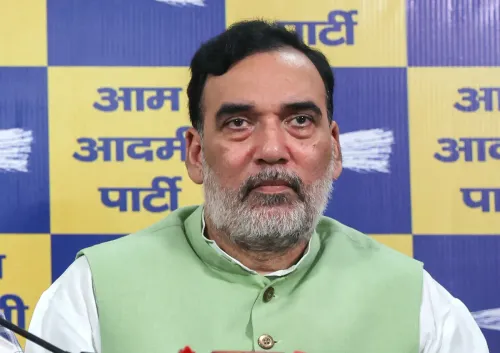
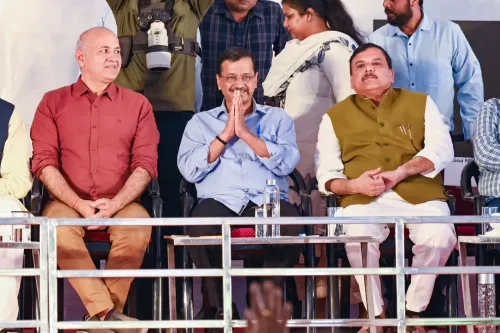
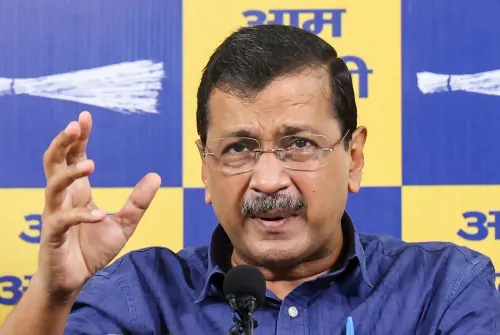
The court issued contempt notices against Kejriwal, former Delhi Deputy Chief Minister Manish Sisodia, Member of Parliament Sanjay Singh, and AAP leaders Saurabh Bharadwaj, Vinay Mishra, and Durgesh Pathak.
What the Judge Said
Justice Sharma drew a firm distinction between permissible dissent and contemptuous conduct. 'Any ordinary citizen may criticize any judge or order. This does not constitute contempt. However, there is a distinction between fair criticism and running a campaign to portray a judge as biased,' the court stated.
The judge specifically noted that Kejriwal, rather than challenging the recusal refusal before the Supreme Court, chose to 'carry the matter to social media' by publishing letters and videos questioning her impartiality. 'He could have gone to the Supreme Court. Instead, he publicly circulated letters and videos alleging political bias and suggesting that justice could not be expected from this court,' she said.
Justice Sharma further stated that even members of her family were drawn into the controversy as part of what she described as a 'psychological coercion' campaign intended to pressure her into stepping aside. 'I refuse to be intimidated,' she said, adding that silence would have amounted to 'surrender'. She clarified that the proceedings were not driven by personal grievance but by the duty to protect the institution. 'Judges may come and go, but the institution of justice will remain. The judiciary in India shall remain fearless,' Justice Sharma declared.
Recusal and What Happens Next
Having initiated contempt proceedings, Justice Sharma also recused herself from further hearing the excise policy case. She explained the reasoning plainly: 'It could be that if I keep hearing this case, Arvind Kejriwal and other people might think that I have a grudge against him. That's why I've thought that this particular case will be heard by some other Bench.'
The matter will now be assigned to a different bench of the Delhi High Court. Notably, Kejriwal, Sisodia, and Pathak had earlier abstained from proceedings after their recusal applications were dismissed — a move that had prompted Justice Sharma to consider appointing senior advocates as amici curiae.
Background: The Excise Policy Case
The contempt proceedings stem from a Central Bureau of Investigation (CBI) revision petition before the Delhi High Court, in which the agency has alleged that the excise policy framed by the then AAP-led Delhi government was manipulated to favour select liquor traders in exchange for kickbacks. The trial court, in a judgment spanning over 1,100 paragraphs, had discharged all accused persons — including Kejriwal and Sisodia — holding that the prosecution failed to establish an overarching conspiracy and that the now-scrapped excise policy was the outcome of a consultative process.
On 9 March, Justice Sharma had issued notice on the CBI's plea challenging that discharge order and had also stayed adverse remarks made by the trial court against the investigating agency and a CBI officer. The contempt row erupted in the weeks that followed, as AAP leaders publicly contested her continued involvement in the case.
This comes amid broader scrutiny of the relationship between political parties and judicial institutions in India — and raises questions about the limits of permissible political commentary on ongoing court proceedings.
Point of View
On record, that her family was targeted as part of a pressure campaign. That detail, if borne out in proceedings, moves this beyond routine political criticism into territory the courts have rarely had to confront so explicitly. The irony is structural: by initiating contempt and then recusing, Justice Sharma has pre-empted the very charge of bias that AAP was levelling. What this episode also exposes is the absence of any clear framework governing political parties' social media conduct during live judicial proceedings — a gap that the Supreme Court may eventually need to address.
NationPress
7 Oct 2026
Frequently Asked Questions
Why has the Delhi High Court initiated contempt proceedings against Arvind Kejriwal?
The Delhi High Court initiated criminal contempt proceedings against Kejriwal because it found that he and other AAP leaders ran a 'coordinated campaign' through social media posts, videos, and public statements to scandalise the judiciary after Justice Swarana Kanta Sharma refused to recuse from the excise policy case. The court held this crossed the line from fair criticism into contempt of court.
Who else has received contempt notices from the Delhi High Court?
Besides Kejriwal, contempt notices were issued to former Delhi Deputy Chief Minister Manish Sisodia, MP Sanjay Singh, and AAP leaders Saurabh Bharadwaj, Vinay Mishra, and Durgesh Pathak — six individuals in total.
What is the Delhi excise policy case about?
The CBI has alleged before the Delhi High Court that the excise policy framed by the then AAP-led Delhi government was manipulated to favour select liquor traders in exchange for kickbacks. The trial court had discharged all accused, including Kejriwal and Sisodia, in a judgment of over 1,100 paragraphs, finding the prosecution failed to establish an overarching conspiracy. The CBI has challenged that discharge order.
Will Justice Sharma continue hearing the excise policy case?
No. Having initiated contempt proceedings, Justice Sharma recused herself from the excise policy matter to avoid any perception that she harbours a grudge against the accused. The case will now be assigned to a different bench of the Delhi High Court.
What is the legal difference between fair criticism and contempt of court in India?
As the Delhi High Court noted in this order, any citizen may criticise a judicial order or a judge — that alone does not constitute contempt. Contempt arises when criticism transforms into a deliberate campaign to portray a judge as biased, damage public trust in the judiciary, or intimidate a judge into a particular course of action. The court described this line as 'very thin' but said it had been clearly crossed in this case.