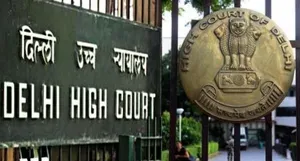
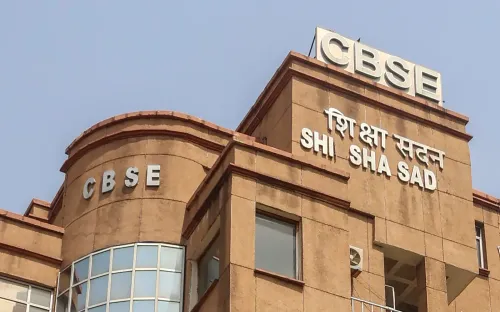
Delhi HC notices Centre, CBSE on PIL over Class 12 OSM irregularities
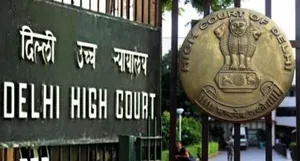
Synopsis
The Delhi High Court has put the Centre and CBSE on notice over a PIL that lays bare a troubling number: over 1.27 lakh applications for scanned answer books filed almost immediately after the Class 12 result portal reopened. The NSUI argues this is not routine — it is evidence that lakhs of students distrust a digital marking system the board itself has acknowledged had technical glitches.
Key Takeaways
The Delhi High Court on 8 June issued notice to the Centre and CBSE on a PIL over the On-Screen Marking (OSM) system for Class 12 board exams.
The bench of Justice Neena Bansal Krishna and Justice Madhu Jain has posted the matter for hearing on 12 June .
The PIL, filed by NSUI President Vinod Jhakhar , cites blurred scans, missing pages, mismatched sheets, and unexpectedly low marks.
Approximately 1,27,146 applications covering nearly 3,87,399 scanned answer books were submitted shortly after the portal was restored.
Relief sought includes reopening the verification portal for one month , manual rechecking, an independent inquiry, and future safeguards for digital evaluation.
The petition alleges violation of Article 14 of the Constitution over arbitrary and unequal treatment of affected students.
The Delhi High Court on Monday, 8 June issued notice to the Centre and the Central Board of Secondary Education (CBSE) on a public interest litigation challenging the fairness and reliability of the newly introduced On-Screen Marking (OSM) system used for evaluating Class 12 board examination answer sheets. The petition alleges that thousands of students suffered due to technical failures in the digital assessment process.
What the Court Said
A bench of Justice Neena Bansal Krishna and Justice Madhu Jain sought responses from the Union government and CBSE on the plea filed by the National Students' Union of India (NSUI). The matter has been posted for further hearing on 12 June.
What the PIL Alleges
Filed through NSUI President Vinod Jhakhar, the petition contends that the OSM system — under which physical answer sheets are scanned, digitally masked to conceal student identities, and assessed on computer screens — was rolled out without adequate safeguards. Students reportedly encountered blurred scans, missing pages, mismatched answer sheets, incomplete uploads, and unexpectedly low marks following the declaration of Class 12 results.
The PIL argues that these are not isolated complaints but point to a systemic failure affecting lakhs of students nationwide. As supporting evidence, the petition cited CBSE's own public communications acknowledging technical glitches in the portal used to provide scanned answer copies to students.
Scale of the Problem
According to the petition, approximately 1,27,146 applications relating to nearly 3,87,399 scanned answer books were submitted within a short window after the portal was restored. The plea argued that this volume of requests ‘reflects an extraordinary level of concern and lack of confidence amongst students regarding the process.’
‘When such a large number of students seek scanned copies immediately after result declaration, the matter cannot be treated as a routine post-result formality,’ the petition stated. The PIL further alleged a violation of Article 14 of the Constitution, arguing that students whose scripts were affected by scanning defects or technical errors cannot be treated on par with those whose sheets were properly evaluated.
What Relief Has Been Sought
The petition has prayed for directions to reopen the verification portal for one month, permit manual rechecking and physical verification of answer sheets in disputed cases, order an independent inquiry into the alleged irregularities, and frame binding safeguards and guidelines for future digital evaluation systems. The plea also questioned the adequacy of the existing grievance redressal mechanism, claiming students were left with limited digital remedies and no access to meaningful manual verification.
Why It Matters
Class 12 board marks carry decisive weight for university admissions, professional college eligibility, scholarship access, and entrance examination qualifications. The NSUI contends that ‘students cannot be made to suffer because of deficiencies in a system introduced by the authorities themselves.’ With the next hearing scheduled for 12 June, the court’s direction on CBSE’s response is expected to set the tone for how the OSM controversy is resolved ahead of the upcoming admissions cycle.
Point of View
And CBSE’s own acknowledgement of technical glitches makes a defence of the system difficult. The deeper issue is one of sequencing: a high-stakes digital evaluation framework was deployed at scale before its failure modes were mapped. Class 12 results are not a test environment. If the court orders an independent audit, it will likely expose whether OSM’s problems were a one-off or structural — and that finding will have consequences for every future board cycle.
NationPress
26 Oct 2026
Frequently Asked Questions
What is the On-Screen Marking (OSM) system that CBSE introduced?
The OSM system is a digital evaluation process in which physical answer sheets are scanned, digitally masked to hide student identities, and then assessed by examiners on computer screens. CBSE introduced it for Class 12 board examinations as part of a broader shift toward digital assessment.
Why has the Delhi High Court issued notice over CBSE’s OSM system?
The court issued notice on 8 June after the NSUI filed a PIL alleging that the OSM system caused widespread technical failures — including blurred scans, missing pages, and mismatched answer sheets — that unfairly affected thousands of Class 12 students’ results. The matter is next listed on 12 June.
How many students are reportedly affected by the OSM irregularities?
According to the PIL, approximately 1,27,146 applications relating to nearly 3,87,399 scanned answer books were submitted shortly after the CBSE portal was restored, indicating large-scale student concern. The petition argues this volume reflects a systemic failure rather than isolated complaints.
What relief has the NSUI sought from the Delhi High Court?
The NSUI has sought directions to reopen the answer-sheet verification portal for one month, allow manual rechecking and physical verification in disputed cases, order an independent inquiry into alleged irregularities, and frame safeguards for future digital evaluation systems.
What is the constitutional argument in the PIL against CBSE’s OSM system?
The petition alleges a violation of Article 14 of the Constitution, arguing that students whose answer sheets were affected by scanning defects or technical errors are being treated on par with those whose sheets were properly evaluated — amounting to arbitrary and unequal treatment.