Supreme Court flags CBSE OSM system flaws, orders status report by July 24

Synopsis
Both the Supreme Court and Delhi High Court are now examining CBSE's On-Screen Marking system, introduced this year for Class 12 board evaluation. With allegations of scanning errors, missing pages, and a dip in pass percentage to 85.2%, the Centre has set up a one-member review commission — but the apex court wants a formal status report in hand before 24 July.
Key Takeaways
The Supreme Court on 15 July expressed concern over CBSE's OSM system and ordered a status report by 24 July .
A one-member commission headed by S.
Radha Chauhan has been constituted to review the OSM mechanism and recommend reforms.
The PIL, filed by Rakesh Binjola , alleged scanning errors, portal glitches, missing pages, and non-evaluation of answer sheets.
Class 12 pass percentage declined to 85.2% this year, cited in the petition as a consequence of OSM irregularities.
The Delhi High Court had earlier on 8 June issued notice to the Centre and CBSE on a similar PIL by the NSUI .
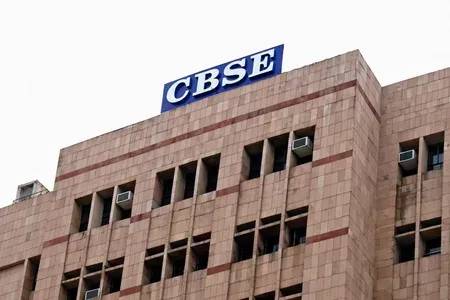
The Supreme Court on Wednesday, 15 July expressed serious concern over the hardships faced by Class 12 students due to the Central Board of Secondary Education's (CBSE) newly introduced On-Screen Marking (OSM) system, directing the Union government to file a status report detailing corrective steps taken so far. The matter will come up for further hearing on 24 July.
What the Court Said
A bench comprising Chief Justice of India (CJI) Surya Kant and Justices Joymalya Bagchi and V. Mohana was hearing a public interest litigation (PIL) filed by Rakesh Binjola, which sought supervision and regulation of the CBSE's digital evaluation mechanism. The bench underscored that it was not looking for adversarial proceedings but a lasting resolution to the systemic concerns raised.
The court called upon Solicitor General Tushar Mehta, appearing for the Centre, to assist in resolving the issue and directed him to place a comprehensive status report on record before the next date of hearing.
Government's Response
Solicitor General Mehta submitted that most individual grievances relating to marksheets cited in the petition had already been addressed. He further informed the bench that the Centre had constituted a one-member commission headed by S. Radha Chauhan to review the OSM mechanism and recommend reforms. 'We are not taking this adversely,' Mehta told the court, adding that the panel was actively examining concerns raised by students and other stakeholders.
What the PIL Alleged
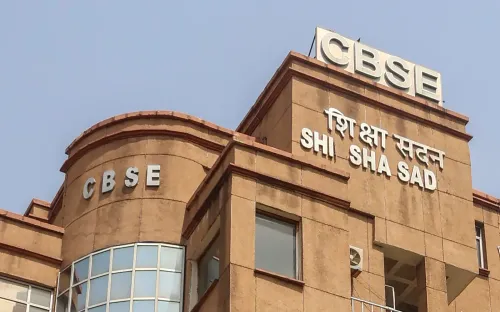
According to the petition, the OSM system — introduced by CBSE for the first time through circulars issued in February 2025 — suffered from large-scale irregularities. These included scanning errors, portal glitches, missing pages, illegible scans, and incomplete evaluation of answer sheets, resulting in what the petitioner described as arbitrary assessment.
The plea alleged violations of students' rights under Articles 14 and 21 of the Constitution, arguing that the flawed digital process had adversely affected students both in India and abroad. The petition also pointed to a decline in the overall Class 12 pass percentage to 85.2% this year, seeking re-evaluation, rechecking, and an independent inquiry. The petitioner further alleged that teachers were not given adequate formal training before the OSM system was rolled out.
Delhi High Court Had Also Taken Note
This is not the first judicial intervention on the OSM issue. On 8 June, a bench of Justices Neena Bansal Krishna and Madhu Jain of the Delhi High Court issued notice to the Centre and CBSE on a PIL filed by the National Students' Union of India (NSUI). That petition alleged thousands of students faced blurred scans, missing pages, mismatched answer sheets, and unexpectedly low marks following the declaration of Class 12 results.
The NSUI plea sought directions to reopen the verification portal, permit manual rechecking and physical verification of disputed answer sheets, order an independent inquiry, and frame safeguards for future digital evaluation systems.
What Happens Next
The Supreme Court has posted the matter for hearing on 24 July, by which date the government and CBSE must place the status report on record. With both the Supreme Court and Delhi High Court now seized of the matter, the pressure on CBSE to demonstrate accountability in its digital evaluation rollout is mounting ahead of the next academic cycle.
Point of View
Safeguards-later implementation. Introducing a digitised evaluation system through circulars in February and deploying it for high-stakes Class 12 board exams within months — without verified teacher training or portal stress-testing — was a governance misstep. The fact that both the Supreme Court and Delhi High Court are now concurrently examining the system signals that judicial patience with ad hoc digital reforms in public education is wearing thin. The one-member commission is a positive step, but its credibility will depend entirely on the independence of its findings and whether CBSE acts on them before the next exam cycle begins.
NationPress
14 Oct 2026
Frequently Asked Questions
What is CBSE's On-Screen Marking (OSM) system?
The OSM system is a digital evaluation mechanism introduced by CBSE for the first time in 2025, through circulars issued in February, for assessing Class 12 board examination answer sheets on screen rather than in physical form. Petitioners allege it has suffered from scanning errors, portal glitches, and incomplete evaluations.
Why has the Supreme Court intervened in the CBSE OSM matter?
The Supreme Court intervened after a public interest litigation alleged that the OSM system caused large-scale irregularities in Class 12 evaluation, violating students' rights under Articles 14 and 21 of the Constitution. The court is seeking a permanent systemic solution, not just resolution of individual grievances.
What has the government done to address OSM irregularities?
The Centre has constituted a one-member commission headed by S. Radha Chauhan to review the OSM mechanism and recommend reforms. The Solicitor General told the court that most individual marksheet grievances cited in the petition have already been resolved.
When is the next Supreme Court hearing on the CBSE OSM case?
The Supreme Court has posted the matter for further hearing on 24 July, by which date the government and CBSE must place a status report on record detailing steps taken to address the concerns.
How has the Delhi High Court responded to CBSE OSM complaints?
On 8 June, a Delhi High Court bench of Justices Neena Bansal Krishna and Madhu Jain issued notice to the Centre and CBSE on a PIL filed by the National Students' Union of India (NSUI), which raised similar concerns about fairness, transparency, and reliability of the digital evaluation system.