Delhi HC sets aside trial court's disciplinary action against cops in POCSO case
Synopsis
The Delhi High Court has drawn a firm jurisdictional line: once a trial court disposes of an anticipatory bail plea, it cannot turn that proceeding into a platform for ordering departmental enquiries or passing adverse remarks against police officers. The ruling, which circulates to all Delhi district judges, could reshape how trial courts engage with investigating agencies during bail hearings.
Key Takeaways
The Delhi High Court set aside a trial court's order directing a departmental enquiry against Inspector Aishvir Singh and former SHO Gyanender Rana in a POCSO case.
Justice Saurabh Banerjee held the Additional Sessions Judge had become 'functus officio' after disposing of the anticipatory bail application and had no jurisdiction to continue proceedings.
The case originated from an FIR at Chhawla police station in June 2019 involving the disappearance of a minor girl.
The court expunged all adverse remarks recorded against the police officers and set aside consequential disciplinary directions.
The High Court directed the judgment be circulated to all district judges in Delhi to prevent similar jurisdictional overreach in bail matters.
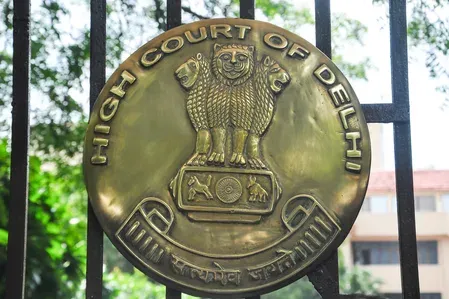
The Delhi High Court has set aside directions issued by a trial court ordering a departmental enquiry and monitoring disciplinary proceedings against police officials over an alleged delay in investigating a POCSO case, ruling that the court below had exceeded its jurisdiction after disposing of an anticipatory bail plea. The order was passed by a single-judge bench of Justice Saurabh Banerjee.
Background of the Case
The matter stems from an FIR registered at Chhawla police station in June 2019 under Section 363 IPC after a minor girl went missing. Following the victim's recovery and recording of her statements, offences under Sections 328 and 376 IPC and Section 4 of the POCSO Act were added to the case.
During the hearing of an anticipatory bail plea filed by one of the co-accused, the Additional Sessions Judge (ASJ) sought an explanation for the delay in completing the investigation and directed previous investigating officers and Station House Officers to appear personally before the court. The trial court subsequently ordered a departmental enquiry against Inspector Aishvir Singh, Inspector Gyanender Rana, and other police officials, while also seeking explanations from senior officers including DCPs and ACPs for alleged supervisory lapses.
High Court's Key Finding: 'Functus Officio'
Justice Banerjee, while allowing petitions filed by Inspector Aishvir Singh and former SHO Gyanender Rana, held that the ASJ had become 'functus officio' — meaning divested of authority — once the anticipatory bail application was decided. The court ruled that the ASJ could not have continued to summon police officials, seek status reports, or supervise disciplinary proceedings thereafter.
'The court, under no circumstances, is to spread its wings far beyond the reach by leaning towards something which is not within its purview while adjudicating an application for grant of bail,' the Delhi High Court stated in its order.
Arguments Before the High Court
Senior advocates Dayan Krishnan and Gautam Narayan, appearing for the petitioners, argued that the trial court's actions amounted to judicial overreach and violated principles of natural justice, as adverse remarks were passed without granting the accused officers an opportunity of hearing. Delhi Police also supported the petitioners' stand, submitting that the trial court could not have monitored or directed disciplinary proceedings after disposal of the bail application.
The High Court agreed, holding that once anticipatory bail proceedings stood concluded, 'there was nothing surviving/alive and/or pending before him (the ASJ) for whatever reason(s).' The court found that directing and following up on a departmental enquiry, and passing adverse remarks 'without issuing any notice(s)' calling for a response from the officers, was 'completely unwarranted and impermissible.'
Caution Against Adverse Remarks on Officers
The Delhi High Court referred to several Supreme Court rulings cautioning courts against making scathing remarks against investigating officers without necessity or without hearing them. Justice Banerjee noted that criminal courts should avoid 'unsavoury criticism' of investigating officers and must keep in mind the practical realities faced by police during investigations.
The court further observed that adverse remarks in judicial orders could have 'lasting consequences' on the careers and reputations of public servants. While acknowledging the trial court's concern over the delay in investigation, the High Court said the 'means and manner' adopted by the ASJ were beyond the scope of jurisdiction in a bail matter.
Order and Directions
Justice Banerjee set aside the impugned order and all consequential proceedings and directions, and expunged any adverse remarks recorded against the officers. Notably, the judge also directed that a copy of the judgment be circulated to all district judges in Delhi for onward communication to trial courts, so that they proceed 'keeping in mind the purport and meaning of an application for grant of (anticipatory) bail.' This directive signals the High Court's intent to prevent similar jurisdictional overreach in future bail proceedings.
Point of View
Yet its application in this context required High Court intervention, suggesting the boundary is not always respected in practice. The directive to circulate the judgment to all Delhi district judges is a rare administrative corrective, signalling institutional concern. The deeper tension — between legitimate judicial concern over investigative delays in sensitive cases like POCSO and the procedural limits of bail jurisdiction — remains unresolved and will likely surface again.
NationPress
21 Sept 2026
Frequently Asked Questions
Why did the Delhi High Court set aside the trial court's order against the police officers?
The Delhi High Court ruled that the trial court had exceeded its jurisdiction by ordering a departmental enquiry and monitoring disciplinary proceedings after it had already disposed of the anticipatory bail application. Once the bail matter was concluded, the court was 'functus officio' and had no authority to continue summoning officers or passing adverse remarks.
What is the 'functus officio' principle applied in this case?
'Functus officio' is a legal doctrine meaning a court or authority has exhausted its power over a matter once it has delivered its decision. In this case, the Delhi High Court held that after the ASJ decided the anticipatory bail plea, it had no remaining jurisdiction to issue further directions related to the investigation or disciplinary proceedings.
What was the original POCSO case about?
The case arose from an FIR registered at Chhawla police station in June 2019 after a minor girl went missing. After her recovery and recording of statements, offences under Sections 328 and 376 IPC and Section 4 of the POCSO Act were added, indicating allegations of sexual assault.
Who were the police officers who petitioned the Delhi High Court?
Inspector Aishvir Singh and former SHO Gyanender Rana filed petitions before the Delhi High Court challenging the trial court's directions. Senior advocates Dayan Krishnan and Gautam Narayan represented the petitioners.
What broader impact will this judgment have on Delhi's trial courts?
Justice Saurabh Banerjee directed that a copy of the judgment be circulated to all district judges in Delhi for communication to trial courts. This is intended to ensure that courts handling anticipatory bail applications do not overstep their jurisdiction by issuing supervisory or disciplinary directions against police officials.