Should the Criminal Justice System Be Used to Settle Personal Scores? Delhi HC Weighs In
Synopsis
In a significant ruling, the Delhi High Court has addressed the misuse of the criminal justice system for personal disputes. The court emphasized that exaggerated allegations do not belong in the legal framework, urging that the system should not be weaponized for settling scores.
Key Takeaways
The Delhi High Court condemns exaggerated allegations in criminal cases.
The court emphasizes using the criminal justice system responsibly.
Filing inflated claims can lead to serious legal repercussions.
Personal disputes should be settled outside the courtroom.
Maintaining judicial integrity is crucial for justice.
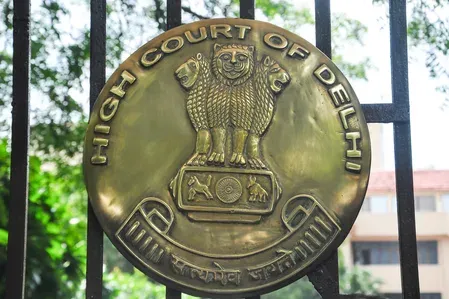
New Delhi, Dec 9 (NationPress) The Delhi High Court has condemned the rising phenomenon of filing criminal cases based on “exaggerated allegations” originating from personal or neighborhood conflicts, asserting that the criminal justice system should not be exploited as a mechanism for settling personal disputes.
A single-judge Bench headed by Justice Amit Mahajan made these remarks while dismissing an FIR lodged in 2016 under Sections 323, 341, 354, and 509 of the IPC and Section 8 of the POCSO Act against two neighbors, after both parties acknowledged that the situation arose from a misunderstanding and previous animosity.
The FIR was filed by a woman who claimed that the accused had inappropriately touched her and assaulted her aunt during a confrontation near their residences.
In its ruling, the Delhi High Court observed that the complainant, who appeared before the court, “candidly admitted” that the allegations were inflated and made under “ill-advice” at the time of the incident.
She expressed that she had no further grievances and did not wish to continue with the case.
The petitioners also acknowledged that they had filed a counter-FIR as a “counterblast”, which also contained exaggerated claims arising from the same neighborhood dispute.
Labeling the practice of filing FIRs with inflated accusations a “strongly deprecated” trend, the Delhi High Court remarked: “The criminal law machinery was invoked with more passion than prudence. This Court finds it necessary to emphasize that the criminal justice system cannot be wielded as a tool for personal vendettas. Submitting FIRs with exaggerated claims, particularly invoking serious sections without a solid foundation, not only undermines the essence of criminal law but also results in prolonged hostility, unnecessary litigation, and a drain on judicial resources.”
Justice Mahajan reiterated that offenses like those under Section 354 IPC or Section 8 of the POCSO Act are “heinous in nature” and usually cannot be dismissed based on compromise.
Considering the admitted exaggerations, the complainant's age, the lack of severe allegations, and the dim prospect of conviction, the Delhi High Court concluded that pursuing the prosecution would constitute “sheer abuse of the process of Court” and serve no beneficial purpose, particularly as both parties had decided to “live peacefully” moving forward.
Utilizing its inherent powers under Section 528 of the Bhartiya Nagarik Suraksha Sanhita (BNSS), the Delhi High Court annulled the FIR and all related proceedings.
“No useful purpose would be served by maintaining the dispute,” it declared, adding that continuing the proceedings would only exacerbate ill will between the parties and cause undue distress, especially since they have now settled their differences. [I]n light of the above, FIR No. 763/2016 and all related proceedings are quashed,” it stated.
Point of View
It is imperative to note that the Delhi High Court's ruling sheds light on an alarming trend that threatens the integrity of our justice system. While personal disputes are common, weaponizing the law for personal vengeance undermines the foundations of justice. We must advocate for a legal system that fosters resolution rather than perpetuating conflict.
NationPress
22 Sept 2026
Frequently Asked Questions
What led to the Delhi High Court's ruling?
The ruling was prompted by a case involving exaggerated allegations stemming from a neighborhood dispute, where both parties acknowledged misunderstandings.
What are the implications of this ruling?
The ruling serves as a warning against the misuse of the criminal justice system for personal vendettas, emphasizing the importance of truth in legal claims.
Can serious allegations be quashed by compromise?
Typically, serious allegations under IPC or POCSO Act cannot be dismissed simply by compromise, as they are considered heinous offenses.
How does this ruling affect future cases?
This ruling may discourage individuals from filing inflated claims and reinforce the need for genuine grievances to be addressed in court.
What does the Delhi High Court suggest for personal disputes?
The court suggests that personal disputes should be resolved amicably instead of resorting to the criminal justice system.