UNSC reform urgent for legitimacy and effectiveness, says Guterres at UNGA
Synopsis
In what was his final address to the UN General Assembly, Secretary-General Antonio Guterres made an unusually forceful call for Security Council reform — singling out Africa's exclusion from permanent membership as 'unjust and indefensible.' With the Council deadlocked on multiple global crises, the speech signals growing pressure on a reform process that has stalled for decades.
Key Takeaways
UN Secretary-General Antonio Guterres called for Security Council reform at the UNGA high-level session on 22 September .
Guterres described Africa's absence from permanent Council membership as 'unjust and indefensible' and said 'this must change.' This was Guterres' last speech to the high-level meeting of the General Assembly .
General Assembly President Khalilur Rahman pledged support for Intergovernmental Negotiations to make the Council more representative.
Any reform requires amending the UN Charter and ratification by all five permanent members , each holding veto power.
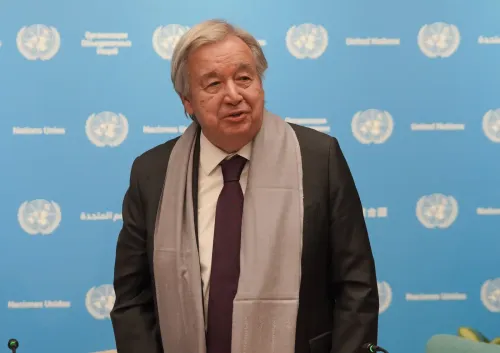
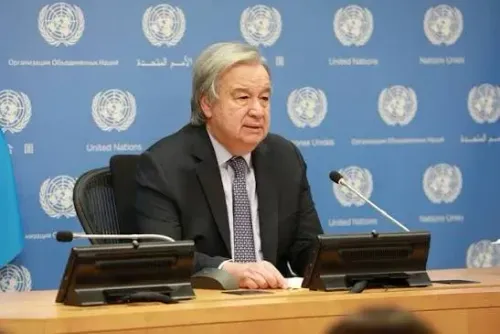
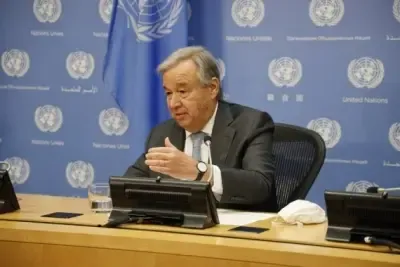
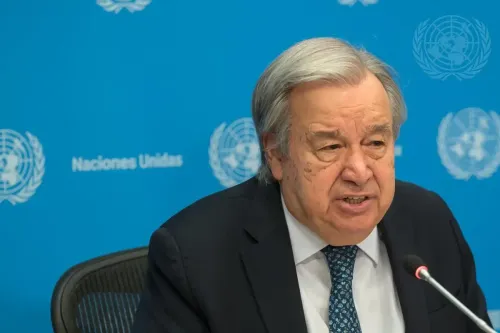
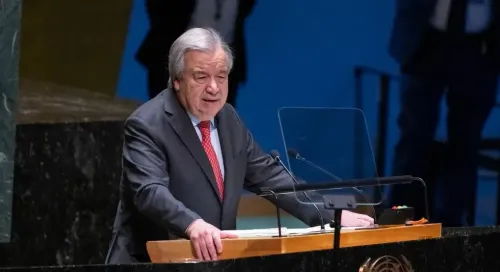
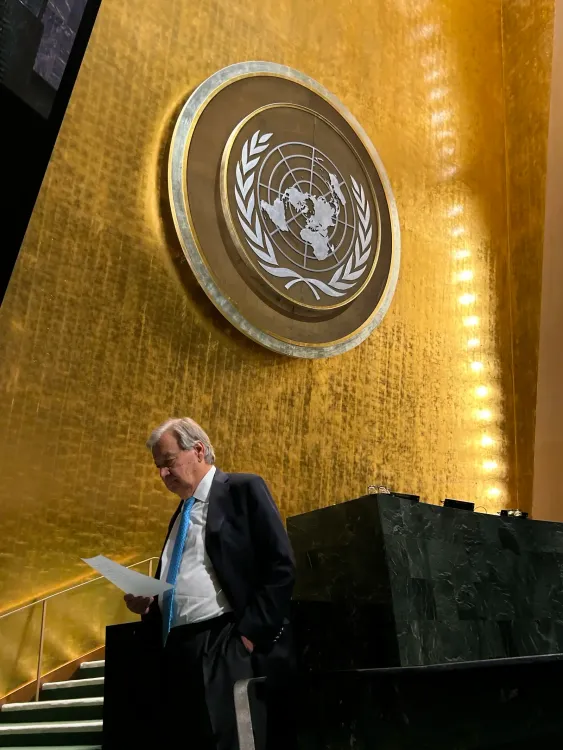
United Nations Secretary-General Antonio Guterres on Tuesday, 22 September called for urgent reform of the UN Security Council, arguing it must be restructured to reflect the realities of the modern world and meet today's challenges with 'legitimacy and effectiveness'. Speaking at the high-level session of the UN General Assembly in New York, Guterres delivered what was his final address to the gathering in his current role.
The Case for Reform
Guterres reminded world leaders that the Security Council was conceived in the immediate aftermath of World War II — a fundamentally different global order. 'The Security Council was designed in the aftermath of World War II. But the world has fundamentally changed since then,' he told the assembled heads of state and government. He stressed that this transformation 'is far from reflected in the Security Council,' underlining a structural mismatch that, in his view, undermines the body's credibility.
Africa's Exclusion Called 'Unjust and Indefensible'
Guterres drew loud applause when he turned to the most glaring gap in the Council's composition — the absence of Africa from permanent membership. 'Today, Africa still has no permanent representation on the Council. A 21st century Security Council without permanent African seats is unjust and indefensible,' he said, calling Africa's exclusion 'stunning.' He was unambiguous: 'This must change.' Notably, much of the Council's peacekeeping agenda is concentrated on African conflicts, making the continent's absence from permanent membership a long-standing structural contradiction.
General Assembly President Backs Intergovernmental Negotiations
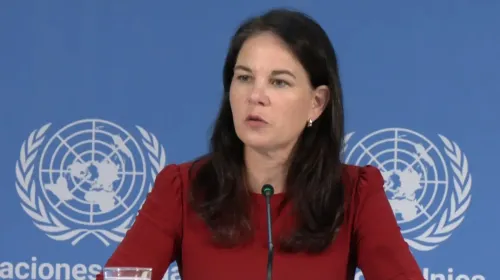
General Assembly President Khalilur Rahman, who addressed the session immediately after Guterres, pledged to support the body's reform process. He said he would 'support the General Assembly-led Intergovernmental Negotiations in its work to make the Council more representative, transparent and reflective of the geopolitical realities of our time.' Rahman also singled out Africa, saying: 'Ending Africa's underrepresentation, now, is a question of fairness, justice and, ultimately, the credibility of this Organisation.'
Why This Matters Now
Calls for Security Council reform are far from new — nations including India, Brazil, Germany, and Japan have long campaigned for permanent seats under the so-called G4 grouping. However, the push has gained renewed urgency in the context of the Council's deadlocked response to conflicts in Ukraine, Gaza, and Sudan — all of which have exposed the limitations of a veto-bound structure. Critics argue the current framework allows a handful of permanent members to stall collective action, eroding global trust in multilateralism.
What Comes Next
The path to reform remains steep. Any change to the Security Council's composition requires an amendment to the UN Charter, which itself demands approval from two-thirds of General Assembly members and ratification by all five permanent members — the United States, the United Kingdom, France, Russia, and China — each of whom holds veto power. The Intergovernmental Negotiations process, backed by General Assembly President Rahman, is expected to continue deliberations, though no timeline for a binding outcome has been set.
Point of View
Gaza, and Sudan has made the structural argument impossible to ignore. Yet the reform path is a diplomatic minefield: the five permanent members who would need to ratify any charter amendment are precisely those with the greatest incentive to block change. Africa's exclusion is the sharpest illustration of the problem, but the deeper contradiction is a 20th-century governance architecture being asked to manage 21st-century polycrises. Without a concrete roadmap backed by the P5, these calls risk remaining eloquent eulogies for a reform that never arrives.
NationPress
22 Sept 2026
Frequently Asked Questions
What did Guterres say about UN Security Council reform at UNGA?
Guterres called for the Security Council to be reformed so it reflects today's world with the 'legitimacy and effectiveness that today's challenges demand.' He described Africa's exclusion from permanent membership as 'stunning,' 'unjust and indefensible,' and said the situation must change.
Why does Africa not have a permanent seat on the UN Security Council?
The Security Council's permanent membership structure was established in 1945 after World War II and has not been changed since. Africa, despite being the focus of much of the Council's peacekeeping work, was not given a permanent seat at that time, and no reform has succeeded in adding new permanent members in the decades since.
What was significant about Guterres' speech at the 2026 UNGA?
It was Guterres' final address to the high-level meeting of the General Assembly, giving his call for Security Council reform added weight. The speech was met with applause, particularly when he addressed Africa's exclusion from permanent membership.
How can the UN Security Council be reformed?
Reforming the Security Council requires an amendment to the UN Charter, which must be approved by two-thirds of General Assembly members and then ratified by all five permanent members — the US, UK, France, Russia, and China. Each permanent member holds a veto, making reform extremely difficult.
What role will the General Assembly play in Security Council reform?
General Assembly President Khalilur Rahman said he would support the General Assembly-led Intergovernmental Negotiations process aimed at making the Council more representative, transparent, and reflective of current geopolitical realities. He also highlighted Africa's underrepresentation as a priority.