Heavy rain floods Hyderabad roads; CM Revanth Reddy puts officials on alert
Synopsis
A cyclonic storm in the Bay of Bengal drenched Greater Hyderabad on Tuesday evening, flooding roads near the IT corridor and triggering a state-level emergency response. Chief Minister Revanth Reddy personally issued directives to three Municipal Corporations, HYDRAA, and police to coordinate flood management — a sign of how seriously the city's administration is treating this weather event.
Key Takeaways
Heavy rain hit Greater Hyderabad on 22 September , recording 3.3 cm of rainfall driven by a Bay of Bengal cyclonic storm .
The Sheikhpet flyover was gridlocked after storm-water drains overflowed; HITEC City and Gachibowli commuters were severely affected.
HYDRAA logged complaints of fallen trees at 9 locations and water stagnation at 4 places ; Commissioner AV Ranganath was personally on the ground.
Chief Minister A Revanth Reddy directed commissioners of three Municipal Corporations , HYDRAA, and police to work in coordination and monitor continuously.
The Energy Department was instructed to prevent power outages; rescue teams are on standby with control rooms on round-the-clock alert.
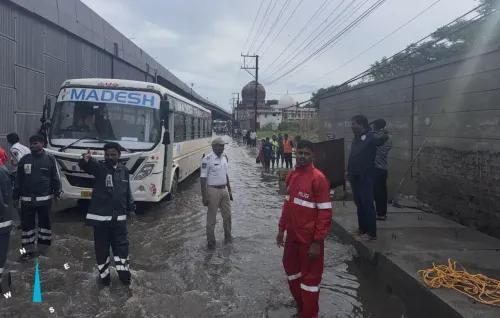
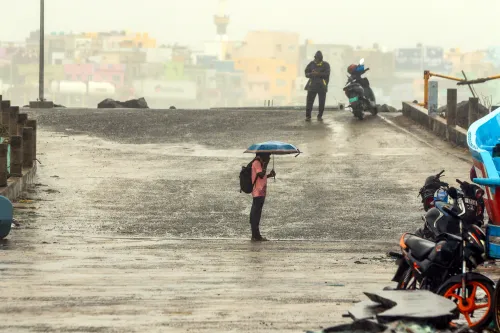
Heavy rain lashed parts of Greater Hyderabad in Telangana on Tuesday evening, 22 September, inundating roads, disrupting peak-hour traffic, and triggering a coordinated government response. The downpour, driven by the influence of a cyclonic storm in the Bay of Bengal, recorded 3.3 centimetres of rainfall and brought the city's emergency machinery into full mobilisation.
What Happened on the Ground
Several arterial stretches across the city were swamped by floodwaters. The Sheikhpet flyover witnessed a massive traffic jam after storm-water drains overflowed, trapping thousands of commuters — including IT professionals returning home from HITEC City and Gachibowli — in gridlock during evening peak hours.
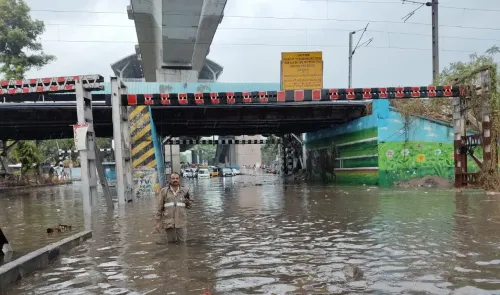
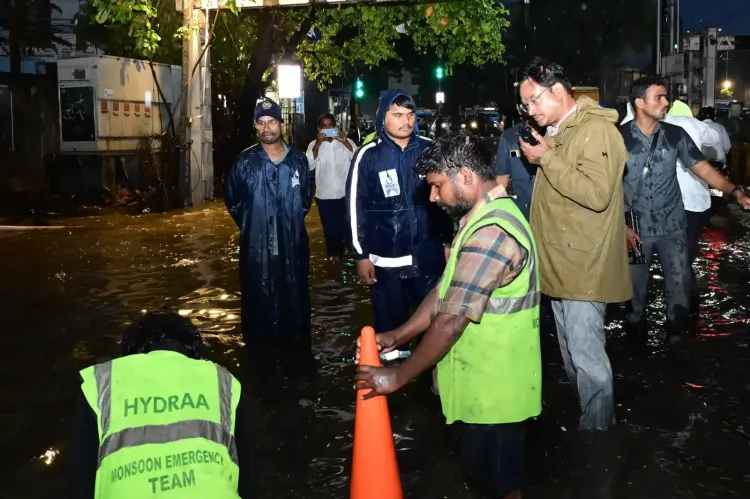
The Hyderabad Disaster Response and Asset Protection Agency (HYDRAA) went on high alert. The agency credited proactive silt removal from flood drains and culverts with preventing waterlogging in many areas. HYDRAA Commissioner AV Ranganath was personally on the ground, overseeing the removal of stagnant water from beneath the Secunderabad Clock Tower bridge using motorised pumps.
The HYDRAA control room logged complaints of fallen trees at nine locations and water stagnation at four places across the city.
Chief Minister's Directives
Chief Minister A Revanth Reddy directed the official machinery to remain on full alert. According to the Chief Minister's Office (CMO), he instructed the commissioners of the three Municipal Corporations in the Greater Hyderabad region, along with HYDRAA and police commissioners, to coordinate closely and continuously monitor the evolving situation.
Civic authorities were ordered to take immediate steps to prevent waterlogging on main roads, junctions, and residential colonies. The Chief Minister also asked that adequate personnel and machinery be promptly deployed in water-stagnant areas.
Key Instructions Issued
The Chief Minister directed the Energy Department to ensure uninterrupted power supply and avoid outages during the rain event. The Traffic Police wing was asked to take proactive measures to prevent congestion. Special attention was called for in low-lying areas and colonies prone to flooding.
Dedicated teams were instructed to clear obstructions in drains and storm-water channels. Rescue teams have been placed on standby for emergency response, and control rooms remain on round-the-clock vigil.
Context and Broader Impact
Hyderabad has been susceptible to flash flooding during the southwest monsoon, with its IT corridor — home to offices of major global technology firms — particularly vulnerable to traffic disruption when drainage infrastructure is overwhelmed. This comes amid an active cyclonic system in the Bay of Bengal, which meteorologists say is sustaining elevated rainfall across parts of Telangana.
Notably, HYDRAA's deployment reflects the city's upgraded disaster-response architecture, established after criticism of the administration's handling of previous flood events. Authorities have indicated that control rooms will remain operational as long as the weather system persists.
Point of View
Not just meteorological — the city's rapid IT-corridor expansion has outpaced drainage infrastructure, and every monsoon season exposes that gap. HYDRAA's visible deployment and the Chief Minister's personal directives signal political awareness of past criticism, but the real test is whether silt removal and pre-monsoon preparation actually reduce inundation year-on-year. The fact that 3.3 cm of rainfall was enough to jam the Sheikhpet flyover and overwhelm drains in HITEC City suggests the underlying drainage deficit remains unresolved. Until Hyderabad's storm-water network is upgraded to match its urbanisation density, these crisis responses will remain reactive rather than preventive.
NationPress
22 Sept 2026
Frequently Asked Questions
Why did Hyderabad flood on 22 September 2026?
Heavy rain driven by a cyclonic storm in the Bay of Bengal lashed Greater Hyderabad on the evening of 22 September, recording 3.3 cm of rainfall. Storm-water drains overflowed, inundating roads and causing severe traffic disruptions, particularly near the Sheikhpet flyover, HITEC City, and Gachibowli.
What is HYDRAA and what role did it play?
HYDRAA, the Hyderabad Disaster Response and Asset Protection Agency, is the city's dedicated disaster management body. On Tuesday, it went on alert, deployed staff for silt removal from drains, and managed stagnant water at multiple locations; Commissioner AV Ranganath was personally on the ground at the Secunderabad Clock Tower bridge.
What orders did CM Revanth Reddy issue during the Hyderabad rains?
Chief Minister A Revanth Reddy directed the commissioners of Hyderabad's three Municipal Corporations, HYDRAA, and police commissioners to coordinate and monitor the situation continuously. He also instructed the Energy Department to prevent power outages and asked Traffic Police to proactively manage congestion.
Which areas of Hyderabad were worst affected by the heavy rain?
The Sheikhpet flyover experienced the most severe traffic disruption due to storm-water drain overflow. Low-lying areas and IT-corridor zones around HITEC City and Gachibowli were among the hardest hit, with thousands of evening commuters caught in gridlock.
Is the flooding expected to continue in Hyderabad?
Authorities have kept control rooms on round-the-clock alert and rescue teams on standby, suggesting the weather system is expected to persist. The cyclonic storm in the Bay of Bengal continues to influence rainfall over Telangana, and officials have been instructed to remain on the ground until conditions normalise.