UN rights chief slams Pakistan's lethal crackdown, cites India's dialogue approach
Synopsis
At the UN Human Rights Council's 63rd session, High Commissioner Volker Türk delivered a rare double verdict on South Asia: Pakistan's authorities used 'excessive lethal force and arbitrary detention' to suppress protests, while India's recent student demonstrations showed that dialogue with youth leaders — not force — is the right response. The contrast has drawn sharp attention across the region.
Key Takeaways
UN High Commissioner Volker Türk accused Pakistan of using 'excessive lethal force and arbitrary detention' to suppress protests at the 63rd UN Human Rights Council session .
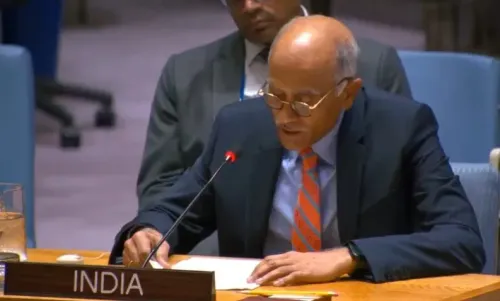
Türk praised India's response to recent student protests, calling dialogue with youth leaders the preferred approach over force.
Pakistan-occupied Kashmir (PoK) is the most documented flashpoint, with reports of hundreds of deaths since protests began in June 2026 .
The Joint Awami Action Committee (JAAC) was banned under anti-terrorism laws after protests over electricity prices and governance failures.
UN experts have separately criticised crackdowns on Baloch protesters, including the life sentence imposed on Dr Mahrang Baloch .
The Council session runs through 7 October ; further scrutiny of Pakistan's human rights record is anticipated.
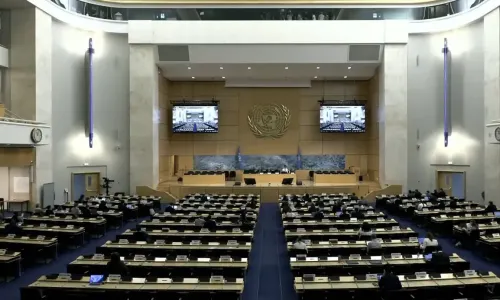
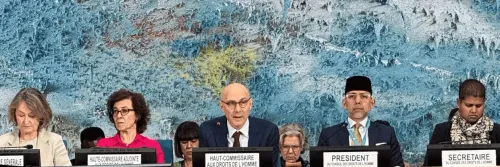
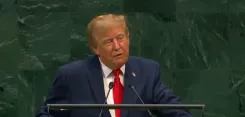
United Nations High Commissioner for Human Rights Volker Türk has publicly accused Pakistani authorities of deploying 'excessive lethal force and arbitrary detention' to crush protests, while holding up recent student demonstrations in India as a model for how governments should engage with dissent. The remarks were made during the 63rd session of the UN Human Rights Council, which began on 7 September and runs through 7 October.
What Türk Said
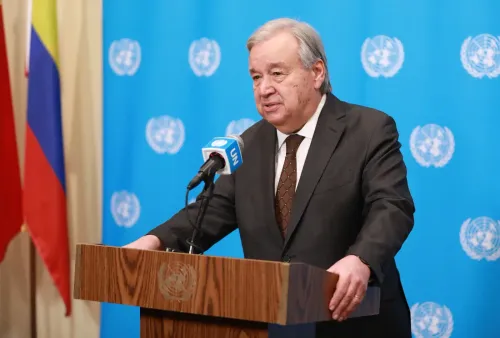
Addressing the Council, Türk drew a pointed contrast between the two South Asian neighbours. 'In Pakistan, the authorities have used excessive lethal force and arbitrary detention to quell protests,' he stated, before adding: 'The recent protests in India showed the best response is dialogue with youth leaders, not the excessive use of force.' The juxtaposition — two neighbouring countries, two markedly different official responses — quickly gained traction across global platforms.
The remarks did not constitute a standalone Council resolution, but their framing within a broader warning about the erosion of civic space has lent them considerable political weight in South Asia, according to reports.
Pakistan-Occupied Kashmir: The Year's Most Documented Flashpoint
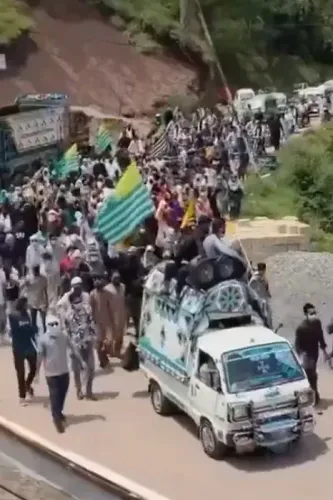
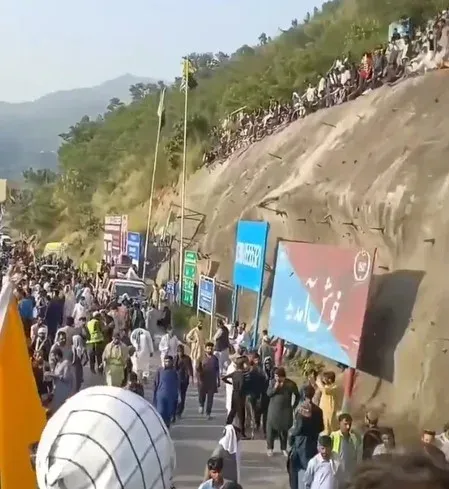
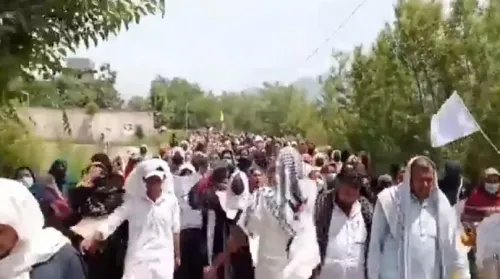
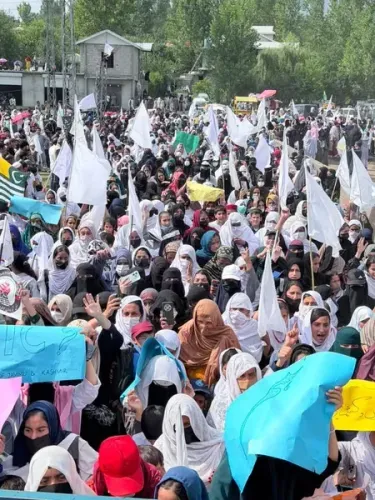
According to reports, Pakistan-occupied Kashmir (PoK) has emerged as the most extensively documented site of unrest in 2026. Beginning in early June, the Joint Awami Action Committee (JAAC) led protests over electricity prices, governance failures, and the contentious issue of 12 reserved seats in the region's so-called legislative assembly.
When negotiations collapsed, Pakistani authorities reportedly banned the JAAC under anti-terrorism laws, imposed communications blackouts, and deployed large police and paramilitary contingents. By 17 July, Türk's office had raised formal concerns over the situation ahead of phased elections in PoK, citing reports of hundreds of deaths since June — predominantly protesters, with some security personnel also among the casualties.
The UN human rights office called for 'prompt, thorough and impartial investigations' into every reported death, and warned that criminalising a civil-society body and restricting public assembly posed direct threats to fundamental freedoms.
A Wider Pattern Across Pakistan
Reports indicate the crackdown is not limited to PoK. UN experts have separately criticised the use of force and anti-terror legislation against Baloch protesters and human rights defenders, including the life sentence handed down to Dr Mahrang Baloch. Arbitrary detention, internet blackouts, and the listing of activists under restrictive schedules have reportedly been recurring features of the official response to dissent across multiple regions of Pakistan.
Notably, Türk's September statement does not cite a specific Pakistani city, protest group, or individual casualty figure — yet, according to reports, it 'compresses that wider picture into a single charge: lethal force and arbitrary detention used to put protests down.'
Significance for South Asia
The explicit praise for India's approach marks an unusual moment at the Human Rights Council, where both countries are typically scrutinised rather than commended. The contrast is especially significant given the Council's traditional reluctance to single out member states in session remarks without a full resolution process. Observers note that the formulation underscores a growing international focus on how democracies — and their neighbours — manage civil unrest in an era of shrinking civic space.
With the Council's session continuing through 7 October, further scrutiny of Pakistan's internal security posture and its handling of political opposition is expected in the weeks ahead.
Point of View
He has done something multilateral bodies rarely do: issue an implicit commendation and a sharp rebuke simultaneously, without a resolution to hide behind. The deeper issue is Pakistan's use of anti-terror statutes against civil society — a legal architecture that has now drawn UN censure across PoK, Balochistan, and beyond. For India, the praise is diplomatically useful, but it reflects a specific, bounded episode of protest management rather than a sweeping endorsement of its broader human rights record. The Council's silence on standalone resolutions should not obscure what Türk's remarks actually signal: that the international community is watching, and the framing of 'lethal force versus dialogue' is the lens through which Pakistan's internal crackdowns will increasingly be judged.
NationPress
22 Sept 2026
Frequently Asked Questions
What did UN human rights chief Volker Türk say about Pakistan?
Türk told the 63rd UN Human Rights Council session that Pakistani authorities had used 'excessive lethal force and arbitrary detention' to suppress protests. He did not specify a city or casualty figure, but the remarks are understood to encompass unrest in PoK, Balochistan, and other regions.
Why did Türk praise India at the UN Human Rights Council?
Türk cited recent student demonstrations in India as an example of the right approach to civil unrest, stating that 'the best response is dialogue with youth leaders, not the excessive use of force.' The comment was framed as a direct contrast to Pakistan's handling of protests.
What sparked the protests in Pakistan-occupied Kashmir?
The Joint Awami Action Committee (JAAC) led protests beginning in early June 2026, demanding action on electricity prices, governance failures, and 12 reserved seats in the PoK legislative assembly. After talks failed, Pakistani authorities banned the JAAC under anti-terrorism laws and deployed security forces.
Who is Dr Mahrang Baloch and why has the UN raised concerns?
Dr Mahrang Baloch is a prominent Baloch human rights defender who was sentenced to life imprisonment. UN experts have separately criticised her sentencing and the broader use of force and anti-terror laws against Baloch protesters and activists across Pakistan.
Does Türk's statement amount to a formal UN resolution against Pakistan?
No — the remarks were made during session and do not constitute a standalone Council resolution. However, their inclusion within a formal address to the Human Rights Council and the explicit contrast drawn with India has given them significant political weight in the region.