Three rusted mines found, destroyed in J&K's Poonch near LoC
Synopsis
Three rusted landmines unearthed near a border village in J&K's Poonch — safely destroyed by the Army — underscore a quietly persistent crisis: drift mines displaced by monsoon rains that turn civilian farmland and walking tracks into unmarked kill zones decades after deployment.
Key Takeaways
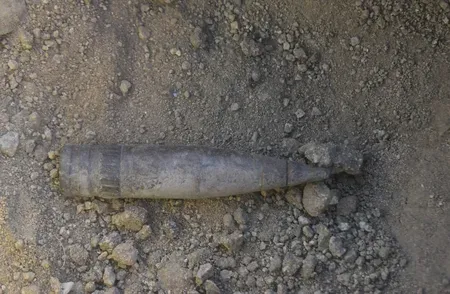
Three rusted landmines were detected and safely destroyed in Poonch district, J&K , on 22 September 2026 .
The mines were found by Army personnel in the Phagwari Gali area near border village Dharana Basoni in the Mendhar sector of the LoC.
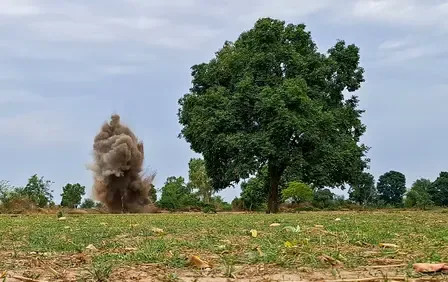
The Army's bomb disposal team neutralised all three devices without casualties or damage.
Heavy monsoon rains, floods, and landslides routinely dislodge LoC mines into civilian farmland and walking tracks — a phenomenon known as 'drift mines' .
Similar incidents in Uri sector and Poonch in July and August 2026 resulted in injuries to soldiers during patrols.
Large tracts of fertile land near the LoC lie barren as communities avoid entering potentially mined areas.
Three rusted landmines were detected and safely neutralised in Poonch district, Jammu and Kashmir, on Tuesday, 22 September 2026, officials said. The find highlights the persistent threat of displaced ordnance along the Line of Control (LoC) in one of India's most sensitive border zones.
How the Mines Were Found
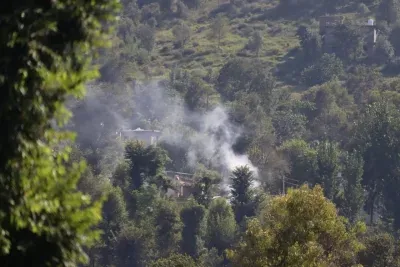
Army personnel discovered the explosive devices while carrying out routine work in the Phagwari Gali area, near the border village of Dharana Basoni in the Mendhar sector of the LoC. The Army's bomb disposal team was promptly deployed and safely destroyed all three mines without causing any casualties or collateral damage, according to officials.
Why Mines Drift From Their Original Positions
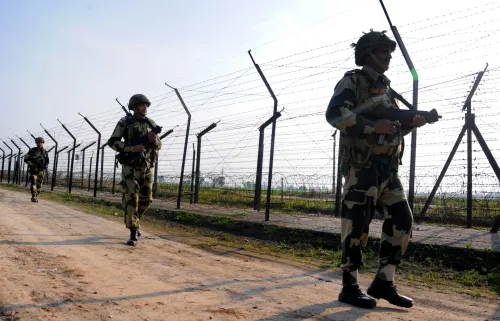
The Indian Army deploys landmines along the LoC as part of a counter-infiltration strategy to plug potential militant crossing routes. However, J&K's extreme topography — combined with heavy monsoon rains, flash floods, earthquakes, and landslides — regularly dislodges these devices from their original positions.
These displaced explosives, often called 'drift mines', migrate down mountain slopes into civilian farmlands, grazing pastures, and walking tracks, converting unmarked terrain into active hazard zones. Notably, similar incidents occurred in the Uri sector and Poonch district in July and August 2026, when shifted mines caused injuries to soldiers on routine patrol.
Who Bears the Burden
While the anti-infiltration obstacle system was designed to deter cross-border militants, historical trends indicate that the primary victims are local civilians and security forces. Local porters, guides, and children are considered especially vulnerable. Younger generations living near the LoC are often unaware of the precise locations of minefields and have, in some documented cases, mistaken exposed ordnance for discarded objects.
Vast stretches of fertile agricultural land close to the LoC remain uncultivated because entering them risks death or permanent disability, compounding the economic hardship of border communities.
The Broader Humanitarian Challenge
The landmine menace along the LoC is widely regarded as a critical humanitarian, economic, and security challenge. Troops regularly encounter the risk of accidental detonation during area-domination patrols and defusing operations. The combination of natural forces and decades-old deployments means the problem is unlikely to resolve without sustained mine-clearance operations and community awareness programmes.
Tuesday's safe disposal in Poonch is a reminder that ordnance management along the LoC remains an active, ongoing task for Indian security forces.
Point of View
Seasonal labourers rerouting livelihoods around invisible hazards, and soldiers absorbing injury risk during what should be routine patrols. The drift-mine problem is structurally predictable — monsoon season will dislodge more ordnance next year, as it did this year — yet mine-clearance timelines and community-awareness resourcing remain largely opaque. The humanitarian case for an accelerated, transparent demining programme along the LoC has never been stronger, but it tends to get buried under the broader security conversation.
NationPress
22 Sept 2026
Frequently Asked Questions
Where exactly were the landmines found in Poonch?
The three rusted landmines were found in the Phagwari Gali area near the border village of Dharana Basoni in the Mendhar sector of the Line of Control (LoC) in Poonch district, Jammu and Kashmir. Army personnel discovered them while carrying out routine work in the area on 22 September 2026.
Were there any casualties from the landmines found in Poonch?
No casualties or damage were reported. The Army's bomb disposal team safely destroyed all three mines on site. Officials confirmed the operation was completed without incident.
Why are landmines a recurring problem near the LoC in J&K?
Landmines are deployed along the LoC as part of India's counter-infiltration strategy, but J&K's rugged terrain and heavy monsoon rains, flash floods, earthquakes, and landslides regularly dislodge them from their original positions. These displaced 'drift mines' migrate into civilian farmlands, grazing areas, and walking tracks, creating unmarked hazards for local communities and patrolling soldiers alike.
Who is most at risk from LoC landmines in J&K?
Local civilians — particularly children, porters, and guides — are among the most vulnerable, according to officials and ongoing incident records. Security forces conducting area-domination patrols also face the risk of accidental detonation. Younger border-community residents are often unaware of minefield locations, increasing their exposure to the hazard.
Have there been similar landmine incidents in J&K recently?
Yes. Multiple soldiers were injured due to shifted mines in the Uri sector and Poonch district in July and August 2026, respectively. These incidents are part of a recurring pattern linked to the monsoon season dislodging ordnance along the LoC.