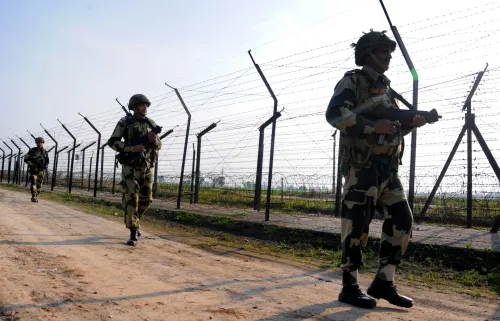
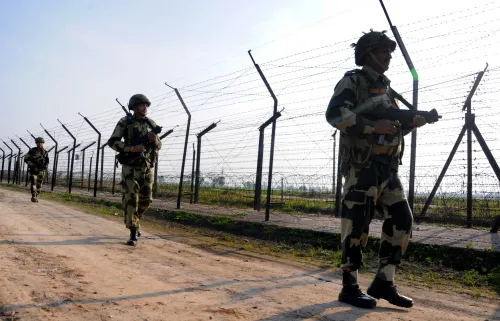
Army destroys landmine along LoC in J&K's Poonch district, 8 October

Synopsis
Just days after neutralising two landmines at Basooni Top, the Indian Army has destroyed another along the LoC in Poonch's Mendhar subdivision — a reminder that the anti-infiltration minefield that guards J&K's border is also a recurring hazard to the civilians who live in its shadow.
Key Takeaways
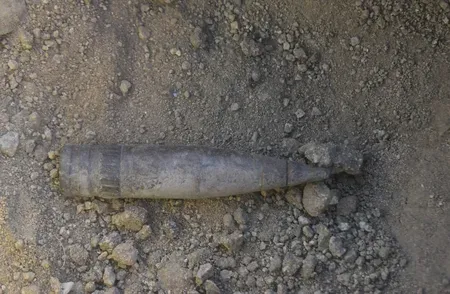
The Indian Army detected and destroyed a landmine in the Balakote forward area , Mendhar subdivision , Poonch on 8 October .
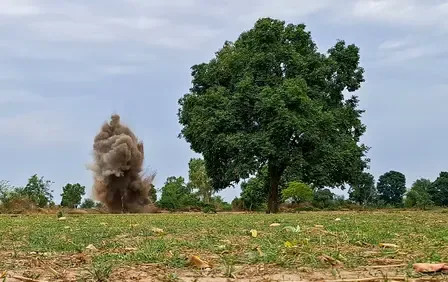
A bomb disposal team carried out a controlled destruction; no casualties were reported.
On 5 October , two landmines were similarly neutralised near the border fence at Basooni Top in the same sector.
Landmines form part of an anti-infiltration obstacle system along the LoC but are frequently displaced by heavy rain and flooding.
Civilians — particularly farmers and children grazing livestock — are advised never to touch unfamiliar metallic objects and to report them to the nearest security post.
The security grid has stepped up drone surveillance and forest patrolling across the region.
The Indian Army on Thursday, 8 October detected and safely destroyed a landmine along the Line of Control (LoC) in Poonch district, Jammu and Kashmir, in what officials described as part of routine forward-area patrolling. The device was neutralised by a bomb disposal team in the Balakote forward area of the Mendhar subdivision without any casualties or collateral damage.
How the Landmine Was Found and Neutralised
Army troops discovered the explosive during a scheduled patrol sweep of the Balakote forward area. A specialised bomb disposal unit was immediately deployed to the site and carried out a controlled destruction of the device. Officials confirmed no security personnel or civilians were harmed in the operation.
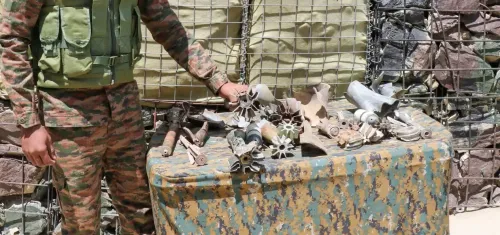
This is not an isolated find. On 5 October, just three days earlier, two landmines were detected near the border fence at Basooni Top in the same Mendhar sector and destroyed in a controlled explosion by a military bomb disposal team.
Why Landmines Get Displaced Along the LoC
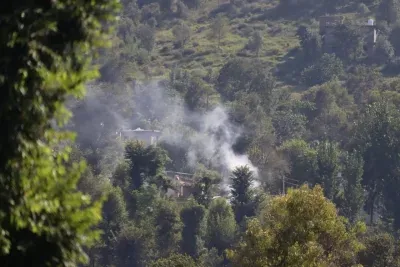
Forward areas along the LoC are deliberately seeded with landmines as part of an anti-infiltration obstacle system designed to check cross-border movement. However, heavy rain and seasonal flooding frequently dislodge these devices from their original positions, sending them downstream into patrol routes, agricultural fields, and grazing grounds. Mountainous forest fires can also trigger accidental detonations of old or displaced mines.
Officials noted that the problem intensifies during and after the monsoon season, when water flows are strong enough to carry explosives significant distances from their planted locations.
Hazard to Civilians and Safety Advisories
Displaced landmines pose a serious hazard to border-area residents — particularly farmers working the land and children who graze livestock in forested areas near the LoC. Authorities have reiterated strict advisories asking locals never to touch, approach, or attempt to move any washed-up or unidentified metallic objects.
Any suspicious discovery must be reported immediately to the nearest security checkpoint or police outpost, officials said, so that a trained squad can handle recovery safely. Public awareness initiatives, including a recent Police Community Partnership Group (PCPG) meeting at the Zero Line in Balakote, have been explicitly instructing villagers on identifying and reporting suspicious objects.
Security Grid on High Alert
The security grid in the region remains on heightened alert, with enhanced drone surveillance and intensified forest patrolling deployed to address both the threat of shifting explosives and the broader risk of cross-border infiltration. Authorities continue to urge residents to cooperate with security forces and promptly flag any unusual finds along the border belt.
Point of View
But monsoon displacement turns that architecture into a civilian hazard — one that has claimed lives in previous years. The Army's swift bomb disposal response is commendable, but the frequency of finds raises questions about whether the current mine-mapping and post-monsoon sweep protocols are sufficiently resourced. Public awareness campaigns at the village level are necessary but not sufficient when farming and grazing routinely bring civilians within range of displaced explosives.
NationPress
8 Oct 2026
Frequently Asked Questions
Where was the landmine detected by the Army on 8 October?
The landmine was detected during routine patrolling in the Balakote forward area of the Mendhar subdivision in Poonch district, Jammu and Kashmir. A bomb disposal team subsequently destroyed it safely without any casualties.
Why are landmines found along the LoC in Jammu and Kashmir?
Forward areas along the Line of Control are planted with landmines as part of an anti-infiltration obstacle system to deter cross-border movement. Heavy rain and seasonal flooding frequently displace these devices from their original positions, causing them to drift into patrol routes and civilian areas.
Were any civilians or soldiers injured in the incident?
No. The bomb disposal team neutralised the landmine in a controlled explosion without causing any casualties or collateral damage, according to officials.
Is this a recent pattern in the Mendhar sector?
Yes. On 5 October, just three days before this incident, two landmines were detected near the border fence at Basooni Top in the same Mendhar sector and destroyed in a controlled explosion by a military bomb disposal team.
What should locals do if they spot a suspicious object near the LoC?
Authorities strongly advise residents never to touch, step near, or attempt to move any unidentified or washed-up metallic object. Any suspicious find must be reported immediately to the nearest security checkpoint or police outpost so a trained squad can handle it safely.