Unemployed Chinese youth launch solo AI startups amid brutal job market

Synopsis
Over 7 million one-person AI companies launched in China last year — up 42% — as jobless youth use artificial intelligence to go it alone. But more than half earn under $1,000 a month, exposing the gap between a tech-enabled entrepreneurship wave and genuine economic opportunity, even as AI adoption across Chinese industry nearly quintupled in a single year.
Key Takeaways
More than 7 million solo companies were established in China last year, up approximately 42% from 2024 .
Founders are using AI for coding, marketing, customer service, and administration to run businesses without staff.
Over half of these solo operators reportedly earn under $1,000 a month .
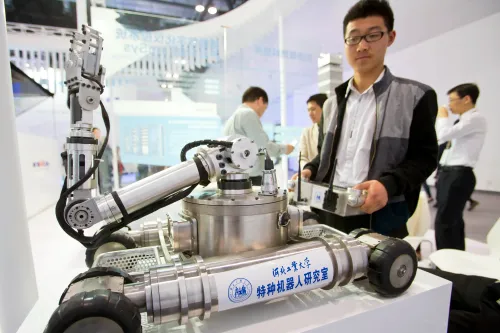
AI adoption among Chinese industrial enterprises surged from under 10% in 2024 to nearly 50% last year, according to IDC .
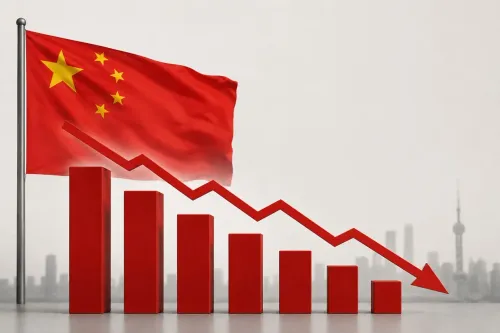
Youth unemployment among 16–24-year-olds not in education is reportedly approaching three times China's national urban unemployment rate of around 5% .
Analysts warn widespread automation could further reduce stable employment opportunities for younger Chinese workers.
Millions of unemployed young people in China are turning to solo AI startups as a lifeline, with more than seven million new one-person companies established last year — a rise of roughly 42% compared to 2024. The surge, documented in a Wall Street Journal report, reflects how artificial intelligence is lowering the barrier to building and running a business alone, even as China's youth unemployment crisis deepens.
The Solo-Startup Wave
Founders of these micro-ventures are leaning heavily on AI tools for coding, marketing, customer service, and day-to-day administrative tasks — functions that would previously have required a small team. The model is appealing to workers disillusioned by China's high-pressure corporate culture, often described as the '996' grind.
Yet the financial reality is sobering. More than half of these solo operators reportedly earn under $1,000 a month, according to the report. 'Fed up with the rat race, people are trying their luck by starting solo AI companies — but they face a brutal market,' the Wall Street Journal noted.
AI Reshaping China's Workplace at Unprecedented Speed
The solo-startup boom sits against a broader backdrop of rapid AI adoption across Chinese industry. According to market intelligence firm IDC, fewer than 10% of Chinese industrial enterprises were deploying AI models and agents in 2024. That figure surged to nearly half of all industrial businesses last year — a pace described as striking even by global standards.
As Beijing accelerates efforts to integrate AI into virtually every sector, employees across fields from software development to delivery services are reportedly feeling the pressure. Productivity gains are real, but so are displacement fears, particularly among workers in roles susceptible to automation.
Youth Unemployment: A Worsening Fault Line
The trend is landing at an especially vulnerable moment for Chinese youth. While China's overall urban unemployment rate stands at approximately 5%, joblessness among people aged 16 to 24 who are not in education remains significantly higher — reportedly approaching three times the national average.
Analysts warn that widespread automation could make it even harder for younger workers to secure stable employment going forward. This is the structural contradiction at the heart of China's AI moment: the same technology enabling a new generation of solo entrepreneurs is accelerating displacement for the broader youth workforce.
What the Trend Signals
The rise of AI-powered solo businesses in China mirrors patterns emerging in other major economies, but the scale and speed in China is notable. The combination of a large, educated youth cohort, readily available AI tools, and a sluggish formal job market is producing a new kind of informal tech entrepreneurship.
Whether these solo ventures can mature into sustainable businesses — or remain a coping mechanism for structural unemployment — will depend on market conditions, regulatory policy, and whether AI tools continue to democratise competitive business capabilities. Analysts caution that without a recovery in formal hiring, the solo-startup model risks becoming a pressure valve rather than a genuine economic transformation.
Point of View
000 a month tells a different story — one of a labour market so hostile to young workers that self-employment via AI tools has become the default fallback. What is striking is the compounding risk: the same AI wave enabling these micro-businesses is accelerating displacement in the formal economy, potentially ensuring that the pipeline of new solo founders keeps refilling. Beijing faces a genuine policy dilemma — AI adoption is a stated national priority, yet its fastest-moving consequence may be a generation of precarious, underearning entrepreneurs rather than stable middle-class employment.
NationPress
22 Sept 2026
Frequently Asked Questions
Why are unemployed young Chinese people launching solo AI startups?
Unemployed young people in China are using readily available AI tools for coding, marketing, and operations to launch one-person companies as an alternative to a difficult formal job market. The Wall Street Journal reported that disillusionment with corporate culture and high youth unemployment are key drivers.
How many solo companies were launched in China last year?
More than seven million new solo companies were established in China last year, representing an increase of roughly 42% compared to 2024. This figure reflects the growing accessibility of AI tools that allow individuals to run businesses without employees.
How much are these solo AI startup founders earning?
More than half of these solo founders reportedly earn under $1,000 a month, according to the Wall Street Journal report. The high failure rate and intense competition make financial sustainability a significant challenge for most.
What is the youth unemployment situation in China?
China's overall urban unemployment rate stands at approximately 5%, but joblessness among people aged 16 to 24 who are not in education is reportedly approaching three times that national average. Analysts warn that accelerating AI-driven automation could further worsen employment prospects for younger workers.
How rapidly is AI being adopted in Chinese industry?
According to market intelligence firm IDC, fewer than 10% of Chinese industrial enterprises were using AI models and agents in 2024, a figure that surged to nearly half of all industrial businesses last year. The pace of adoption is among the fastest recorded globally.