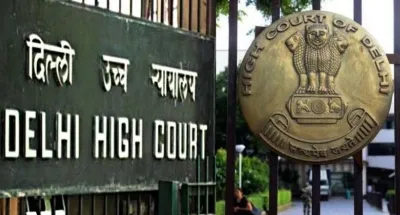
Can an EdTech platform display public rankings of universities without disparaging them? Delhi HC rules
Synopsis
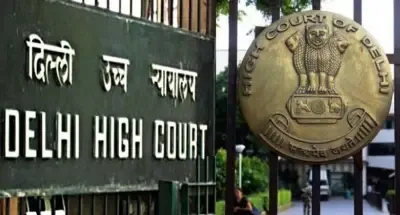
In a landmark decision, the Delhi High Court has ruled that an EdTech platform can use publicly available university rankings, provided they are not presented in a disparaging manner. This decision favors student access to vital information and emphasizes the importance of transparency in education.
Key Takeaways
The Delhi High Court allows the use of publicly available university rankings.
Information must be presented without disparagement.
The ruling promotes access to essential educational data for students.
Universities did not challenge the legitimacy of the rankings.
Communication between parties indicated prior discussions on collaborations.
New Delhi, Feb 20 (NationPress) The Delhi High Court has overturned previous interim injunction orders that prohibited an EdTech platform from showcasing information about two universities on its site, ruling that publicly available data can be utilized as long as it is not presented in a disparaging way.
In a decision favoring GetMyUni Education Services Private Limited, a single-judge Bench led by Justice Manoj Kumar Ohri nullified prior orders from a Dwarka court that had barred the company from using the names and details of Mangalayatan University and Usha Martin University on its platform, instructing the removal of such content while legal proceedings were ongoing.
The Delhi High Court had suspended the enforcement of these contested orders on May 22, 2023.
The appellant argued that it functions as an educational technology startup, offering an online platform that delivers information about universities and colleges to students. They emphasized that they displayed only snippets from publicly accessible data, including rankings from the National Institutional Ranking Framework (NIRF) and well-known publications like ‘The Week’ and ‘India Today’. The appellant contended that the information was shared in the public interest, without any misrepresentation or claim of affiliation with the universities, and that the trial court's orders had caused irreparable harm by hindering student access to crucial information.
Conversely, the respondent universities asserted that the rankings and search results shown on the appellant’s website did not align with those visible on Google and that such displays were damaging to their professional image.
Upon reviewing the case, the Delhi High Court concluded that there was no evidence to indicate that the appellant had manipulated rankings or made any editorial comments that would harm the reputations of the respondent universities.
The court stated, 'The trial court, while issuing the contested order, did not recognize that there was no proof suggesting that the appellant had altered the NIRF rankings, added its own editorial remarks, or criticized the quality of services offered by the ranked institutions.'
Justice Ohri dismissed the claim of reputational damage as weak, asserting: 'It is an unpersuasive argument from the respondent that the displayed rankings are harmful to its professional reputation, given that these rankings are referenced from publicly available sources.'
The ruling further noted that email communications between the parties indicated earlier discussions about potential lead generation campaigns for the universities, which ultimately did not materialize.
The Delhi High Court pointed out that the institutions did not challenge the rankings provided by the ranking agencies, nor did they exercise any 'right to be forgotten' by requesting removal from search engine results. Additionally, there was no accusation that the appellant had misappropriated the universities' intellectual property or falsely claimed affiliation with their trademarks.
Concluding that the respondent universities failed to establish a prima facie case, the court affirmed that the appellant 'is entitled to use publicly available information about the respondents, as long as it is not presented in a disparaging manner.'
Consequently, Justice Ohri annulled the contested interim orders in both appeals and resolved the appeals along with any outstanding applications.
Point of View
I believe this ruling underscores the delicate balance between public interest and the reputations of educational institutions. Ensuring students have access to information is vital, but this must be done with respect to academic integrity. The court's emphasis on non-disparagement is a necessary safeguard in this digital age.
NationPress
14 Sept 2026
Frequently Asked Questions
What did the Delhi High Court rule regarding the EdTech platform?
The Delhi High Court ruled that an EdTech platform can display publicly available university rankings as long as they are not presented in a disparaging manner.
Which universities were involved in this case?
The case involved Mangalayatan University and Usha Martin University.
What was the basis of the universities' argument against the EdTech platform?
The universities claimed that the rankings displayed on the platform did not match those on Google and were damaging to their reputations.
What is the National Institutional Ranking Framework (NIRF)?
The NIRF is a framework initiated by the Ministry of Education in India to rank higher education institutions based on various parameters.
What does the term 'right to be forgotten' refer to in this context?
The 'right to be forgotten' allows individuals to request the removal of certain information from search engine results, which was not exercised by the universities in this case.