Delhi HC lets Vivo India finance director travel to Bangkok, suspends LOC for 4 days

Synopsis
The Delhi High Court has granted Vivo India's finance director Harinder Dahiya a narrow four-day window to travel to Bangkok — suspending his Look Out Circular — even as the Enforcement Directorate pursues a ₹20,241 crore money-laundering case against him. The ruling turns on a key legal distinction: Dahiya is an Indian national, unlike Chinese co-accused Andrew Kuang, whose travel plea was denied due to the absence of an extradition treaty with China.
Key Takeaways
Delhi High Court on 7 October 2026 permitted Harinder Dahiya , Senior Director of Finance and Accounts at Vivo Mobile India , to travel to Bangkok from 12 to 15 October .
The court suspended his Look Out Circular (LOC) for the four-day period; it will automatically revive after 15 October .
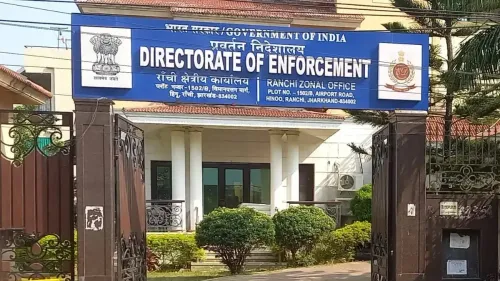
The Enforcement Directorate had opposed the application, citing Dahiya's alleged role in siphoning proceeds of crime worth approximately ₹20,241 crore .
The court distinguished Dahiya's case from that of co-accused Guangwen Kuang (Andrew Kuang) , whose travel plea was denied due to foreign nationality and no extradition treaty with China .
Dahiya must deposit original title documents with the High Court Registry , share travel details with investigators, and report back within 24 hours of returning to India.
The Delhi High Court on Wednesday, 7 October 2026 permitted Harinder Dahiya, Senior Director of Finance and Accounts at Vivo Mobile India, to travel to Bangkok, Thailand from 12 to 15 October for official business meetings, directing simultaneous suspension of the Look Out Circular (LOC) issued against him during that four-day window.
A single-judge bench of Justice Sachin Datta also ordered the release of Dahiya's passport for the period and imposed strict conditions governing his travel, including mandatory reporting obligations upon return.
Why Dahiya Needed Court Permission
Dahiya had approached the Delhi High Court challenging a 19 March 2026 order of the Patiala House Courts, which had rejected his earlier plea seeking the setting aside of the LOC, permission to travel abroad, and release of his passport. The LOC had effectively grounded him as part of an Enforcement Directorate (ED) money-laundering investigation linked to Vivo India.
The four-day Bangkok trip, according to Dahiya's application, was required for official meetings concerning statutory audit matters, audit and control transformation, litigation, and business and finance strategy at the company.
ED's Opposition and the Court's Response
The Enforcement Directorate opposed the travel application, arguing that Dahiya, in his capacity as Director and Chief Financial Officer of Vivo India, had allegedly played a key role in the siphoning of proceeds of crime estimated at approximately ₹20,241 crore. The agency contended that the official meetings could be conducted virtually.
The ED also relied on an earlier High Court order that had dismissed the travel application of co-accused Guangwen Kuang, also known as Andrew Kuang. However, Justice Datta ruled that precedent did not apply to Dahiya's case, noting that the earlier refusal was grounded in Kuang's foreign nationality and the absence of an extradition treaty with China. Dahiya, as an Indian national travelling to Thailand, 'stood on a different footing,' the court observed.
Conditions Imposed on Dahiya
The court's permission came with substantial safeguards. Dahiya has been directed to:
— Deposit original title documents of his immovable assets with the High Court Registry as security until his return.
— Furnish his travel itinerary, flight details, address of stay, and contact number in Thailand to the investigating officer and the trial court.
— Intimate the investigating officer and the trial court within 24 hours of his return to India.
— Re-deposit his passport within the same 24-hour window and appear before the trial court on the next scheduled date.
The court also explicitly barred Dahiya from contacting any witness, tampering with evidence, or undertaking any action prejudicial to the ongoing proceedings.
Automatic Revival of LOC After October 15
The LOC will automatically revive after 15 October, the court clarified. Justice Datta further stated that his observations were confined strictly to the present travel application and would not constitute an expression of opinion on the merits of the underlying case.
The ruling is a conditional reprieve for Dahiya as the larger ED money-laundering case — centred on alleged proceeds of crime worth over ₹20,000 crore — continues to move through the courts. Legal observers note that Indian courts routinely balance personal liberty and international movement rights against the state's interest in preventing flight risk, particularly in high-value financial crime investigations.
Point of View
241 crore proceeds-of-crime case has been cleared to travel abroad, however briefly. The stringent conditions — asset documents as collateral, 24-hour reporting on return — suggest the bench was aware of this tension. The real question is whether the trial court proceedings are moving at a pace commensurate with the scale of the alleged fraud; if they are not, such incremental relief applications will keep returning.
NationPress
7 Oct 2026
Frequently Asked Questions
Why did the Delhi High Court allow Vivo India's finance director to travel abroad?
The Delhi High Court allowed Harinder Dahiya to travel to Bangkok from 12 to 15 October for official meetings on statutory audit matters and business strategy, finding that his status as an Indian national travelling to Thailand distinguished his case from a co-accused Chinese national whose travel was denied. The LOC against him will be suspended only for the four-day period and revives automatically on 16 October.
What is the ED's case against Harinder Dahiya and Vivo India?
The Enforcement Directorate alleges that Dahiya, in his role as Director and CFO of Vivo Mobile India, played a crucial role in the alleged siphoning of proceeds of crime worth approximately ₹20,241 crore. The case is being investigated under money-laundering laws.
What conditions has the court placed on Dahiya's travel?
Dahiya must deposit original title documents of his immovable assets with the Delhi High Court Registry as security, share his full travel itinerary and contact details in Thailand with investigators, inform the investigating officer and trial court within 24 hours of returning, re-deposit his passport in the same period, and must not contact witnesses or tamper with evidence during his absence.
Why was the earlier order against co-accused Andrew Kuang not applied to Dahiya?
The Delhi High Court ruled that the refusal of Andrew Kuang's travel application was based on his Chinese nationality and the absence of an extradition treaty between India and China. Since Dahiya is an Indian national travelling to Thailand, the court found the two situations legally distinct.
When will Dahiya's Look Out Circular come back into effect?
The Look Out Circular will automatically revive after 15 October 2026, the last day of Dahiya's permitted travel window. The court also clarified that its ruling applied only to this travel application and did not reflect any view on the merits of the underlying case.