Delhi High Court upholds TRAI's 12-minute TV ad cap, dismisses 17 petitions
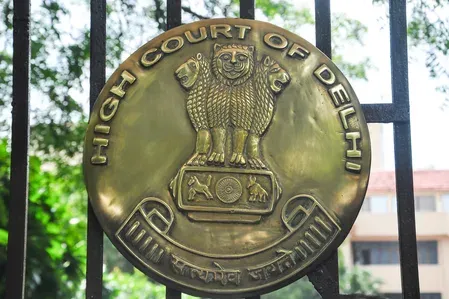
Synopsis
In a sweeping verdict that redraws the line between broadcaster rights and public interest, the Delhi High Court dismissed 17 petitions challenging TRAI's 12-minute TV ad cap — ruling that spectrum is a scarce public resource that cannot be commercially exploited without limit, and that Article 19(1)(g) guarantees no right to profitability.
Key Takeaways
The Delhi High Court on 29 May upheld TRAI's cap of 12 minutes of advertisements per clock hour on television channels.
A division bench of Justice Anil Kshetarpal and Justice Amit Mahajan dismissed all 17 petitions filed by general entertainment, news, and regional broadcasters.
The cap comprises 10 minutes for commercial ads and 2 minutes for self-promotional content per hour.
The court held that airwaves and spectrum are scarce public resources and cannot be subjected to unfettered commercial exploitation.
Broadcasters' constitutional challenge under Articles 14 and 19 was rejected; the court ruled Article 19(1)(g) does not guarantee profitability.
The Delhi High Court on Friday, 29 May upheld the Telecom Regulatory Authority of India's (TRAI) regulations capping television advertisements at 12 minutes per clock hour, dismissing a batch of 17 petitions filed by general entertainment, news, and regional broadcasters. The ruling affirms the constitutional validity of a framework that has long been contested by the broadcasting industry.
What the Court Ruled
A division bench of Justice Anil Kshetarpal and Justice Amit Mahajan dismissed challenges to Rule 7(11) of the Cable Television Network Rules, 1994, and Regulation 3 of the Standards of Quality of Service (Duration of Advertisements in Television Channels) Regulations, 2012. The bench held that TRAI had acted squarely within its statutory powers in prescribing the limit.
'TRAI's statutory power to regulate the prescribed time for advertisements can be deduced from Section 11(1)(b)(v) of the Act of 1997,' the Justice Kshetarpal-led bench stated, noting that TRAI's mandate includes enhancing viewers' experience and balancing the interests of broadcasters and consumers.
Broadcasters' Arguments Rejected
The petitioning broadcasters had argued that the cap — 10 minutes for commercial advertisements and 2 minutes for self-promotional content per hour — violated their fundamental rights under Articles 14 and 19 of the Constitution. The court rejected this, holding that the grievance was essentially about loss of advertising revenue and therefore fell within the freedom to carry on business under Article 19(1)(g), which is subject to reasonable restrictions in the public interest.
'Article 19(1)(g) of the Constitution does not guarantee profitability, and certainly not a right to monetise public property beyond reasonable structural limits imposed in the common good,' the bench observed.
Spectrum as a Public Resource
The judgment drew heavily on the principle that airwaves and spectrum are scarce public resources held by the government in trust for the people. Citing Supreme Court precedents on spectrum as a finite public resource, the bench linked the regulation of advertisement time to the constitutional mandate under Articles 39(b) and 39(c) — ensuring that material resources of the community serve the common good.
'The broadcasters cannot claim an unfettered right to exploit spectrum for commercial purposes. Their use of such resources is subject to licensing conditions, statutory frameworks, and regulatory oversight,' the court said.
Consumer Protection at the Centre
The court noted that unlike users of digital platforms, television viewers cannot skip or fast-forward advertisements, making excessive commercial breaks a direct impairment of their right to a fair viewing experience. The bench recorded that the regulations were introduced following widespread complaints about disruptive advertising.
'The measure taken by TRAI to limit the advertisements to 12 minutes per clock hour is in pursuance of the recognised QoS objective of TRAI, aimed at reducing excessive commercial breaks and preventing the artificial clustering of advertisements,' the judgment stated.
Significance of the Verdict
Describing the framework as a 'constitutionally sound exercise' of regulatory authority, the bench concluded that the 12-minute ceiling is a neutral, time-based restriction regulating the quantity — not the content — of advertisements, and that it neither violates Articles 14 and 19 nor suffers from arbitrariness. The ruling is a significant setback for broadcasters who had sought to expand commercial airtime and could have wider implications for how spectrum-based media businesses are regulated in India going forward.
Point of View
Not a commercial free-for-all. Broadcasters have long argued that digital platforms face no equivalent ad-time constraint, creating an uneven playing field; the court sidestepped that asymmetry entirely. The real pressure point now shifts to OTT and connected TV, where TRAI's jurisdiction is still contested. If the Supreme Court upholds this reasoning on appeal, it could set the template for regulating digital advertising inventory as well — a prospect that should unsettle far more than just linear television.
NationPress
20 Sept 2026
Frequently Asked Questions
What did the Delhi High Court rule on TRAI's TV advertisement cap?
The Delhi High Court on 29 May upheld TRAI's regulation capping television advertisements at 12 minutes per clock hour, dismissing all 17 petitions filed by broadcasters. The bench held that TRAI acted within its statutory powers and that the regulation constitutionally balances broadcaster rights against the public interest.
What is the 12-minute advertisement cap and how is it divided?
Under TRAI's Standards of Quality of Service Regulations, television channels are permitted a maximum of 12 minutes of advertising per clock hour — comprising 10 minutes for commercial advertisements and 2 minutes for self-promotional content. The rule applies to all television channels licensed under the Cable Television Network Rules, 1994.
Why did broadcasters challenge the advertisement cap?
Broadcasters argued that the cap violated their fundamental rights under Articles 14 and 19 of the Constitution, contending it restricted their freedom of speech and their right to carry on business. They also argued it caused significant loss of advertising revenue. The court rejected both arguments, ruling the restriction was a reasonable regulation in the public interest.
How did the court address the spectrum and public resource argument?
The bench held that airwaves and spectrum are scarce public resources held by the government in trust for the people, citing Supreme Court precedents. It ruled that broadcasters cannot claim an unfettered right to exploit spectrum for commercial purposes, linking the ad-time restriction to the constitutional mandate under Articles 39(b) and 39(c).
What happens next after this ruling?
The dismissal of all 17 petitions means TRAI's 12-minute cap remains in force for all television channels. Broadcasters may challenge the ruling before the Supreme Court. The verdict is likely to have broader implications for how spectrum-based media businesses are regulated, and could influence future debates around advertising limits on digital and OTT platforms.