Delhi Lakshmi Yojana: 5.14 lakh women register, NE district leads
Synopsis
More than 5.14 lakh Delhi women signed up for the ₹2,500-a-month Delhi Lakshmi Yojana in its first week, with North-East district alone contributing over 38,000 final applications — and the government racing to credit the first instalment by Raksha Bandhan. The stark gap between working-class districts and the affluent New Delhi district, which submitted just 1,801 applications, tells its own story about who the scheme is really reaching.
Key Takeaways
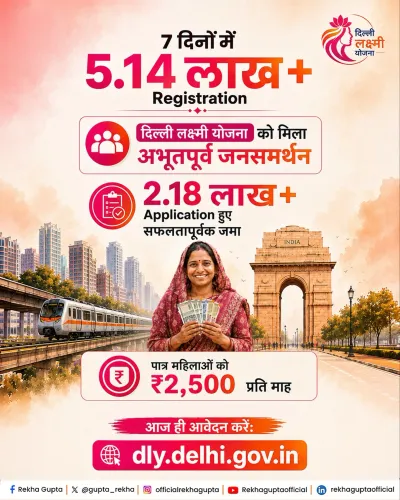
5,14,460 women registered for the Delhi Lakshmi Yojana by 8 August 2025 .
North-East district led with 38,579 final applications from 73,676 registrants.
New Delhi district recorded the fewest submissions — just 1,801 final applications.
Eligible women receive ₹2,500 per month , with a choice between a CBDC wallet option and a full RD/FD deposit option.
Each application goes through a four-level scrutiny process; the entire workflow is digital via PFMS integration.
Chief Minister Rekha Gupta has set Raksha Bandhan as the target date for the first disbursement.
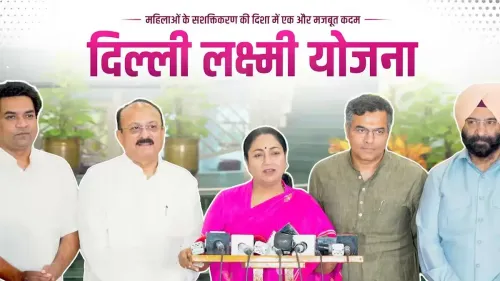
Over 5,14,460 women had registered for the Delhi Lakshmi Yojana by Saturday, 8 August, with the North-East and North-West districts posting the highest application volumes, according to an official statement. Chief Minister Rekha Gupta said the government aims to credit the first instalment into eligible beneficiaries' accounts on Raksha Bandhan.
District-by-District Breakdown
The North-East district has recorded the strongest response: of 73,676 women who entered details on the portal, 38,579 have submitted final applications. In the North-West district, 34,545 out of 55,700 registered users completed their submissions.
Other districts show steady uptake: South-West recorded 23,994 final applications from 44,149 registrants; Outer North saw 23,694 out of 39,401; West logged 18,967 out of 44,358; and South-East posted 18,725 from 38,979 registered women. In the North, East, South, Central-North, Central, and Old Delhi districts, final submissions ranged from 4,208 to 16,074.
The lowest response came from New Delhi district — home to government offices, staff residential complexes, the diplomatic enclave, and upscale neighbourhoods — which recorded only 1,801 final applications from 5,573 registrations in the scheme's first seven days.
How the Scheme Works
Under the Delhi Lakshmi Yojana, eligible women receive ₹2,500 per month. Beneficiaries may choose between two options: under the first, ₹1,000 is credited to a Central Bank Digital Currency (CBDC) wallet for daily use while ₹1,500 goes into a recurring or fixed deposit (RD/FD); under the second, the entire ₹2,500 is deposited in an RD/FD, encouraging long-term savings.
The application process is fully digital, covering document verification, eligibility assessment, approval, PFMS integration, and payment. Each application undergoes a four-level scrutiny process to ensure only genuine beneficiaries receive the benefit.
What the Government Said
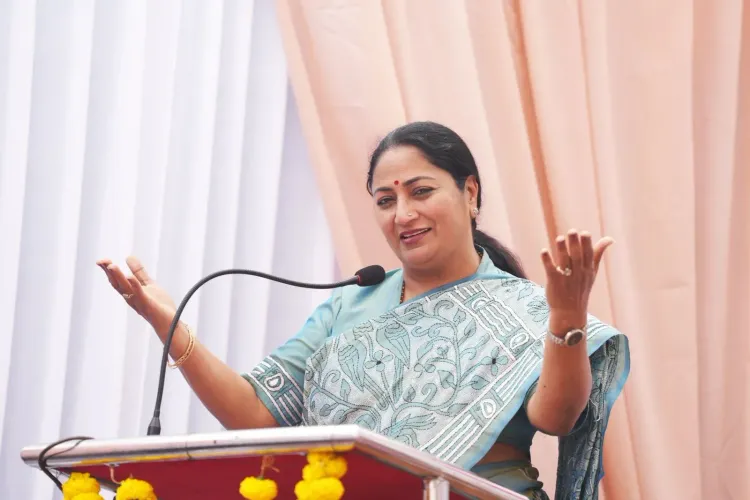
Chief Minister Rekha Gupta described the scheme as the fulfilment of a commitment made during the Delhi Assembly elections, framing it as a vehicle for economic empowerment. 'The enthusiasm and trust with which women have embraced the Delhi Lakshmi Yojana is proof that the scheme will bring a positive change to the lives of millions of families,' she said.
Gupta added that the government's objective extends beyond direct financial assistance — connecting women with savings instruments, digital financial inclusion, social security, and long-term stability.
Context and What Comes Next
The scheme's rollout comes amid a broader political push by the Bharatiya Janata Party (BJP)-led Delhi government to deliver on welfare promises from the February 2025 Assembly election campaign. The geographic disparity in registrations — with densely populated working-class districts far outpacing the capital's affluent central belt — reflects the scheme's targeted demographic reach.
With the Raksha Bandhan deadline for the first disbursement approaching, attention will now shift to whether the four-level verification process can clear the backlog of pending applications in time.
Point of View
Lower-income districts — and the near-silence from the New Delhi district confirm that direct-benefit transfer schemes find their sharpest traction where household income is most constrained. What the numbers do not yet tell us is conversion: barely half of registered women in most districts have filed final applications, suggesting either friction in the digital process or eligibility anxiety. The Raksha Bandhan deadline is politically symbolic, but it also compresses the verification window sharply — and a four-level scrutiny process under time pressure is where exclusion errors tend to creep in.
NationPress
22 Sept 2026
Frequently Asked Questions
What is the Delhi Lakshmi Yojana and who is eligible?
The Delhi Lakshmi Yojana is a monthly financial assistance scheme launched by the BJP-led Delhi government under Chief Minister Rekha Gupta, providing eligible women ₹2,500 per month. Eligibility is assessed through a four-level digital scrutiny process; women can apply via the government portal.
How many women have registered for the Delhi Lakshmi Yojana so far?
As of Saturday, 8 August, a total of 5,14,460 women had registered on the portal. Of these, a smaller number have completed the final application submission, with North-East district leading at 38,579 final submissions.
When will the first payment be released under the scheme?
Chief Minister Rekha Gupta has stated that the government aims to credit the first instalment into eligible beneficiaries' accounts on Raksha Bandhan. No specific date has been confirmed beyond that festival deadline.
What are the two payment options under the Delhi Lakshmi Yojana?
Under the first option, ₹1,000 is credited to a Central Bank Digital Currency (CBDC) wallet for daily use and ₹1,500 is deposited in an RD or FD account. Under the second option, the full ₹2,500 is deposited in an RD/FD, promoting long-term savings.
Why did New Delhi district record the lowest registrations?
New Delhi district, which encompasses government offices, staff residential complexes, the diplomatic enclave, and upscale neighbourhoods, recorded only 1,801 final applications from 5,573 registrations — the lowest of all districts. Officials have not publicly explained the gap, but the district's affluent demographic profile likely reduces the scheme's relevance to a large share of its residents.