Will Delhi Ministers Take Action Against Anti-PM Modi, HM Shah Protesters in JNU?
Click to start listening
Synopsis
Delhi ministers have vowed to take decisive action against protesters at JNU who raised slogans targeting PM Modi and HM Shah. As tensions rise, the ministers emphasize that violence and anti-national sentiment will not be tolerated. This incident follows a Supreme Court ruling regarding key figures involved in the 2020 riots, making the situation even more critical.
Key Takeaways
- Delhi ministers vow strict action against anti-mod slogans.
- Protests at JNU highlight tensions in political discourse.
- Supreme Court ruling adds gravity to the situation.
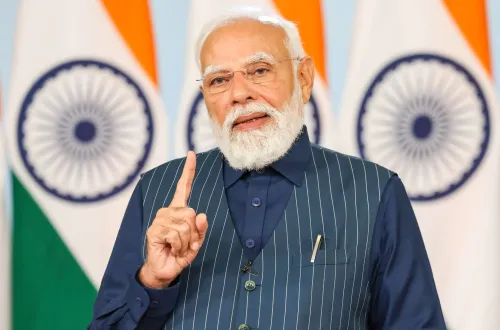
New Delhi, Jan 6 (NationPress) Following a protest by several Left-leaning student groups at Jawaharlal Nehru University (JNU), where participants voiced slogans against Prime Minister Narendra Modi and Union Home Minister Amit Shah at the 'Guerrilla Dhaba' on campus, Delhi officials declared on Tuesday that they would enforce stringent measures against those responsible.
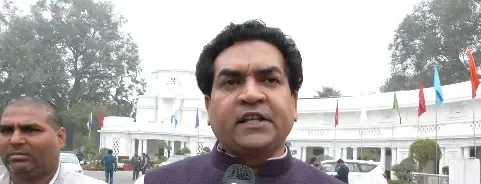
In an interview with IANS, Delhi Minister Kapil Mishra stated that the administration would not condone actions that incite violence or foster anti-national sentiments.
"The hoods of snakes are being crushed, and their offspring are troubled by it. These individuals chant in favor of terrorists, Naxalites, and rioters. They have come to terms with the fact that the Naxalites, who once operated with impunity, are now being eradicated," he remarked.
Mishra further noted that the judiciary has already pinpointed those engaged in violent behavior.
"The courts have recognized the rioters and issued a decisive verdict yesterday. Stringent action will follow against those who participated in such chanting," Mishra confirmed to IANS.
Delhi Minister Ashish Sood also denounced the incident, asserting that violence and incitement have no place in politics.
"In a democracy, individuals are free to debate policies and express disagreement with the Prime Minister or Home Minister. Discussions on education, finance, and governance are vital, and differing opinions are natural. However, those who seek to undermine the nation do not belong in democratic conversations," he quipped.
Sood further accused figures like Sharjeel Imam and Umar Khalid of promoting divisive rhetoric, claiming that Khalid was found guilty regarding the 2020 Delhi riots while criticizing the apparent sympathy shown towards such individuals by some political leaders who have shared platforms with them.
This protest occurred on Monday evening, shortly after the Supreme Court denied bail to former JNU students Umar Khalid and Sharjeel Imam in connection with the 2020 Delhi riots.
Approximately 30 to 40 students connected with the Democratic Students' Federation (DSF), the All India Students' Association (AISA), and the Students' Federation of India (SFI) staged a protest, chanting anti-government slogans on campus.
One of the slogans raised was, "Modi-Shah ki kabra khudegi, JNU ki dharti par," which drew significant backlash from the BJP.
Point of View
It is crucial to approach this situation with a balanced perspective. While the right to protest and express dissent is a cornerstone of democracy, it is equally important to ensure that such expressions do not incite violence or promote anti-national agendas. The government's readiness to act in this context reflects the delicate balance between maintaining public order and upholding democratic freedoms. The Nation stands firm on the principle that all voices should be heard, provided they adhere to the norms of peaceful discourse.
NationPress
07/01/2026
Frequently Asked Questions
What triggered the protests at JNU?
The protests at JNU were triggered by slogans raised against Prime Minister Narendra Modi and Home Minister Amit Shah by Left-wing student organizations during a gathering.
What actions are Delhi ministers planning to take?
Delhi ministers have announced that they will take strict action against individuals involved in raising anti-national slogans during the protest.
What is the significance of the Supreme Court ruling?
The Supreme Court's denial of bail to Umar Khalid and Sharjeel Imam in connection with the 2020 Delhi riots adds a layer of urgency to the current protests and government responses.