Delhi IRS Officer's Daughter Murder: Accused to Face Psychological Profiling
Synopsis
Rahul Meena, accused of brutally murdering, raping, and robbing a 22-year-old IRS officer's daughter in Delhi's Kailash Hills, will undergo psychological profiling after displaying chilling calmness during interrogation. Police cracked the case using Wi-Fi tracking, Instagram records, and IPDR analysis — a landmark moment for digital forensics in Indian crime investigation.
Key Takeaways
Rahul Meena , the accused in the Kailash Hills murder case , will undergo psychological profiling after displaying chilling calmness and zero remorse during interrogation by Delhi Police .
The victim, a 22-year-old student and daughter of an IRS officer , was allegedly assaulted with a lamp, raped, and strangled with a phone charger inside her Southeast Delhi home.
Meena looted approximately ₹2.5 lakh in cash and jewellery , exploiting the unconscious victim's finger to bypass a fingerprint-secured locker .
Delhi Police arrested Meena at a Dwarka hotel using Wi-Fi tracking , IPDR analysis , and Instagram communication records with a Gurugram relative.
CCTV footage established that Meena entered the colony at 6:30 AM and left at 7:20 AM , spending less than an hour at the crime scene.
The case is expected to set a precedent for the use of forensic psychology and digital surveillance evidence in Indian criminal prosecutions.
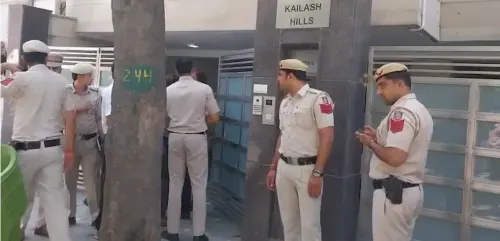
New Delhi, April 24: Delhi Police have initiated steps to conduct a psychological profiling of Rahul Meena, the prime accused in the brutal murder, rape, and robbery of a 22-year-old woman — daughter of an IRS officer — at their residence in Kailash Hills, Southeast Delhi. The decision comes after investigators noted Meena's chilling composure and complete absence of remorse during interrogation sessions, raising serious questions about his mental state and the premeditated nature of the crime.
Why Police Ordered Psychological Profiling
Senior officials close to the investigation confirmed that Meena's unnervingly calm demeanour throughout questioning prompted authorities to seek a clinical evaluation by forensic psychology experts. The assessment is designed to measure his aggression levels, emotional responses, and overall behavioural patterns.
Investigators are specifically looking for indicators of Antisocial Personality Disorder (ASPD) — a condition characterised by a persistent disregard for others' rights, lack of empathy, and manipulative behaviour. Establishing whether the crime was a product of cold premeditation or explosive impulsive rage will be central to the prosecution's case.
Psychological profiling is increasingly being used by Indian law enforcement in high-profile cases as courts demand stronger evidence of criminal intent beyond physical evidence alone. This move signals that the prosecution intends to build a comprehensive, multi-layered case against Meena.
The Crime: A Calculated Act of Violence
The horrifying incident unfolded on Wednesday morning at the IRS officer's home in Kailash Hills. CCTV footage shows Meena entering the residential colony at 6:30 AM and stepping inside the house just nine minutes later. He exited at approximately 7:20 AM — spending under an hour inside during which he committed multiple serious crimes.
Upon being questioned about his uninvited presence, Meena allegedly fabricated a story, falsely claiming the victim's mother had let him in. He then demanded cash urgently from the 22-year-old student. When she refused, the confrontation turned violent.
As the victim screamed for help, Meena allegedly struck her repeatedly across the face with a lamp, causing severe head injuries and rendering her unconscious. He then allegedly raped her. In a deeply disturbing sequence of events, he dragged her body to a room housing the family's lockers, used her unconscious finger to unlock a fingerprint-secured safe, and pried open a second locker using a screwdriver.
Meena fled with approximately ₹2.5 lakh in cash and jewellery. Noticing blood stains on his trousers, he changed into a pair belonging to the victim's brother before heading towards a railway station. Before leaving, in a calculated move to eliminate any witness, he allegedly strangled the victim with a phone charger.
How Delhi Police Tracked and Arrested the Accused
Despite Meena's attempts to evade arrest, Delhi Police dismantled his escape plan using three critical digital leads. He had deliberately avoided using his own mobile phone, instead operating a handset he had stolen during a prior harassment incident in Alwar, Rajasthan.
His downfall came when he connected to the Wi-Fi network of a hotel in Dwarka, exposing his location to investigators monitoring Internet Protocol Detail Records (IPDR). Further, he had remained in contact with a relative based in Gurugram via Instagram, a digital trail that proved decisive.
By combining advanced digital surveillance, IPDR analysis, and intelligence gathered from questioning the Gurugram relative, police pinpointed Meena's exact location and executed the arrest at the Dwarka hotel.
Evidence and Prosecution Strategy
The case against Meena is bolstered by a formidable body of evidence: CCTV footage establishing a precise timeline, blood-stained clothing, forensic samples, stolen valuables, and digital records linking him to the crime scene and subsequent movements.
The psychological profiling, however, is expected to serve as a cornerstone of the prosecution's effort to establish the gravity of Meena's criminal intent. Proving premeditation — through both physical evidence and psychological assessment — could be decisive in securing the harshest possible sentence under Indian law.
This case has also reignited a broader national conversation about domestic security vulnerabilities, particularly for families in high-profile professions, and the growing role of digital forensics in solving violent crimes in India.
Broader Implications: A Pattern That Cannot Be Ignored
This is not an isolated incident. Crimes targeting families of senior government officials have raised alarm in recent years, exposing gaps in personal security protocols even within secured residential colonies. Notably, the accused's ability to enter a bureaucrat's home undetected — and to exploit biometric security systems — points to systemic vulnerabilities that authorities must urgently address.
The use of forensic psychology in Indian criminal investigations remains underdeveloped compared to global standards. This case could set a significant precedent for how courts weigh psychological evidence alongside physical proof in capital crime trials.
As the investigation continues, all eyes will be on the Delhi Police's chargesheet, the findings of the psychological evaluation, and the eventual trial proceedings — which legal experts believe could become a landmark case in Indian criminal jurisprudence.
Point of View
Exploit biometric security systems, and escape undetected for hours exposes a systemic failure in elite residential security that authorities have long ignored. The decision to pursue psychological profiling is welcome, but it also reflects how underprepared India's criminal justice system remains in building intent-based prosecutions. If this case catalyses reform in both residential security protocols and forensic psychology standards in Indian courts, it will have served a purpose beyond justice for one family.
NationPress
7 Oct 2026
Frequently Asked Questions
Who is Rahul Meena and what is he accused of?
Rahul Meena is the prime accused in the murder, rape, and robbery of a 22-year-old woman, the daughter of an IRS officer, at her home in Kailash Hills, Southeast Delhi. He allegedly assaulted the victim with a lamp, raped her, looted ₹2.5 lakh in cash and jewellery, and strangled her with a phone charger before fleeing.
Why are Delhi Police conducting psychological profiling of the accused?
Delhi Police ordered psychological profiling of Rahul Meena because he displayed unusual calmness and showed no remorse during interrogation. The assessment aims to identify traits linked to Antisocial Personality Disorder and determine whether the crime was premeditated or impulsive.
How did Delhi Police track and arrest Rahul Meena?
Police tracked Meena using three digital clues: he used a stolen phone, connected to a hotel Wi-Fi in Dwarka exposing his location via IPDR analysis, and stayed in contact with a Gurugram relative via Instagram. These digital trails led to his arrest at the Dwarka hotel.
What happened during the Kailash Hills murder incident?
On Wednesday morning, Rahul Meena entered an IRS officer's residence in Kailash Hills between 6:30 AM and 7:20 AM. He demanded cash, attacked the victim with a lamp, raped her, used her unconscious finger to open a biometric locker, stole ₹2.5 lakh, and strangled her before fleeing.
What is the significance of psychological profiling in this murder case?
Psychological profiling will help prosecutors establish the degree of criminal intent — a crucial factor in securing the harshest sentence under Indian law. It is expected to be a cornerstone of the prosecution's case alongside physical and digital evidence.