Delhi-NCR heatwave: 45°C days and 31°C nights offer no relief for 6 days
Synopsis
Delhi-NCR is trapped in a heat vice with no exit — 45°C afternoons and 31°C nights are denying residents any overnight recovery, and the IMD sees no break for at least six days. The combination of daytime extremes and officially declared 'warm nights' makes this one of the most sustained heat events in the region this season.
Key Takeaways
Delhi-NCR is experiencing a heatwave with daytime highs of 45°C and nighttime lows of 30–32°C — both significantly above normal.
The IMD has forecast heatwave conditions to persist for at least six days from 21 May , with no relief through 26 May .
Thursday's maximum was 44°C ; Friday's temperature is expected to cross 45°C .
The IMD has flagged 'warm nights' and strong surface winds as additional hazards during afternoon and evening hours.
The Delhi Health Department has directed hospitals to set up dedicated heatstroke wards and arrange additional beds.
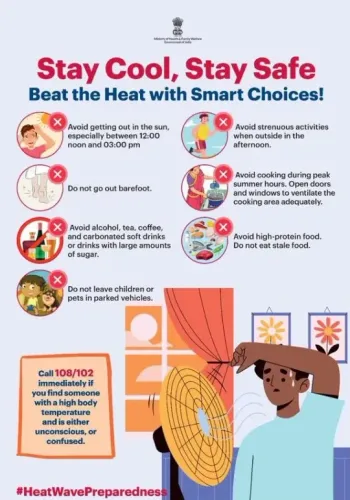
Residents have been advised to stay indoors between 12 pm and 4 pm IST , stay hydrated, and wear light clothing.
Delhi-NCR residents are enduring a punishing heatwave that now refuses to ease even after sundown, with minimum temperatures locked between 30 and 32 degrees Celsius — far above seasonal norms — compounding the misery of days that are touching 45 degrees Celsius. The India Meteorological Department (IMD) has forecast that heatwave conditions will persist across the region for at least the next six days, with no meaningful respite in sight.
Current Conditions and Forecast
On Thursday, 22 May, the maximum temperature in Delhi-NCR was recorded at 44 degrees Celsius, with the mercury expected to breach 45 degrees Celsius on Friday, 23 May. Nighttime temperatures are hovering around 31 degrees Celsius, a phenomenon the IMD has officially flagged as a 'warm night' — a designation used when minimum temperatures remain significantly above normal.
The IMD has also warned of strong surface winds during afternoon and evening hours alongside the heatwave conditions, adding a dry, scorching wind element to the heat burden.
Day-by-Day Outlook Through May 26
From 23 to 24 May, maximum temperatures are projected to hold steady at around 45 degrees Celsius, with minimums near 31 degrees. Heatwave warnings and strong surface winds are expected to continue during the latter half of each day.
For 25 and 26 May, the IMD forecasts no change — maximums likely at 45 degrees and minimums around 30 degrees Celsius. Notably, this extended stretch of above-normal nighttime temperatures prevents the human body from recovering from daytime heat stress, a factor that health experts say significantly raises the risk of heat-related illness.
Health Department Response
The Delhi Health Department has stepped up its response to the escalating heat emergency. Hospitals across the region have been directed to arrange additional beds, establish dedicated wards for heatstroke cases, and ensure the availability of specialised medical care for heat-related conditions.
This comes amid growing concern over vulnerable populations — the elderly, outdoor workers, and children — who face the highest risk during prolonged heatwaves. This is consistent with a broader pattern of intensifying summer heat events in the Indo-Gangetic Plain over the past decade, which climate scientists have linked to accelerating urban heat island effects and shifting monsoon timelines.
Advisory for Residents
Health experts have urged Delhi-NCR residents to avoid venturing outdoors between 12 pm and 4 pm IST, remain well-hydrated throughout the day, wear light and loose clothing, and cover their heads when exposure to direct sunlight is unavoidable.
With both day and night temperatures expected to remain above normal through at least 26 May, conditions are likely to worsen before any relief arrives. The arrival of pre-monsoon activity — the only credible natural break from such heat — remains uncertain for the near term, according to the IMD.
Point of View
The body never fully recovers from the previous day's heat load, and cumulative heat stress compounds rapidly. Delhi's public health infrastructure, while on alert, is not designed for multi-day warm-night events at this scale. The IMD's six-day no-relief forecast also raises a harder question: as urban heat island effects intensify and monsoon onset grows less predictable, is a seasonal heatwave advisory system still adequate, or does the capital need a standing heat emergency protocol with automatic triggers?
NationPress
20 Sept 2026
Frequently Asked Questions
How long will the Delhi-NCR heatwave last?
According to the IMD, heatwave conditions are expected to persist across Delhi-NCR for at least six days from 21 May, with no significant relief forecast through 26 May. Both daytime highs and nighttime minimums are projected to remain above normal throughout this period.
What temperatures are forecast for Delhi-NCR this week?
Daytime maximums are expected to hover around 45 degrees Celsius from 23 to 26 May, while nighttime minimums are likely to stay between 30 and 31 degrees Celsius. Thursday's maximum was recorded at 44°C, with Friday expected to cross 45°C.
What is a 'warm night' and why is it dangerous?
A 'warm night' is an IMD designation for nights when minimum temperatures remain significantly above seasonal norms — in this case, 30–32°C instead of typical mid-20s levels. Without nighttime cooling, the human body cannot recover from daytime heat stress, sharply increasing the risk of heatstroke and other heat-related illnesses.
What steps has the health department taken during the Delhi heatwave?
The Delhi Health Department has directed hospitals to arrange additional beds, set up dedicated wards for heatstroke patients, and ensure specialised medical care is available. Health experts have also advised residents to avoid outdoor exposure between 12 pm and 4 pm, stay hydrated, and wear light, loose clothing.
Who is most at risk during the Delhi-NCR heatwave?
The elderly, children, and outdoor workers are considered most vulnerable during the current heatwave. Prolonged exposure to both high daytime temperatures and elevated nighttime minimums significantly raises the risk of heat exhaustion and heatstroke for these groups.