Is Delhi-NCR Facing a Crisis Due to Severe Pollution and Fog?
Click to start listening
Synopsis
The Delhi-NCR region is reeling under the combined effects of severe pollution and thick fog. With the Air Quality Index exceeding alarming levels and visibility dropping to zero, commuters face serious disruptions. Authorities are issuing warnings, and relief may only come with predicted rainfall in the coming days.
Key Takeaways
- Delhi-NCR is facing a critical pollution crisis.
- AQI has exceeded 450, raising health alerts.
- Visibility has dropped to zero, disrupting transportation.
- The IMD predicts continued fog and potential rain relief.
- Residents are advised to take precautions for health safety.
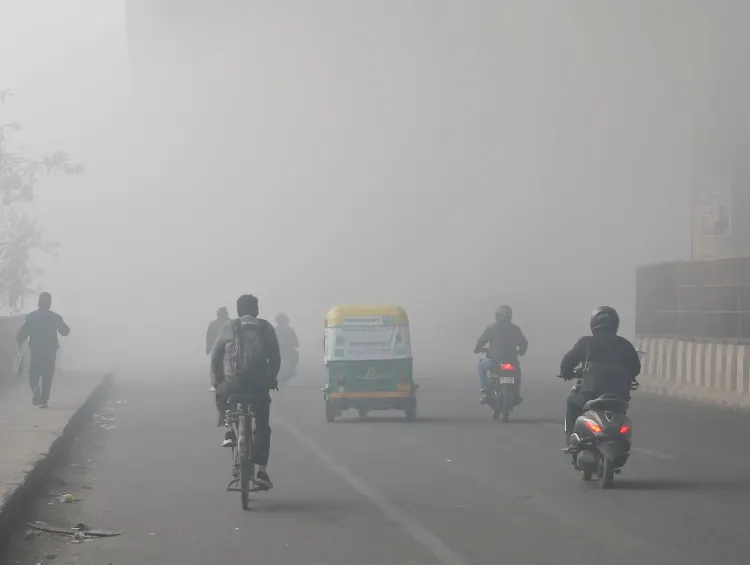
New Delhi, Dec 30 (NationPress) The combination of winter chill, extreme air pollution, and thick fog on Tuesday has led to a critical scenario across the Delhi-National Capital Region (NCR). Authorities have issued a warning for extremely dense fog for two consecutive days, while the Air Quality Index (AQI) has soared above 450 in multiple areas, raising alarming health concerns.
The situation deteriorated significantly, with visibility plummeting to zero in various locations on Monday night. This severely disrupted road, rail, and air traffic, leading to significant delays and safety hazards for travelers.
According to data from different air quality monitoring stations in Delhi, the AQI was noted at 451 in Anand Vihar, 433 in Ashok Vihar, 446 in Rohini, 449 in Wazirpur, and 432 in Chandni Chowk. Other areas reported concerning levels as well, with the AQI reaching 411 at DTU Delhi, 410 at Siri Fort, 401 at Shadipur, 426 at Punjabi Bagh, and 421 at Sonia Vihar. In Bawana, the AQI was recorded at 368, while Alipur saw 379 and Vivek Vihar 380.
All these figures are categorized as ‘very poor’, which is regarded as highly hazardous to human health. The scenario remains equally dire in neighboring cities like Noida and Ghaziabad.
In Noida, AQI levels were documented at 433 in Sector-1, 388 in Sector-125, and 372 in Sector-62. Ghaziabad reported even more severe conditions, with the AQI reaching 459 in the Vasundhara area. Other localities like Sanjay Nagar, Indirapuram, and Loni recorded AQI levels of 393, 382, and 360, respectively. These statistics indicate that the entire NCR continues to grapple with severe pollution.
The India Meteorological Department (IMD) has predicted “extremely dense fog” during the morning hours of December 30, followed by “dense fog” until the afternoon. The maximum temperature for the day was registered at 21 degrees Celsius, while the minimum fell to 8 degrees Celsius. Humidity levels peaked at 100 percent, intensifying the foggy conditions.
The IMD has also issued a caution for dense fog on the morning of December 31. However, light rain or drizzle is anticipated on January 1, which may offer some respite from the pollution and fog conditions.
Point of View
It's crucial to highlight the ongoing environmental crisis in Delhi-NCR, which poses significant health risks to the population. The alarming air quality levels and the hazardous fog conditions demand immediate attention and action from authorities. As the region grapples with these challenges, our focus remains on providing accurate information and advocating for public health and safety.
NationPress
03/01/2026
Frequently Asked Questions
What is the current Air Quality Index in Delhi?
Air Quality Index levels have exceeded 450 in several areas of Delhi, indicating severe pollution.
How is the fog affecting transportation in Delhi-NCR?
Visibility has dropped to zero in many locations, severely disrupting road, rail, and air traffic.
What measures are authorities taking to address pollution?
Authorities have issued warnings for extremely dense fog and are monitoring air quality closely.
Will there be any relief from the pollution soon?
Light rain or drizzle is expected on January 1, which may help alleviate pollution and fog conditions.
What are the health risks associated with such high AQI levels?
AQI levels categorized as 'very poor' are extremely hazardous to human health, potentially leading to respiratory issues.