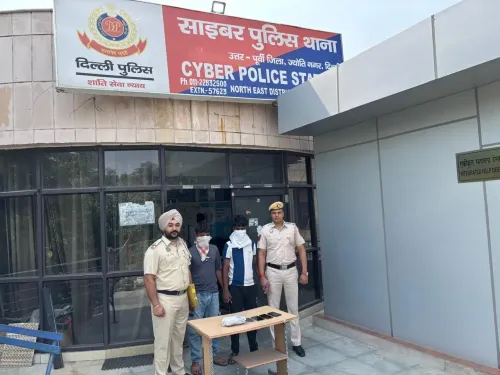
Delhi Police arrest APK banking fraud accused from Bihar's Aurangabad
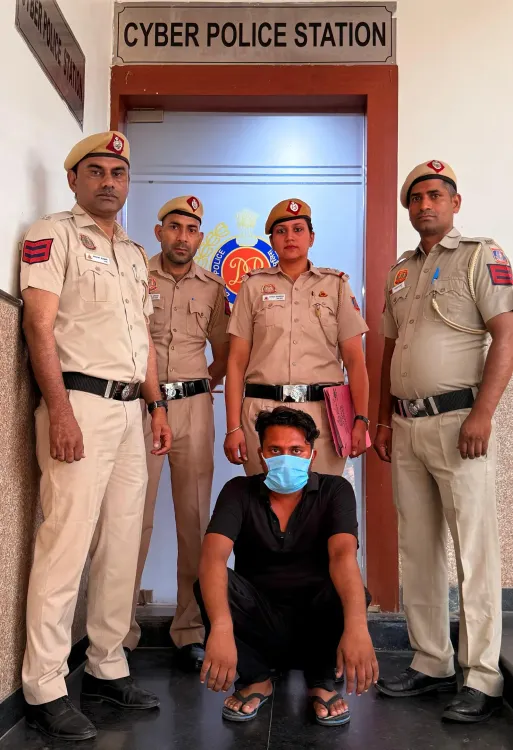
Synopsis
Delhi's Shahdara Cyber Police cracked an APK-based banking fraud by tracing a malicious mobile file back to a suspect in Bihar's Aurangabad — exposing a multi-module network that used mule accounts sourced from villagers lured with gas connections. The arrest signals how sophisticated mobile-malware fraud has become, and how far investigators must now reach to dismantle it.
Key Takeaways
Delhi Police arrested Shashikant Kumar from Madanpur, Aurangabad, Bihar in connection with an APK-based banking fraud case.
The fraud involved a malicious APK file allegedly installed on the victim's phone, enabling three unauthorised bank transactions .
The investigation was led by Inspector Vijay Kumar , SHO PS Cyber Shahdara, under ACP/Ops Mohinder Singh .
Fraud proceeds were allegedly routed through mule bank accounts procured from villagers offered gas connections as inducements.
Kumar allegedly managed fund withdrawals, retained a commission, and passed the balance to associates in the network.
One mobile phone and a SIM card were recovered; further investigation to identify remaining network members is ongoing.
Delhi Police have arrested a key accused in an APK-based banking fraud case from Madanpur in Bihar's Aurangabad district, officials said on Sunday, 23 August. The breakthrough came after sustained technical surveillance, forensic analysis of digital evidence, and examination of financial transaction trails by the Shahdara District Cyber Police.
How the Fraud Came to Light
The case originated when a complainant reported three unauthorised debit transactions from his bank account, flagged through SMS alerts on his registered mobile number. The victim told investigators he had neither authorised the transactions nor shared his banking credentials or PIN with anyone, and was initially unaware of how the breach had occurred. A case was subsequently registered at PS Cyber Shahdara in Delhi.
The Investigation Trail
A dedicated police team was constituted under Inspector Vijay Kumar, Station House Officer of PS Cyber Shahdara, functioning under the supervision of ACP/Ops Mohinder Singh. Investigators meticulously correlated IP logs, Call Detail Records, bank account details, transaction patterns, and other digital evidence to reconstruct the offence.
The probe revealed that a malicious APK file had allegedly been sent to and installed on the complainant's mobile phone. Installation of the file is suspected to have compromised the device and facilitated unauthorised access to banking information — a method increasingly used by cyber-fraud networks to bypass conventional security measures.
Accused Identified and Apprehended
Based on location-based inputs and field verification, investigators identified the accused as Shashikant Kumar, a resident of Aurangabad, Bihar. Officials said he allegedly attempted to evade arrest on multiple occasions, but the team continued its surveillance and ultimately apprehended him from within the jurisdiction of PS Madanpur. One mobile phone and a SIM card were recovered from him at the time of arrest.
A Wider Cyber-Fraud Network
The investigation has indicated that Kumar was allegedly part of a multi-module cyber-fraud network. The network reportedly used malicious APK files to target victims, compromise their devices, and execute unauthorised banking transactions. Proceeds were allegedly routed through mule bank accounts — reportedly procured from unsuspecting villagers by offering them gas connections and related benefits.
Kumar allegedly managed a portion of the fraud proceeds: facilitating withdrawal and transfer of funds, retaining a commission, and passing the remainder to associates. Investigators are now working to identify other members of the network, establish individual roles, and trace the complete money trail. Notably, this case reflects a growing pattern of APK-based mobile banking fraud that has been flagged by cybersecurity agencies across India in recent months.
Police Advisory to Citizens
Shahdara Police have urged citizens to avoid downloading APK files from unknown or unverified sources and to remain vigilant while using banking applications or sharing financial information. Further investigation is underway.
Point of View
A tactic that complicates prosecution. Delhi Police deserve credit for the cross-state digital trace, but the real measure of success will be whether the wider network is dismantled or whether, as in many previous cyber-fraud cases, the foot soldier is caught while the architects remain at large. India's cyber-crime conviction rate remains low; arrests without full network takedowns offer limited deterrence.
NationPress
23 Aug 2026
Frequently Asked Questions
What is APK-based banking fraud and how does it work?
APK-based banking fraud involves tricking victims into downloading a malicious Android application package (APK) file, which once installed can compromise the device and allow fraudsters to access banking credentials and execute unauthorised transactions. In this case, the malicious APK was allegedly sent to the victim's phone, enabling three unauthorised debits without the victim sharing any credentials.
Who was arrested in the Delhi Police APK banking fraud case?
The accused arrested is Shashikant Kumar , a resident of Aurangabad district in Bihar. He was apprehended from Madanpur within Aurangabad by a Shahdara Cyber Police team after sustained technical surveillance and field verification.
How did Delhi Police trace the accused to Bihar?
Investigators correlated IP logs, Call Detail Records, bank account details, and transaction patterns to build a digital trail. Location-based inputs and coordinated field verification ultimately led the team to Madanpur in Bihar's Aurangabad district, where Kumar was arrested despite reportedly attempting to evade the police multiple times.
What role did mule bank accounts play in this fraud?
According to the investigation, proceeds from the fraud were routed through mule bank accounts — accounts reportedly procured from unsuspecting villagers by allegedly offering them gas connections and related benefits. Kumar allegedly facilitated the withdrawal and transfer of these funds, retaining a commission before passing the remainder to other associates.
How can citizens protect themselves from APK-based banking fraud?
Delhi Police have advised citizens to avoid downloading APK files from unknown or unverified sources and to remain vigilant while using banking applications or sharing financial information. Users should only install apps from official app stores and never click on links received via SMS or messaging apps that prompt an APK download.