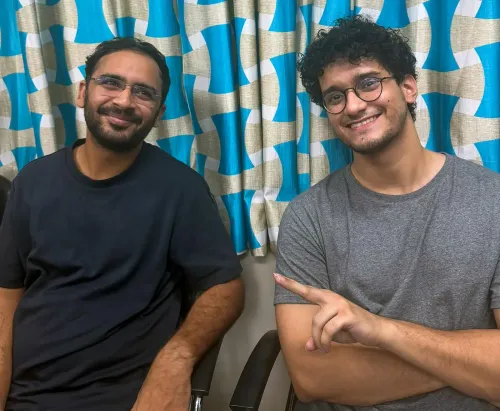
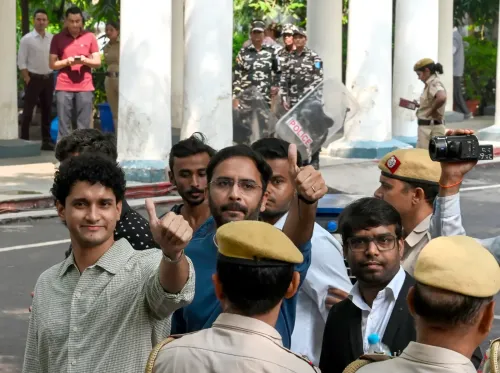
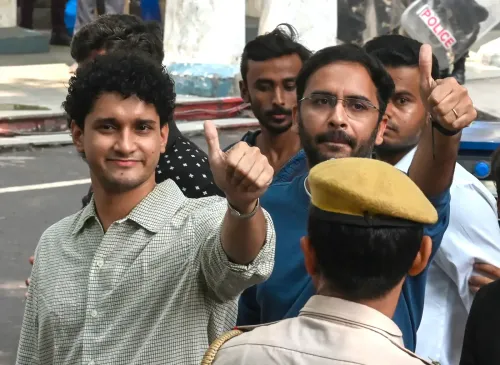
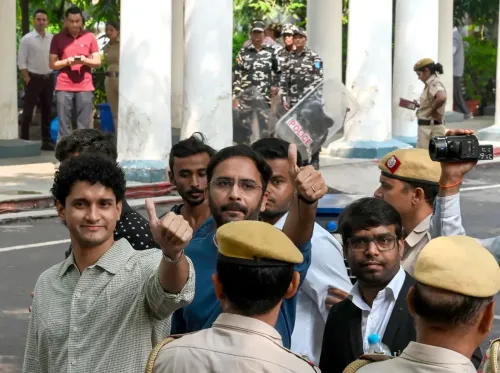
Jantar Mantar protest: Delhi Police summons CJP's Saurav Das, Ranka, Shinde for Thursday questioning
Synopsis
A day after being released from Tihar Jail on ₹50,000 bonds, CJP activists Saurav Das and Ashutosh Ranka — along with Ajinkya Shinde — have been summoned by Delhi's Crime Branch for Thursday questioning. The case, rooted in a 13 October trespass at the de-notified Jantar Mantar, is now a test of where the legal line sits between civil dissent and prohibited protest.
Key Takeaways
Delhi Police Crime Branch has summoned Saurav Das , Ashutosh Ranka , and Ajinkya Shinde for questioning at Rajouri Garden at noon on 23 October 2025 .
Das and Ranka were released from Tihar Jail on 22 October after a week in judicial custody, upon furnishing personal and surety bonds of ₹50,000 each .
The three activists, along with 11 others , trespassed into the de-notified Jantar Mantar on 13 October 2025 , protesting alleged irregularities in the Special Intensive Revision (SIR) of electoral rolls.
Their slogans targeted Chief Election Commissioner Gyanesh Kumar by name.
Delhi Police this week transferred the protest cases to its Crime Branch , escalating the investigation.
SEM Ritu Raj invoked Section 135(3) of the BNSS to secure bonds and written undertakings from Das and Ranka as a condition of release.
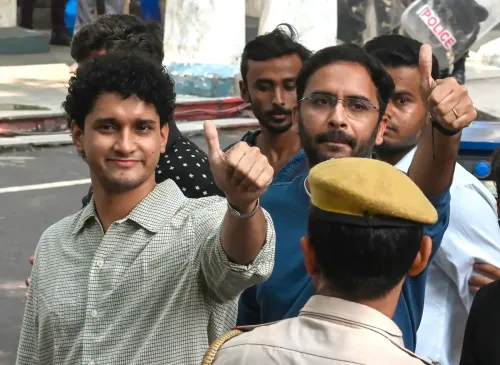
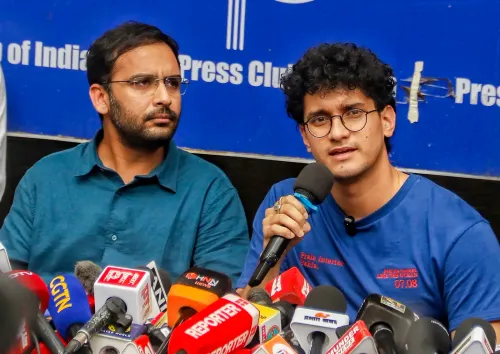
Delhi Police has summoned Citizens for Justice and Peace (CJP) activists Saurav Das, Ashutosh Ranka, and Ajinkya Shinde to appear before the Crime Branch office in Rajouri Garden at noon on Thursday, 23 October 2025, for questioning in connection with the Jantar Mantar trespassing case. The summons come a day after Das and Ranka walked free from Tihar Jail following a week in judicial custody.
Background: What Happened at Jantar Mantar
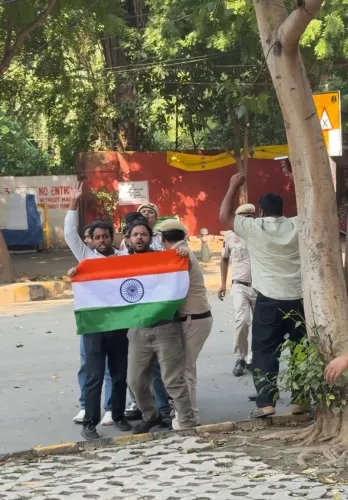
On 13 October 2025, Das, Ranka, and Shinde, along with 11 others, entered Jantar Mantar — a site that has been de-notified as a designated protest venue — and raised slogans against Chief Election Commissioner (CEC) Gyanesh Kumar. The group was protesting against alleged irregularities in the Special Intensive Revision (SIR) of electoral rolls. All those present were detained by Delhi Police.
While Shinde was released on a bail bond shortly after the incident, Das and Ranka remained in judicial custody for a week before being freed on Wednesday, 22 October 2025.
How Das and Ranka Secured Their Release
The two activists were released after submitting written undertakings before a Special Executive Magistrate (SEM), assuring that they would maintain peace and refrain from calling for protests at Jantar Mantar until the site is formally de-notified in accordance with law. They also furnished personal bonds and surety bonds of ₹50,000 each.
SEM Ritu Raj directed their release, observing that the immediate measures required under Section 135(3) of the Bharatiya Nagarik Suraksha Sanhita (BNSS) to prevent a breach of peace could be adequately secured through the execution of these bonds, supported by the written undertakings. In their submissions, both activists expressed full faith in the judiciary and all its instruments, including the SEM court.
Crime Branch Takes Over the Cases
Earlier this week, Delhi Police transferred the protest-related cases against the CJP leaders to its Crime Branch — a step that signals a more intensive investigative approach than a standard local police inquiry. The transfer to Crime Branch, which typically handles serious or complex cases, raises the procedural stakes for the activists ahead of Thursday's questioning.
Notably, Jantar Mantar's de-notification as a designated protest site has previously been a source of legal friction; this is among the first high-profile trespassing cases to be escalated to Crime Branch in connection with that restriction.
What the Activists Were Protesting
The CJP members had gathered to voice concerns over alleged irregularities in the Election Commission of India's Special Intensive Revision of voter rolls, a process that critics argue disproportionately deletes legitimate voter entries. Their targeting of CEC Gyanesh Kumar by name in their slogans added a confrontational dimension to the demonstration, drawing heightened scrutiny from authorities.
What Comes Next
All three activists are expected to appear before the Crime Branch on Thursday. The outcome of that questioning is likely to determine the trajectory of the case — whether it proceeds to further charges or is eventually closed. Civil liberties groups are reportedly monitoring the matter closely, given its implications for protest rights and the use of trespassing provisions against political demonstrators.
Point of View
In effect, the enforcement arm of that policy. The demand for ₹50,000 bonds and written undertakings to 'refrain from calling for protests' raises a pointed question: does a bail condition that restricts future protest activity cross the line from securing public order into pre-emptively curbing free expression? That question is unlikely to stay confined to the SEM court.
NationPress
22 Oct 2026
Frequently Asked Questions
Why have the CJP activists been summoned by Delhi Police?
The three CJP activists — Saurav Das, Ashutosh Ranka, and Ajinkya Shinde — have been summoned to appear before the Delhi Police Crime Branch on 23 October 2025 for questioning in connection with a trespassing case. On 13 October, they and 11 others entered Jantar Mantar, which has been de-notified as a designated protest venue, and raised slogans against Chief Election Commissioner Gyanesh Kumar.
Why were Saurav Das and Ashutosh Ranka in Tihar Jail?
Das and Ranka were held in judicial custody for a week following their detention at Jantar Mantar on 13 October 2025. They were released on 22 October after furnishing personal and surety bonds of ₹50,000 each and submitting written undertakings before a Special Executive Magistrate.
What were the CJP activists protesting about?
The activists were protesting against alleged irregularities in the Election Commission of India's Special Intensive Revision (SIR) of electoral rolls. They directed their slogans specifically at Chief Election Commissioner Gyanesh Kumar.
What conditions were placed on Das and Ranka's release?
SEM Ritu Raj directed their release under Section 135(3) of the Bharatiya Nagarik Suraksha Sanhita (BNSS), on the condition that they furnish ₹50,000 bonds each and submit written undertakings promising to maintain peace and refrain from calling for protests at Jantar Mantar until the site is legally de-notified.
Why was the Jantar Mantar protest case transferred to Crime Branch?
Delhi Police transferred the protest cases against the CJP leaders to its Crime Branch earlier this week. The Crime Branch typically handles cases requiring more intensive investigation, indicating that authorities are treating the Jantar Mantar trespassing matter with greater seriousness than a routine law-and-order incident.