Delhi-NCR rain brings winter chill on Sep 29; dry spell from Sep 30
Synopsis
Delhi-NCR's late-September rain spell — the first of its kind since 2019 — has delivered a winter-like chill just days after the southwest monsoon's earliest withdrawal from the capital since 2002. A dry spell kicks in from 30 September, but this unusual seasonal overlap has already set the monsoon data apart: a 16% rainfall surplus at Safdarjung despite a shortened, late-starting season.
Key Takeaways
Delhi-NCR received late-season rain on 29 September 2026 , bringing cooler, winter-like conditions to the capital.
The IMD forecasts dry weather from 30 September through the first week of October across northwest India.
4.3 mm of rain was recorded at Safdarjung on Sunday — the first late-September rain since 29 September 2019 .
The 2026 southwest monsoon withdrew from Delhi on 23 September — the earliest exit since 2002 — and lasted just 83 days .
Safdarjung recorded a 16% surplus ( 728.6 mm vs normal 629.7 mm ) for the June–September season.
Delhi-NCR's air quality remained in the 'satisfactory' category, with AQI readings ranging from 58 to 83 across monitoring stations.
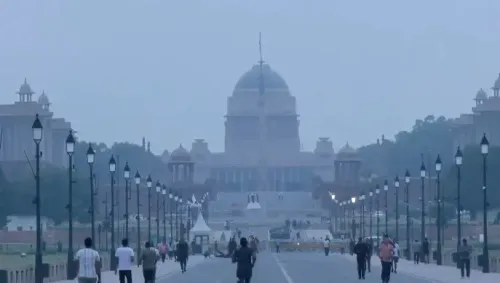
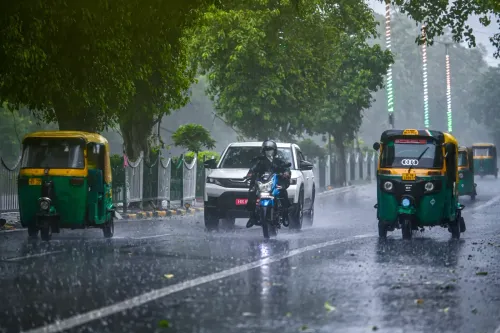
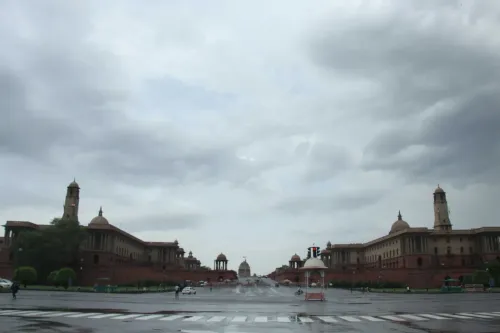
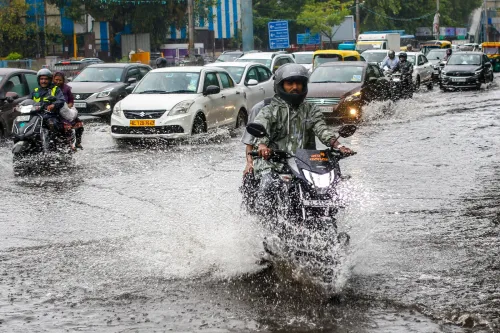
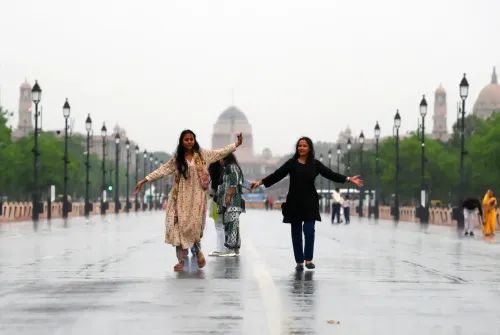
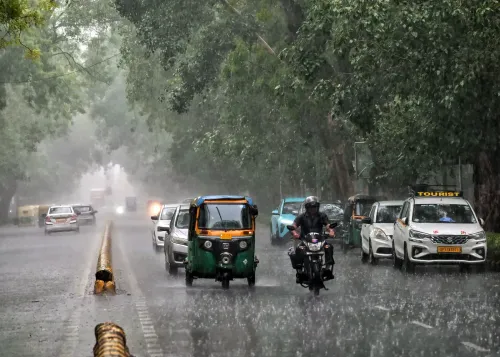
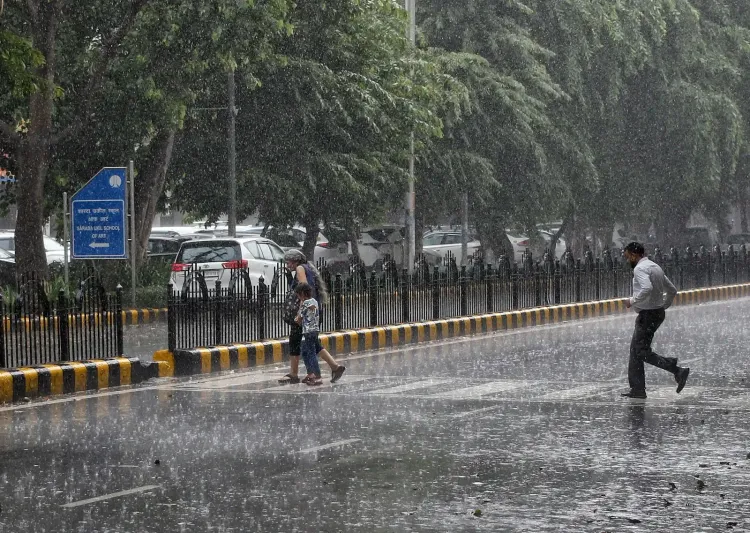
Delhi-NCR woke up to a winter-like chill on Tuesday, 29 September 2026, as late-season rains swept through the national capital and surrounding areas, bringing cooler temperatures and overcast skies. The India Meteorological Department (IMD) has forecast isolated showers continuing through Tuesday before a dry spell takes hold from 30 September, with mainly clear skies expected through the first week of October.
Rain Activity Across the Region
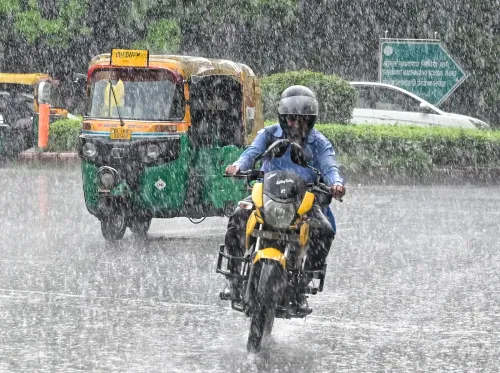
Isolated rainfall, thunderstorms and lightning are expected at scattered locations across Delhi, Chandigarh and Haryana on Tuesday, with similar conditions likely in Punjab. From 30 September onwards, the IMD projects mainly dry weather over large parts of northwest India as the southwest monsoon completes its withdrawal from the country.
The late-season spell follows 4.3 mm of rain recorded at Safdarjung on Sunday morning, after 0.6 mm was logged until 8:30 pm the previous evening. Notably, the 27 September shower was the first rain recorded this late in the month since 29 September 2019, when just 0.3 mm was measured.
Monsoon Withdrawal: Earliest Since 2002
The late rains arrived just four days after the southwest monsoon officially withdrew from Delhi on 23 September 2026 — earlier than the IMD's normal withdrawal date of 25 September (based on the 1971–2019 climatological period). This year's withdrawal was the earliest since 2002, when the monsoon exited Delhi on 20 September.
The 2026 monsoon arrived over Delhi on 2 July, five days later than the standard onset date of 27 June. It lasted 83 days — seven days shorter than the normal duration. Despite an uneven distribution, Safdarjung recorded 728.6 mm of rainfall between 1 June and 23 September against the normal 629.7 mm, a surplus of 16 per cent. The IMD classified the season as 'normal' even though it exceeded the long-period average.
Widespread Rainfall Forecast Across India
As the monsoon makes its final exit, rainfall activity remains widespread. Heavy rain is likely in Himachal Pradesh, parts of the Northeast, Tamil Nadu, Kerala and South Interior Karnataka. Rain and thunderstorm activity is also expected to continue across Jammu and Kashmir, Ladakh, Uttarakhand, Punjab, Haryana, Uttar Pradesh, Madhya Pradesh, Maharashtra and Chhattisgarh. Hilly states of North India, Bihar and Northeast India are also in the forecast zone.
Delhi Air Quality Remains Satisfactory
Despite the weather shift, Delhi-NCR's air quality held steady in the 'satisfactory' category on Tuesday. Monitoring stations reported AQI levels of 58 at Mandir Marg, 60 at Aya Nagar, 60 at Punjabi Bagh, 83 at CRRI Mathura Road, 67 at Sirifort, 72 at IGNOU-Maidan Garhi, 73 at Chandni Chowk, 58 at Burari Crossing, 69 at Anand Vihar, 82 at Mundka, 77 at Jahangirpuri, 70 at Okhla Phase-2, and 65 at Jawaharlal Nehru Stadium.
With the dry spell due from Wednesday, residents can expect a gradual transition toward autumn conditions — though the IMD has not ruled out further isolated activity in the days ahead.
Point of View
But because it sits at the intersection of two unusual signals: an early monsoon withdrawal and post-withdrawal rainfall that technically falls outside the monsoon window. The 2026 season's 16% surplus at Safdarjung masks an uneven distribution that the 'normal' classification does not fully capture. As Delhi heads into the October–November transition, the more consequential question is whether the early dry-out accelerates the return of stubble-burning-linked pollution — the real seasonal threat that the satisfactory AQI readings today do not yet reflect.
NationPress
29 Sept 2026
Frequently Asked Questions
Why is Delhi experiencing rain after the monsoon has withdrawn?
The southwest monsoon officially withdrew from Delhi on 23 September 2026, but a residual moisture system brought post-withdrawal rainfall on 27–29 September. The IMD notes this kind of late-season activity can occur even after the formal withdrawal date, triggered by passing weather systems rather than the monsoon itself.
When will the rain stop in Delhi-NCR?
According to the IMD, isolated showers are expected on Tuesday, 29 September, after which mainly dry weather will set in from 30 September. Clear skies are forecast through the first week of October.
How unusual is late-September rain in Delhi?
The 27 September 2026 shower was the first rain recorded this late in September since 29 September 2019, when 0.3 mm was measured. The combination of an early monsoon withdrawal and subsequent post-withdrawal rain makes the 2026 pattern statistically uncommon.
What was Delhi's monsoon rainfall total for 2026?
Safdarjung recorded 728.6 mm of rainfall between 1 June and 23 September 2026, against a normal of 629.7 mm — a surplus of 16 per cent. The IMD classified the season as 'normal' despite it exceeding the long-period average.
How is Delhi's air quality amid the weather change?
Delhi-NCR's air quality remained in the 'satisfactory' category on Tuesday, with AQI readings ranging from 58 to 83 across monitoring stations including Mandir Marg, Punjabi Bagh, Anand Vihar and CRRI Mathura Road.