Delhi's 1,511 Unauthorised Colonies Set for Regularisation: Manohar Lal
Synopsis
In a landmark announcement, Union Minister Manohar Lal unveils the regularisation of 1,511 unauthorized colonies in Delhi, benefitting 45 lakh residents. This move not only fulfills a political promise but also ensures access to vital housing benefits.
Key Takeaways
1,511 unauthorized colonies in Delhi to be regularized.
Legal recognition to benefit 45 lakh residents.
Application process begins on April 24.
Delhi Revenue Department to oversee formalities.
Transit Oriented Development policy to enhance housing availability.
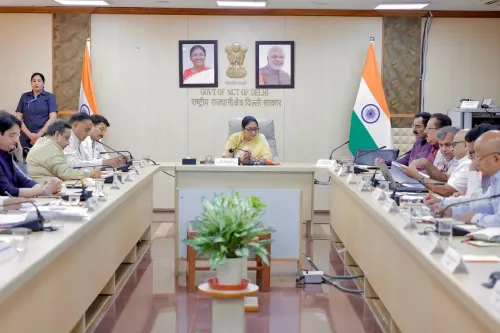
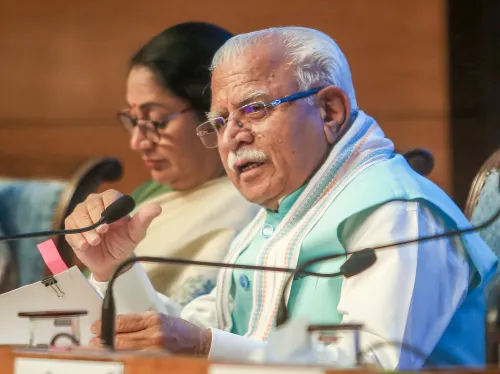
New Delhi, April 7 (NationPress) Union Housing and Urban Affairs Minister Manohar Lal revealed on Tuesday the decision to regularize 1,511 "unauthorized colonies" in Delhi on an "as is, where is" basis. This initiative is set to provide substantial relief to approximately 45 lakh migrant residents who have lived in these areas, established over the last three to four decades, in contravention of building regulations.
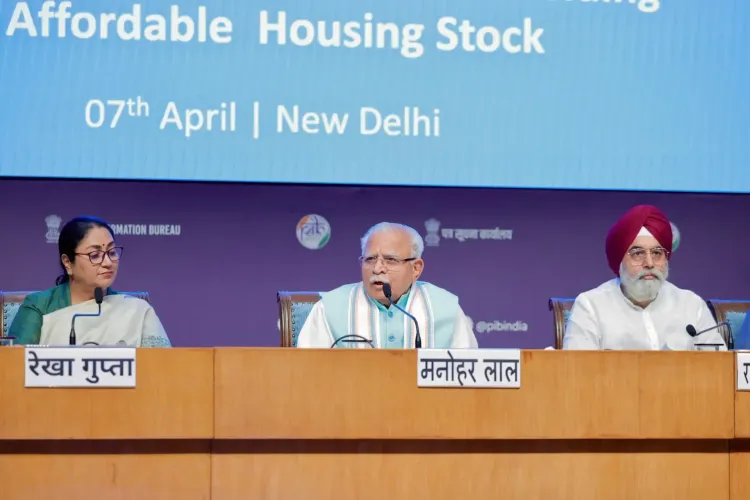
During a joint press conference with Delhi Chief Minister Rekha Gupta, Minister Lal emphasized that granting a "legal tag" to the homes in these unplanned colonies will enable residents to access benefits under the PM Uday Yojana, which includes loans against property, permissions for lawful new constructions, and initiation of development projects.
He noted that existing structures will be recognized, while any new constructions must strictly comply with Municipal Corporation guidelines.
"For expedited processing, all these colonies will be classified as residential," he stated.
Among the 1,731 unplanned colonies in the national capital, 1,511 have been approved for regularization. The remaining colonies were excluded due to their location in non-conforming areas, green zones such as the Delhi Ridge, riverbeds, or proximity to protected monuments, breaching archaeological regulations.
The regularization of these "unauthorized colonies" also fulfills a significant electoral pledge made by the Bharatiya Janata Party in its Delhi election 'Sankalp Patra'. These colonies accommodate over 10 lakh migrant families, predominantly from Purvanchal, Uttarakhand, and other northern states.
Manohar Lal mentioned that following the directives of Prime Minister Narendra Modi, the procedures for inspection and the issuance of conveyance deeds to homeowners in these colonies have been significantly simplified.
"Now, the Delhi Revenue Department will handle all formalities, minimizing the involvement of the Delhi Development Authority and other agencies," he explained, adding that the Delhi government's circle rates will apply for documentation purposes in all colonies.
He acknowledged that the residents of Delhi have long confronted urban challenges, many of which remained unresolved due to past inter-agency and governmental coordination failures.
He reiterated the government’s dedication to systematic and phased urban reforms for the citizens of Delhi.
Chief Minister Rekha Gupta expressed gratitude to Prime Minister Modi for the significant relief provided to the residents of these 1,511 colonies.
"The application process will commence on April 24. A seven-day timeline for the GIS survey, a 15-day period to rectify application deficiencies, and a 45-day limit for the issuance of conveyance deeds have been established," the Chief Minister stated.
"The central and Delhi governments have collaboratively eliminated 22 major hurdles in this process, ensuring that millions of families can secure their rightful entitlements without delays or complications. Additionally, small shops up to 20 square meters will also be regularized under certain conditions, benefiting small traders as well," she added.
Furthermore, Manohar Lal elaborated on the proposed Transit Oriented Development (TOD) policy aimed at enhancing housing availability near Metro and Regional Rapid Transit System (RRTS) corridors.
"The TOD policy will promote planned, high-density, and mixed-use developments in approximately 207 square km within a 500-metre radius of Metro and RRTS corridors. This will facilitate affordable housing options, improved connectivity, and an enhanced quality of life, particularly benefiting poor and middle-class families," the Chief Minister concluded.
Frequently Asked Questions
What is the significance of the regularisation of these colonies?
The regularisation of 1,511 unauthorized colonies in Delhi signifies a crucial step towards providing legal recognition to residents, enabling them to access housing benefits and loans under PM Uday Yojana.
When does the application process for regularisation begin?
The application process for the regularisation of these colonies is set to begin on April 24.
Who will handle the formalities for the regularisation process?
The Delhi Revenue Department will manage all formalities for the regularisation process, streamlining the procedure for residents.
How many families are affected by this decision?
The decision to regularise these colonies impacts over 10 lakh migrant families residing in these areas.
What new policies are included in the announcement?
The announcement includes the implementation of the Transit Oriented Development policy to promote housing near Metro and RRTS corridors.