Bakrid 2025: Delhi deploys Rapid Response Teams for animal welfare, sanitation
Synopsis
Delhi has mobilised Rapid Response Teams across all 13 districts ahead of Bakrid, banning public sacrifice and unlicensed meat sales while deploying district-level enforcement under Minister Kapil Mishra. The sweep spans markets and localities in six districts — and the government is warning of strict legal action for violations.
Key Takeaways
The Delhi government deployed Rapid Response Teams (RRTs) across all 13 districts ahead of Bakrid 2025 .
The drive was directed by Delhi Development Minister Kapil Mishra under the Animal Husbandry Unit .
Inspections were conducted on Tuesday across North-West, North-East, North, Central, South-West and West districts.
The advisory bans sacrifice at public places; only authorised locations are permitted.
Sacrifice of cows, calves and camels remains completely prohibited.
Sale of meat at unlicensed locations and disposal of blood into public drains are also prohibited under the advisory.
Citizens can report violations to the nearest police station or PCR .
Ahead of Bakrid celebrations, the Delhi government has deployed Rapid Response Teams (RRTs) under its Animal Husbandry Unit across all 13 districts of the national capital to enforce animal welfare norms, regulate sacrificial practices, and maintain public sanitation. The move, directed by Delhi Development Minister Kapil Mishra, was confirmed by officials on Wednesday, 27 May.
Inspections Across Six Districts
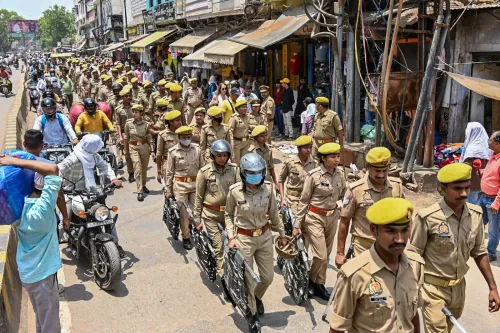
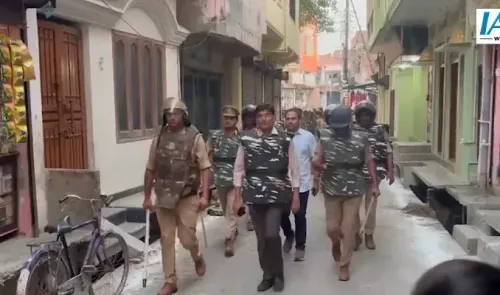
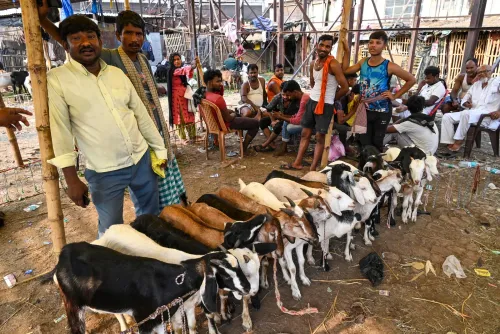
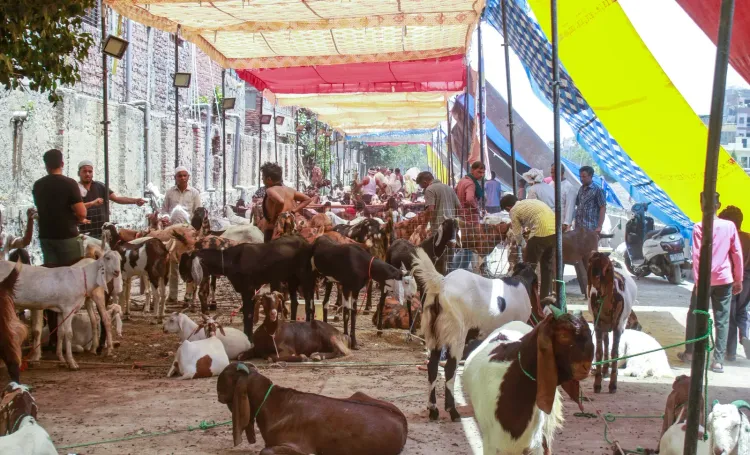
On Tuesday, RRT personnel conducted inspections in markets and residential localities spanning North-West, North-East, North, Central, South-West and West districts of Delhi. The teams simultaneously ran awareness drives targeting residents, livestock owners, animal traders, and transporters, briefing them on the advisory issued by the Delhi government for Bakrid-related activities.
Officials noted that inspectors clearly communicated that violations involving the transportation, sale, purchase, or management of animals would attract strict legal action.
What the Government Advisory Prohibits
The Delhi government's advisory lays out several firm restrictions for the festival period. According to officials, no illegal sacrifice of any kind will be permitted, and the sale or purchase of animals at public places across the city is explicitly banned.
'Sacrifice can only take place at authorised locations. Sacrifices should not be carried out on roads, lanes or other public places. Special care must also be taken to ensure that the sacrifice of cows, calves and camels remains completely prohibited,' officials stated.
The advisory further prohibits the sale of meat at unlicensed locations and mandates that blood and animal remains must not be allowed to enter drains or public sewerage systems. Citizens with complaints have been directed to contact the nearest police station or PCR.
Structure of the Rapid Response Teams
Minister Kapil Mishra said the RRTs have been constituted in all 13 districts under the supervision of district in-charges and deputy directors. Each team is tasked with monitoring local activity, inspecting the transportation and handling of animals, ensuring adherence to welfare norms, and taking immediate action against any violations detected on the ground.
Authorities also stressed that animals must not be subjected to cruelty at any stage — during transit or at the point of handling — underscoring that the enforcement mandate extends beyond sacrifice sites to the entire supply chain.
Appeal for Public Cooperation
The Delhi government has appealed to residents to cooperate fully with RRT personnel and local authorities throughout the festival period. Officials framed the enforcement drive not as a restriction on religious observance but as a mechanism to ensure peaceful celebrations and compliance with established regulations.
This comes amid a broader pattern of pre-festival regulatory mobilisation in Delhi, where the administration has in previous years issued similar advisories around Eid al-Adha. With Bakrid approaching, authorities say monitoring will remain active until the festival concludes.
Point of View
Not merely advisory, matter — a notable escalation in enforcement posture. Yet the real test lies in consistent follow-through: past festival cycles have seen similar advisories go unenforced in dense urban localities. The explicit prohibition on cow, calf, and camel sacrifice reiterates existing law, but its prominence in the official communication reflects the political sensitivities around the festival. Whether the RRT framework translates into verifiable outcomes — reduced illegal slaughter, cleaner public spaces — or remains largely performative will depend on ground-level accountability that the government has not yet detailed.
NationPress
11 Oct 2026
Frequently Asked Questions
Why has the Delhi government deployed Rapid Response Teams ahead of Bakrid?
The Delhi government deployed RRTs to enforce animal welfare norms, regulate sacrificial practices, and maintain public sanitation during the Bakrid festival period. The teams, operating under the Animal Husbandry Unit, are tasked with inspecting animal transportation, conducting awareness drives, and taking legal action against violations.
What does the Delhi government's Bakrid advisory prohibit?
The advisory bans sacrifice at public places such as roads and lanes, restricting it to authorised locations only. It also prohibits the sale and purchase of animals in public spaces, the sale of meat at unlicensed locations, and the disposal of blood or animal remains into drains or public sewerage systems. The sacrifice of cows, calves, and camels is completely prohibited.
How many districts are covered by the Rapid Response Teams?
RRTs have been constituted in all 13 districts of Delhi, each operating under the supervision of district in-charges and deputy directors, as confirmed by Minister Kapil Mishra.
Who directed the Bakrid enforcement drive in Delhi?
The enforcement drive was initiated at the direction of Delhi Development Minister Kapil Mishra. He confirmed that the RRTs are supervised at the district level and mandated to act immediately against any violations.
How can Delhi residents report violations during Bakrid?
Citizens can contact the nearest police station or PCR (Police Control Room) to report any violations of the Bakrid advisory. Authorities have urged the public to cooperate with RRT personnel and local officials throughout the festival period.