Jamiat Ulama-i-Hind issues Bakrid guidelines: follow law, maintain cleanliness
Synopsis
Ahead of Bakrid, Jamiat Ulama-i-Hind president Mahmood Asad Madani issued unusually detailed guidelines — covering everything from banned animal species and waste disposal to a specific call to avoid posting Qurbani videos on social media. The advisory signals how community organisations are increasingly stepping in to manage both civic compliance and the online communal flashpoints that now accompany major religious festivals.
Key Takeaways
Jamiat Ulama-i-Hind issued Bakrid guidelines on 23 May , ahead of Eid ul-Adha .
President Mahmood Asad Madani urged Muslims to perform Qurbani strictly within legal provisions and local administration rules.
Sacrifice of animals prohibited by law must be strictly avoided, the statement said.
Animal remains must be disposed of in plastic bags at designated sites — not on roads, streets, or drains.
Community members were advised to avoid sharing Qurbani photos or videos on social media platforms.
In case of communal provocation, Madani urged filing complaints with police rather than taking the law into one's own hands.
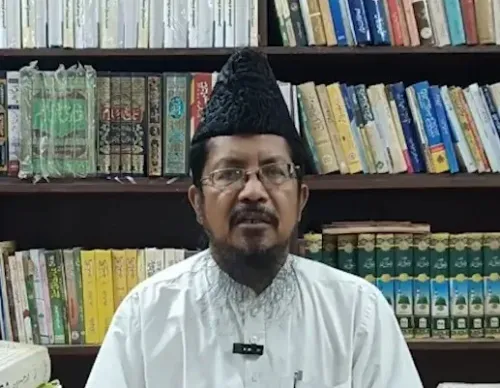
Jamiat Ulama-i-Hind on Saturday, 23 May released a comprehensive set of guidelines ahead of Bakrid (Eid ul-Adha), urging Muslims across India to perform Qurbani (animal sacrifice) in strict compliance with government regulations and local administration directives. The appeal was issued by the organisation's president, Mahmood Asad Madani, who called for religious observance to be paired with civic responsibility and communal harmony.
Key Directives Issued
In his statement, Madani underscored the religious significance of Qurbani, describing it as 'an important Islamic act of worship, obligatory on every Muslim of means,' with 'no alternative to it during the days of sacrifice.' He urged every eligible Muslim to fulfil this obligation while remaining within the bounds of the law.
Crucially, he warned that 'sacrifice of animals prohibited by law should be strictly avoided,' and directed members of the community to adhere to all legal procedures governing the purchase, sale, and transportation of sacrificial animals.
Hygiene and Public Sanitation
A significant portion of the guidelines focused on cleanliness and waste disposal. Madani appealed to the community to ensure that animal remains are never discarded on roads, streets, or drains. 'Arrangements should be made to safely transport them to designated places in plastic bags,' he said, adding that 'full cooperation should be extended to the municipal and sanitation workers in this regard.'
He also urged people to ensure that religious practices 'do not cause inconvenience or discomfort to others' — a message directed at both civic conduct and neighbourly relations during a high-visibility festival period.
Social Media Restraint Urged
Jamiat Ulama-i-Hind explicitly advised community members to refrain from posting photographs or videos of the sacrifice on social media platforms. 'Sharing photos and videos of sacrifice on social media should be strictly avoided,' Madani stated. This guidance reflects growing awareness of how such content can inflame communal sentiment online, particularly in the days surrounding major religious festivals.
Communal Harmony and Legal Recourse
Addressing the possibility of communal provocation during the festival period, Madani urged restraint and patience. 'If any local area faces provocation, threats, or harassment from communal elements, exercise patience, restraint, and understanding, and immediately file a complaint with the relevant police station or administration. Under no circumstances should the law be taken into one's own hands,' he said.
He further assured the community that if any obstacles arise regarding the performance of Qurbani, people should contact Jamiat Ulama-i-Hind or its local units for assistance and guidance. This comes amid a broader national context in which religious festivals have, on occasion, been accompanied by localised tensions — making pre-emptive outreach by community organisations increasingly significant.
Broader Significance
The Jamiat Ulama-i-Hind guidelines reflect a pattern of proactive community leadership ahead of major Muslim festivals, aimed at pre-empting administrative friction and reducing the potential for communal discord. With Bakrid observed across India by millions of Muslims, the organisation's reach — spanning local units in multiple states — gives such advisories considerable practical weight. All eyes will now be on how local administrations and communities coordinate in the days leading up to and following the festival.
Point of View
Civic optics, and the volatile terrain of social media, all at once. The explicit instruction to avoid posting Qurbani videos online is a direct acknowledgement that religious practice has become a content-moderation problem — one with real-world communal consequences. Pre-emptive advisories like this one increasingly serve as a buffer between community practice and state administration, but they also place the burden of de-escalation squarely on the minority community. Whether local administrations reciprocate with equal outreach to prevent provocation from other quarters is the question mainstream coverage rarely asks.
NationPress
6 Oct 2026
Frequently Asked Questions
What guidelines has Jamiat Ulama-i-Hind issued for Bakrid 2025?
Jamiat Ulama-i-Hind has issued guidelines urging Muslims to perform Qurbani strictly in accordance with government regulations and local administration rules, avoid sacrificing animals prohibited by law, dispose of animal waste responsibly at designated sites, and refrain from sharing sacrifice-related content on social media.
Who issued the Jamiat Ulama-i-Hind Bakrid advisory?
The advisory was issued by Jamiat Ulama-i-Hind president Mahmood Asad Madani on 23 May. Madani appealed to the Muslim community across India to observe Bakrid with civic responsibility and communal harmony.
Why has Jamiat Ulama-i-Hind asked people not to share Qurbani videos on social media?
The organisation has flagged that such content can inflame communal sentiment online, particularly around major religious festivals. The advisory reflects growing concern about how sacrifice-related visuals can be weaponised to provoke tensions on social media platforms.
What should people do if they face communal provocation during Bakrid?
Mahmood Asad Madani has urged people to exercise patience and restraint, and to immediately file a complaint with the local police station or administration. He explicitly said the law must not be taken into one's own hands under any circumstances.
How should animal waste be disposed of during Qurbani?
According to the Jamiat guidelines, animal remains should be placed in plastic bags and transported to designated disposal sites. They must not be thrown on roads, streets, or drains, and full cooperation should be extended to municipal and sanitation workers.