Delhi Speaker Vijender Gupta pushes gender-neutral parliamentary rules at key meet
Synopsis
Delhi Assembly Speaker Vijender Gupta has taken the push for gender-neutral legislative language to a national platform, arguing that rules rooted in an 1897 statute no longer reflect India's democratic aspirations. His recommendations — covering constitutional safeguards for special legislatures, digital procedure recognition, and a 30-sitting minimum — could reshape how every state legislature operates.
Key Takeaways
Delhi Legislative Assembly Speaker Vijender Gupta called for gender-neutral parliamentary rules at a national committee meeting on 27 October 2026 in New Delhi .
He argued that masculine expressions in rules derived from the General Clauses Act, 1897 must be replaced with language reflecting contemporary democratic realities.
Gupta pushed for constitutional safeguards for the Legislatures of Delhi , Puducherry , and Jammu and Kashmir within the proposed Model Rules.
The paperless meeting saved an estimated 18,252 sheets of paper , approximately 4.4 trees , and 182.5 kg of CO₂-equivalent emissions , per a Delhi Assembly Secretariat assessment.
He endorsed a minimum of 30 sittings and three annual sessions for all State Legislatures, and formal recognition of e-Vidhan and NeVA digital systems.
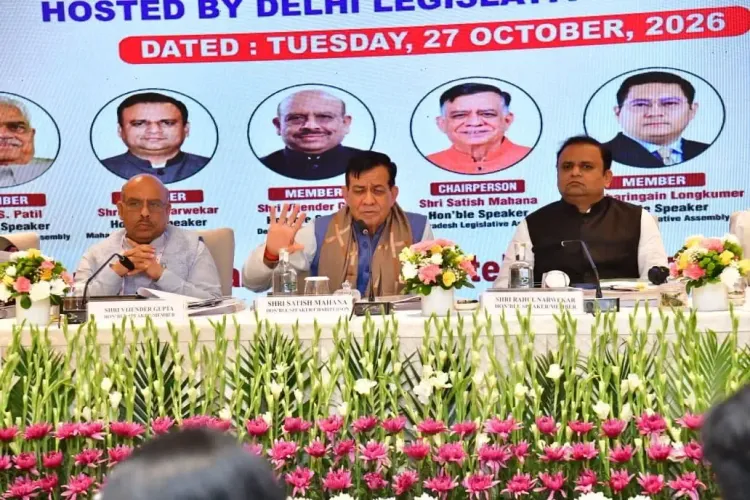
The meeting was chaired by UP Assembly Speaker Satish Mahana and attended by Speakers from Maharashtra , Himachal Pradesh , and Karnataka .
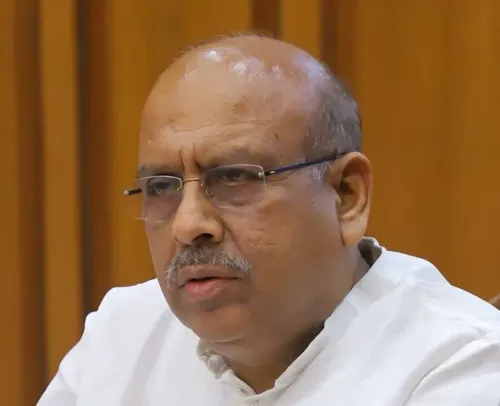
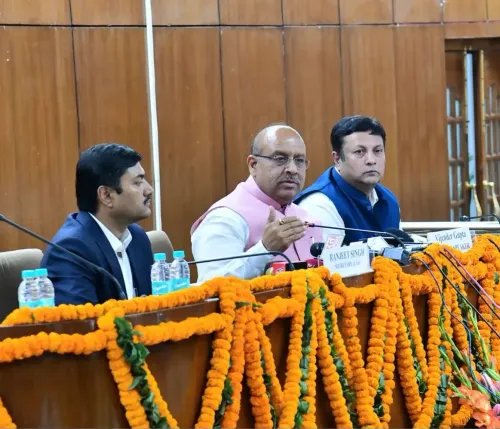
Delhi Legislative Assembly Speaker Vijender Gupta on Tuesday, 27 October 2026, called for gender-neutral parliamentary rules, constitutional safeguards, and sweeping modernisation of legislative procedures at a high-level inter-assembly committee meeting in New Delhi. Gupta made the appeal while presenting Delhi's formal recommendations before the Committee on Formulation of Model Rules for Uniformity in the Procedure and Conduct of Business in Legislative Bodies in India.
The Core Demand: Gender-Neutral Legislative Language
At the heart of Gupta's address was a call to retire masculine expressions that persist in parliamentary rules under conventions derived from the General Clauses Act, 1897. He argued that such archaic language must give way to formulations that reflect contemporary democratic realities. Framing the shift within a broader equity agenda, he stated that recognition of Nari Shakti must extend beyond political speeches and into the very rules governing India's democratic institutions.
He underscored that standardisation need not mean uniformity at the cost of identity, stating: 'Our endeavour should be to strengthen common democratic standards while preserving the constitutional autonomy and institutional distinctiveness of every Legislature.'
Constitutional Safeguards for Special Legislatures
Gupta pressed for the Model Rules to formally recognise the distinct legal frameworks applicable to Delhi, Puducherry, and Jammu and Kashmir — Legislatures that function under specific constitutional provisions and statutes, including the Government of National Capital Territory of Delhi Act, 1991. He also sought dedicated provisions for bicameral Legislatures with Legislative Councils, their Presiding Officers, and Secretariat officials, and called for clarity on the election of presiding offices and the delegation of Speaker's functions.
Cautioning against overreach, he opposed unnecessary duplication of constitutional and statutory provisions — such as those governing formal Addresses by the President, Governor, and Lieutenant Governor — noting that quorum requirements could be altered only through legislation, not model rules.
Digital Legislatures and Paperless Proceedings
The meeting itself was conducted in a fully paperless manner, reflecting the growing uptake of digital practices across Indian legislative bodies. According to an environmental impact assessment carried out by the Delhi Legislative Assembly Secretariat, the digital circulation of 12 sets of documents comprising 1,521 pages each saved an estimated 18,252 sheets of paper — equivalent to approximately 4.4 trees and 18,252 litres of water — and reduced carbon-equivalent emissions by roughly 182.5 kg of CO₂.
Gupta advocated formal recognition of electronic notices, summons, petitions, and procedural communications within the Model Rules framework, in step with the growing adoption of Digital Sansad, e-Vidhan, and the National e-Vidhan Application (NeVA).
Procedural Reforms and Session Standards
On the structure of legislative functioning, Gupta endorsed a framework of three annual sessions — Budget, Monsoon, and Winter — along with a minimum of 30 sittings for all State Legislatures, a measure discussed at the 86th Conference of Presiding Officers. He sought protection of higher statutory requirements where they already exist, to guard against a race to the bottom on deliberative quality.
He also recommended procedural refinements including avoiding duplication between Zero Hour and Special Mentions, limiting Adjournment Motions to one per sitting, and leaving debate durations to the Speaker's or the House's discretion. He welcomed the proposed practice of reciting Vande Mataram at the commencement of proceedings and Jana Gana Mana at the close of a session — practices already followed in the Delhi Legislative Assembly.
Who Attended and What Comes Next
The meeting was chaired by Uttar Pradesh Legislative Assembly Speaker Satish Mahana and attended by Rahul Narwekar, Speaker of the Maharashtra Legislative Assembly; Kuldeep Singh Pathania, Speaker of the Himachal Pradesh Legislative Assembly; and G.S. Patil, Speaker of the Karnataka Legislative Assembly, along with senior legislative officials and delegates from across the country.
Gupta recalled that this meeting followed a preliminary session in Mysore on 12 May 2026, itself a consequence of the decision taken at the 85th All India Presiding Officers' Conference in Patna to develop a common procedural framework. He commended the Uttar Pradesh Legislative Assembly Secretariat for preparing the draft report, while stressing that the exercise must identify ambiguities, draw on effective parliamentary practices, and deliver substantive institutional reform. The finalisation of the Model Rules is expected to set a common procedural baseline for legislative bodies across India.
Point of View
But the real test is whether Speakers with no binding legislative authority can translate committee recommendations into actual rule amendments across 28 state assemblies. The reliance on the General Clauses Act of 1897 for parliamentary language is an anomaly in a country that has legislated on gender identity and women's reservation — the contradiction is glaring. Gupta's insistence on protecting Delhi's distinct constitutional status is also a politically loaded demand, coming as the GNCT framework remains a live friction point between the assembly and the Centre. The Model Rules exercise, if it delivers, would be the most consequential standardisation of Indian legislative procedure since independence; if it stalls, it joins a long shelf of presiding-officers' conference resolutions that changed little.
NationPress
27 Oct 2026
Frequently Asked Questions
What did Delhi Speaker Vijender Gupta propose at the legislative committee meeting?
Vijender Gupta proposed gender-neutral parliamentary rules, constitutional safeguards for Delhi, Puducherry and Jammu and Kashmir, formal recognition of digital legislative systems, and a minimum of 30 sittings per year for all state legislatures. He made these recommendations at the meeting of the Committee on Formulation of Model Rules for Uniformity in the Procedure and Conduct of Business in Legislative Bodies in India on 27 October 2026.
Why are gender-neutral parliamentary rules being discussed?
Current parliamentary rules retain masculine expressions under conventions derived from the General Clauses Act, 1897, which critics argue no longer reflect contemporary democratic realities or the growing role of women in legislatures. Gupta contended that the recognition of Nari Shakti must extend to the very language of institutional rules, not just political rhetoric.
What is the Committee on Formulation of Model Rules and why does it matter?
It is an inter-assembly body set up following a decision at the 85th All India Presiding Officers' Conference in Patna to develop a common procedural framework for legislative bodies across India. If adopted, its Model Rules would standardise how all state legislatures conduct their business, covering everything from session schedules and quorum to digital communications.
Which states were represented at the meeting?
The meeting was chaired by Uttar Pradesh Legislative Assembly Speaker Satish Mahana and attended by Speakers from Maharashtra (Rahul Narwekar), Himachal Pradesh (Kuldeep Singh Pathania), and Karnataka (G.S. Patil), along with senior legislative officials and delegates.
What was the environmental impact of conducting the meeting digitally?
According to an assessment by the Delhi Legislative Assembly Secretariat, the paperless circulation of 12 sets of documents (1,521 pages each) saved an estimated 18,252 sheets of paper — equivalent to about 4.4 trees and 18,252 litres of water — and reduced emissions by approximately 182.5 kg of CO₂-equivalent.