Delhi Cabinet clears plan to hand 75 monuments, including Mirza Ghalib's Haveli, to NGOs
Synopsis
The Delhi Cabinet has greenlit a plan to hand over 75 state-protected monuments — including the Haveli of Mirza Ghalib in Chandni Chowk — to NGOs, trusts, and institutions for conservation. The move echoes ASI's 'Adopt a Heritage' model and raises questions about whether civil society can deliver what a cash-strapped Archaeology Department has struggled to.
Key Takeaways
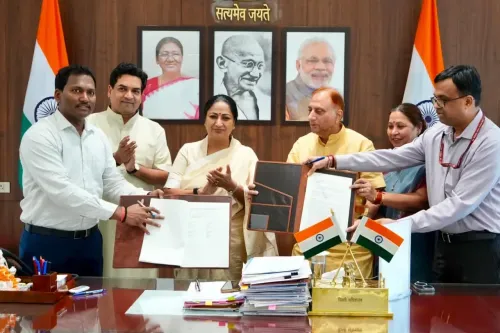
The Delhi Cabinet under Chief Minister Rekha Gupta approved the adoption of 75 monuments by NGOs, trusts, and institutions on 30 June .
The Haveli of Mirza Ghalib in Ballimaran, Chandni Chowk is among the most prominent sites on the list.
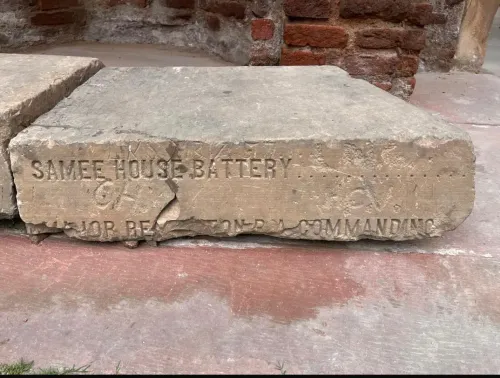
Other key monuments include Turkman Gate , Baradari of Qudsia Garden , the Mutiny Memorial , and sites in Lodi Garden , Badarpur , and Mehrauli .
All 75 monuments fall under the Archaeology Department of the Delhi government ; the proposal transfers upkeep, not ownership.
Nearly a dozen sites are located near Mehrauli Archaeological Park and the Northern and Southern Ridges .
The Delhi Cabinet, led by Chief Minister Rekha Gupta, has approved a proposal to transfer the conservation and upkeep of 75 state-protected monuments to non-government entities, including the iconic Haveli of Mirza Ghalib in Ballimaran, Chandni Chowk. The decision, announced on Tuesday, 30 June, allows trusts, NGOs, foundations, and institutions to formally adopt these heritage sites from the Archaeology Department of the Delhi government.
Key Monuments on the List
The 75 monuments span several historically significant locations across the capital. Among the most prominent are Turkman Gate on Asaf Ali Road, the Baradari of Qudsia Garden, and the Mutiny Memorial on the Northern Ridge near Hindu Rao Hospital. Nearly a dozen of the listed sites are situated close to the Mehrauli Archaeological Park and along the Northern and Southern Ridges.
The Lodi Garden cluster includes a Turret, a nameless Mosque, a Baoli, and the four walls of an enclosed garden with its entrance. Several monuments in Badarpur village also feature — the Northern Gateway, Central Gateway, and Southern Gateway and enclosure remains of Badarpur Saria.
Spread Across Delhi's Neighbourhoods
The list extends to less-visited but historically layered sites. Gumti of Sheikh Ali in Defence Colony, Gol Gumbad near the Lodhi Road Flyover, and Munda Gumbad inside Deer Park near Hauz Khas Tank are all included. So are the Bara Lao ka Gumbad, a mosque, baoli, and water channel in DDA Park, Vasant Vihar near Priya Cinema, and the Mosque of Darwesh Shah near Siri Auditorium, Khel Gaon.
Other sites earmarked for adoption include Malcha Mahal on S.P. Mukherjee Marg, the Imambara on Qutub Road, the Bhuli Bhatiyari Ka Mahal on the Southern Ridge near Karol Bagh, the Gateway of Mahaldar Khan Garden at Rana Pratap Bagh near Gur Ki Mandi, and a Baoli in Sector 12, Dwarka.
What the Proposal Envisages
Under the approved framework, adopting entities — whether trusts, NGOs, or institutions — will be responsible for conservation and maintenance of the assigned monuments. The sites remain under the formal purview of the Archaeology Department of the Delhi government; the proposal transfers upkeep responsibility, not ownership. Officials did not specify, in the available statement, the tenure of adoption agreements or the financial obligations of adopting bodies.
Why This Matters
Delhi's state-protected heritage inventory has long suffered from chronic under-maintenance, with many lesser-known monuments deteriorating due to resource constraints within the Archaeology Department. This move mirrors similar public-private partnership models adopted for centrally protected monuments under the Archaeological Survey of India (ASI)'s 'Adopt a Heritage' scheme, which has faced mixed outcomes. Notably, the Haveli of Mirza Ghalib — where the celebrated Urdu poet lived and wrote — holds particular cultural resonance and has historically attracted calls for better upkeep from literary and heritage circles. Whether the NGO-led model delivers sustained conservation or risks uneven stewardship across 75 diverse sites will be closely watched.
Point of View
But the devil is in the implementation. The ASI's 'Adopt a Heritage' scheme — the closest national parallel — has seen several high-profile adoptions lapse or deliver cosmetic upgrades rather than substantive conservation. The inclusion of the Mirza Ghalib Haveli is symbolically significant but also a test case: literary heritage demands curatorial sensitivity, not just physical maintenance. Without published adoption agreements, defined conservation standards, and a public accountability mechanism, this risks becoming a maintenance outsourcing exercise dressed up as heritage revival.
NationPress
29 Sept 2026
Frequently Asked Questions
Which monuments is the Delhi government handing over to NGOs?
The Delhi Cabinet has approved the adoption of 75 state-protected monuments by NGOs, trusts, and institutions. The list includes the Haveli of Mirza Ghalib in Ballimaran, Turkman Gate on Asaf Ali Road, the Baradari of Qudsia Garden, the Mutiny Memorial, and several sites in Lodi Garden, Badarpur, Mehrauli, Defence Colony, Vasant Vihar, and Karol Bagh, among others.
What does the Delhi Cabinet's monument adoption proposal involve?
The proposal allows non-government entities — trusts, NGOs, foundations, or institutions — to formally adopt state-protected monuments for their conservation and upkeep. All 75 sites remain under the Archaeology Department of the Delhi government; the transfer covers maintenance responsibility, not ownership.
Why is the Mirza Ghalib Haveli significant?
The Haveli of Mirza Ghalib in Ballimaran, Chandni Chowk, is the residence where the celebrated Urdu poet Mirza Ghalib lived and wrote. It is one of Delhi's most culturally resonant heritage sites and has long been a focus of calls for better conservation from literary and heritage communities.
Who approved the monument adoption plan and when?
The Delhi Cabinet, headed by Chief Minister Rekha Gupta, approved the proposal on Tuesday, 30 June. The decision was communicated through an official government statement.
How does this compare to similar heritage adoption schemes?
The Delhi government's plan mirrors the Archaeological Survey of India's 'Adopt a Heritage' scheme for centrally protected monuments, under which corporates and institutions have taken on upkeep of major sites. That national scheme has had mixed results, with some adoptions delivering limited conservation impact, making execution oversight critical for Delhi's initiative as well.