Is Delhi Experiencing Warmer Weather While AQI Remains in the ‘Poor’ Category?
Synopsis
New Delhi is experiencing a rise in temperatures and persistent shallow fog as winter draws to a close. The AQI has escalated to 206, categorizing it as poor. With health concerns on the rise, the city has initiated pollution mitigation plans aimed at reducing harmful air quality levels.
Key Takeaways
Delhi's AQI has reached 206, indicating poor air quality.
Shallow fog is prevalent, impacting visibility.
The city aims for a 15% reduction in AQI by 2026.
Health risks are heightened due to pollution and fog.
NCR cities have submitted plans to mitigate pollution.
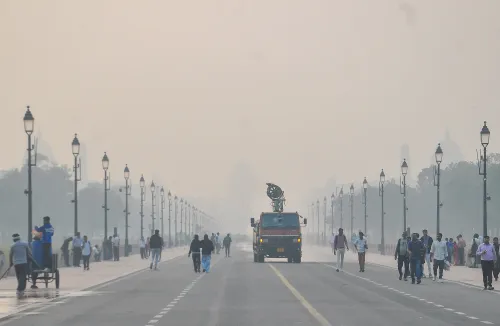
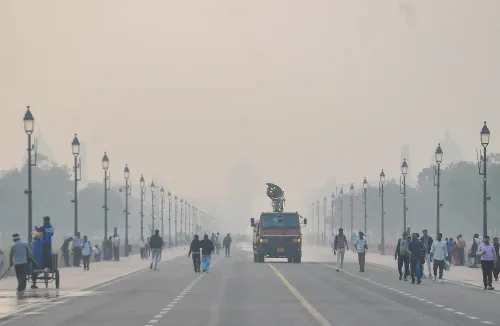
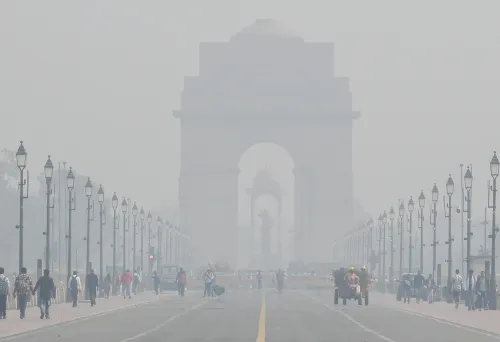
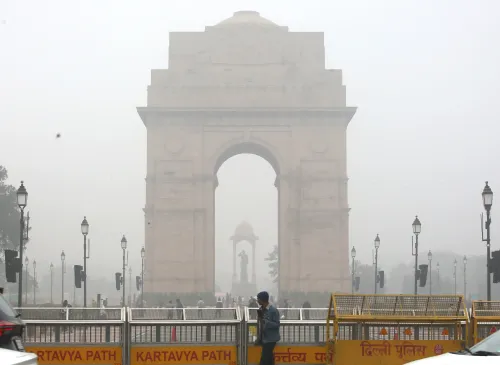
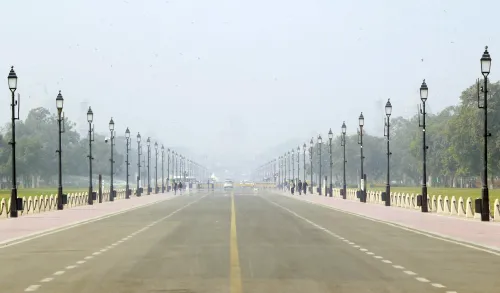
On February 9, New Delhi (NationPress) greeted its residents with shallow fog and a slight increase in temperatures on Monday, signifying a gradual transition from winter. The Air Quality Index (AQI) climbed to 206, categorizing it as ‘poor’ at 7 a.m., as reported by the Central Pollution Control Board (CPCB).
Multiple monitoring stations displayed AQI levels ranging from poor to moderate. As stated by the CPCB, Anand Vihar recorded an AQI of 289, Bawana at 259, Chandni Chowk at 193, DTU at 206, IGI Airport (T3) at 179, IIT Delhi at 155, ITO at 216, Jawaharlal Nehru Stadium at 213, Mundka at 276, Narela at 233, North Campus at 135, Patparganj at 208, Rohini at 260, Pusa at 159, and Wazirpur at 254.
In the adjacent city of Noida, air quality remained troubling. Noida Sector-125 recorded an AQI of 237, Noida Sector-62 at 154, Noida Sector-1 at 192, and Noida Sector-116 at 195.
According to AQI classifications, readings between 0 and 50 are deemed ‘good’, 51 to 100 as ‘satisfactory’, 101 to 200 as ‘moderate’, 201 to 300 as ‘poor’, 301 to 400 as ‘very poor’, and 401 to 500 as ‘severe’.
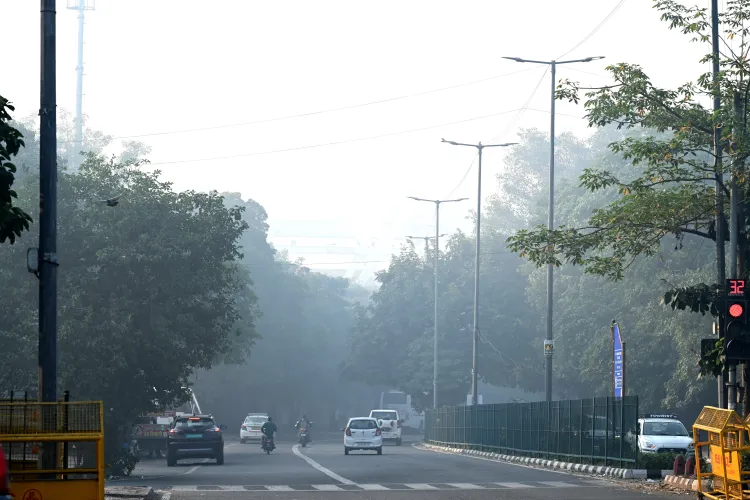
Delhi recorded a minimum temperature of 9 degrees Celsius. The shallow fog in the morning hours impacted visibility in certain areas, though no significant disruptions were noted.
The city is expected to continue experiencing shallow fog and mist in the upcoming days, with temperatures remaining relatively stable.
The India Meteorological Department (IMD) forecasts that mist will persist from February 10 to February 14, particularly during early mornings and late nights.
Daytime temperatures are predicted to range between 23 and 25 degrees Celsius, while minimum temperatures may hover between 10 and 12 degrees Celsius. Humidity levels are expected to be maintained at 50 to 60 percent.
As the winter season approaches its conclusion, pollution levels remain notably high across various parts of the city, raising health concerns for residents, especially during early hours when fog and pollution combine to diminish air quality further.
In a related announcement, the Commission for Air Quality Management (CAQM) revealed on Sunday that 12 cities within the National Capital Region (NCR), along with four NCR states and Delhi, have submitted comprehensive pollution mitigation strategies aimed at curbing pollution in the region this year.
In addition to Delhi, sector-specific measures to lower annual average AQI and particulate pollution were presented by Uttar Pradesh, Haryana, and Rajasthan.
The NCR cities that have submitted their proposals include Agra, Meerut, Noida, Greater Noida, Ghaziabad, Karnal, Faridabad, Gurugram, Manesar, Panipat, Rohtak, and Sonipat.
According to Delhi's action plan, the city aims to achieve a 15% reduction in its annual average AQI by 2026 compared to the average of the preceding five years. The strategy also outlines a 15% reduction in annual average PM2.5 concentrations and a 20% reduction in PM10 levels by 2026.
Point of View
We uphold the responsibility of delivering accurate and unbiased news. Today's report highlights the persistent air quality challenges faced by Delhi, emphasizing the need for effective pollution control measures. The commitment shown by NCR cities in submitting detailed pollution mitigation plans reflects an urgent response to a critical public health issue. We must continue to advocate for cleaner air and healthier living conditions for all residents.
NationPress
22 Oct 2026
Frequently Asked Questions
What is the current AQI level in Delhi?
The current Air Quality Index in Delhi is 206, categorizing it as 'poor'.
How does fog affect air quality?
Fog can trap pollutants close to the ground, worsening air quality and increasing health risks.
What are the health implications of poor air quality?
Poor air quality can lead to respiratory issues, cardiovascular problems, and other health concerns, particularly for vulnerable populations.
What measures is Delhi taking to combat pollution?
Delhi has initiated various pollution mitigation plans, aiming for a 15% reduction in annual average AQI by 2026.
How can residents protect themselves from air pollution?
Residents can protect themselves by staying indoors during high pollution days, using air purifiers, and wearing masks when necessary.