Why is Delhi's Air Quality Still 'Very Poor' Amid Cold?
Synopsis
As Delhi ushers in the New Year, it faces a severe air quality crisis exacerbated by cold weather and pollution. With the AQI skyrocketing, residents are left to grapple with the health implications. Discover the alarming statistics and weather forecasts that detail the ongoing struggle for cleaner air in the capital.
Key Takeaways
Delhi's air quality remains critically poor with an AQI of 372.
Weather conditions like cold and fog are worsening pollution levels.
Monitoring stations report alarming AQI figures across the city.
Neighboring cities are also experiencing severe air quality issues.
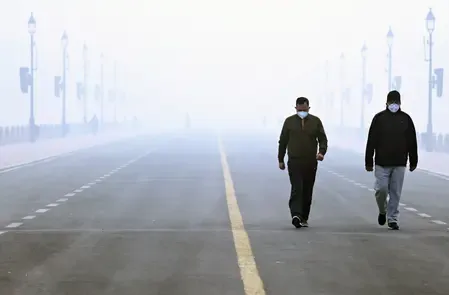
Residents are advised to stay indoors and wear masks when outside.
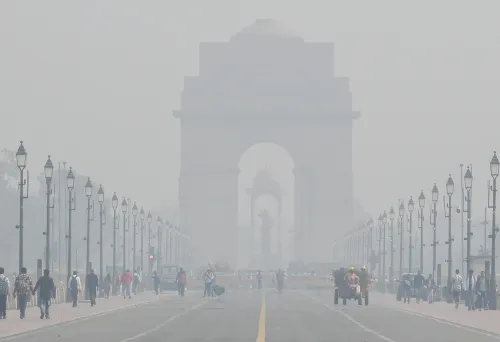
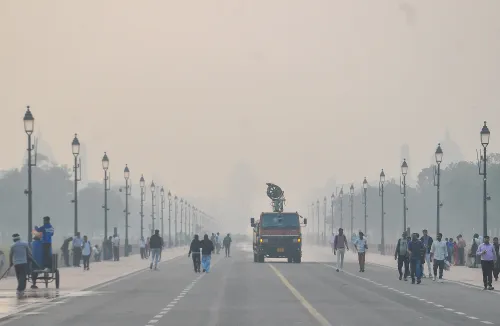
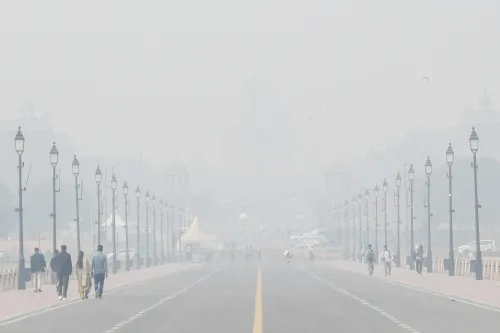
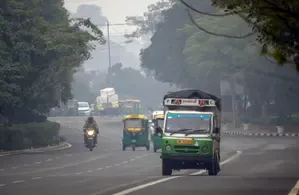
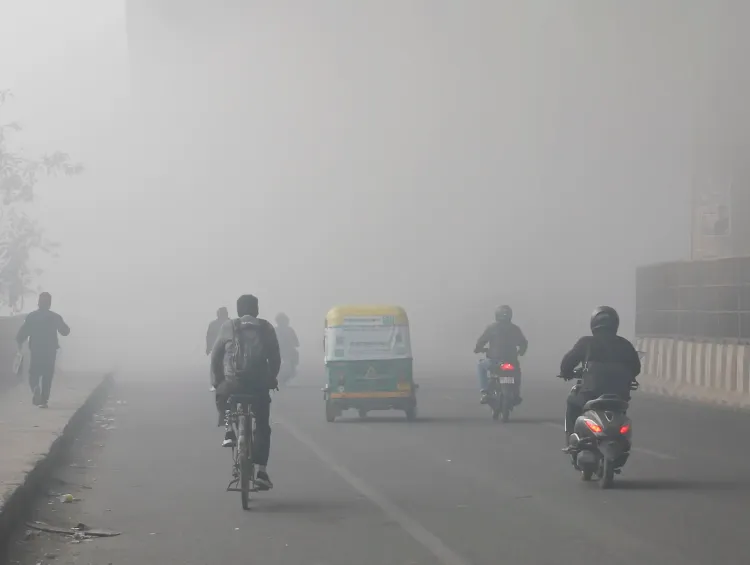
New Delhi, Jan 1 (NationPress) This New Year, Delhi faced yet another difficult morning, enveloped in a dense layer of pollution and extreme cold, as the air quality persisted in the 'very poor' category. The fog and low temperatures tightened their grip on the national capital.
Recent data from the Central Pollution Control Board (CPCB) revealed that the Air Quality Index (AQI) for Delhi was recorded at 372, indicating ongoing high pollution levels throughout the city.
The cold and foggy weather conditions have exacerbated the issue, as diminished wind speed and low temperatures have hindered the dispersion of pollutants, causing fine particulate matter to linger in the air for extended periods.
Alarmingly, various air quality monitoring stations in Delhi reported concerning AQI levels. Anand Vihar registered an AQI of 418, with Wazirpur close behind at 414.
Rohini recorded an AQI of 413, while Ashok Vihar logged 392.
RK Puram noted 381, ITO at 371, Chandni Chowk reported 377, and Siri Fort recorded an AQI of 384.
The neighboring cities within the National Capital Region also grappled with poor air quality.
Noida recorded an AQI of 364, and Ghaziabad followed with an AQI of 338. Greater Noida was close behind at 336, with all these areas falling into the 'very poor' air quality category.
The India Meteorological Department (IMD) has forecast a generally cloudy sky for Thursday, suggesting a chance of very light to light rain in isolated areas.
Moreover, the weather office warned residents about moderate fog in many locations, with dense fog in certain areas during the morning hours, alongside cold day conditions in some regions.
Notably, Wednesday marked the coldest day recorded in Delhi since 2019, with maximum temperatures peaking at 14.2 degrees Celsius, which is 6.2 degrees below the seasonal average.
Such uncharacteristically low daytime temperatures, coupled with high humidity levels and stagnant wind conditions, have significantly added to the discomfort for residents and worsened the air quality across the region.
In a recent analysis by the Centre for Research on Energy and Clean Air (CREA), it was noted that Delhi remained the most polluted city in the National Capital Region in 2025, followed by Ghaziabad and Noida.
While there was a slight decline in annual average PM2.5 concentration in Delhi compared to the previous year, pollution levels during the crucial October to December period saw a slight uptick when compared to 2024.
The study pointed out that PM2.5 levels across all 40 monitoring stations in Delhi were at least 1.8 times, almost double, the prescribed annual standards.
Among the 29 cities within the NCR, only 14 had PM2.5 data coverage exceeding 75% in 2025, highlighting significant gaps in comprehensive air quality monitoring throughout the region.
Point of View
It is crucial to highlight the persistent air quality issues in Delhi that not only affect public health but also raise concerns about environmental policies and practices. The data presented underscores an urgent need for effective measures to combat air pollution and its adverse effects on the population.
NationPress
29 Sept 2026
Frequently Asked Questions
What is the current AQI level in Delhi?
The current AQI level in Delhi stands at 372, indicating 'very poor' air quality.
What factors are contributing to poor air quality in Delhi?
The combination of cold temperatures, fog, and low wind speed are contributing to the accumulation of pollutants in the air.
How does Delhi's air quality compare to neighboring cities?
Delhi continues to have the highest pollution levels in the NCR, with neighboring cities like Noida and Ghaziabad also reporting 'very poor' AQI levels.
What health risks are associated with poor air quality?
Poor air quality can lead to respiratory issues, cardiovascular diseases, and other health problems, especially for vulnerable populations.
What measures can be taken to improve air quality?
Implementing stricter regulations on emissions, promoting public transport, and increasing green spaces are crucial steps towards improving air quality.