Delimitation panel likely to be led by SC judge: govt sources
Synopsis
The Centre's answer to gerrymandering fears is a judge in the chair. As the Delimitation (Second) Bill heads to the Lok Sabha, government sources say a serving or retired SC judge will lead the panel that could expand the House from 550 to 850 seats. The Opposition's real objections, however, run deeper: no fresh Census and delayed women's quota.
Key Takeaways
The Delimitation Commission is likely to be chaired by a serving or retired Supreme Court judge appointed by the Centre, according to government sources.
The Delimitation (Second) Bill, 2026 will be tabled in the Lok Sabha on Monday.
The bill is linked to raising the Lok Sabha's maximum strength from 550 to 850 .
The CEC or a nominated Election Commissioner and the State Election Commissioner will be ex-officio members, alongside five MPs and five MLAs as associate members.
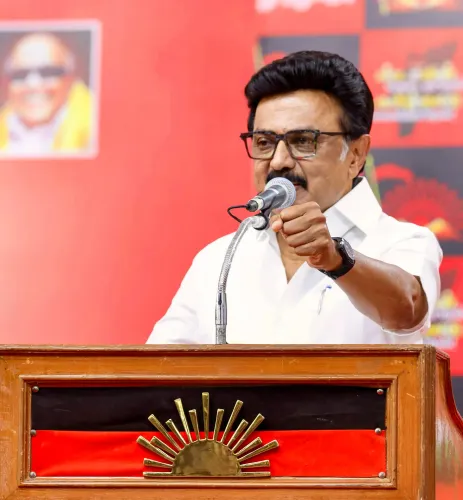
The INDIA bloc opposes the bill and has demanded a fresh Census and implementation of the existing women's reservation law.
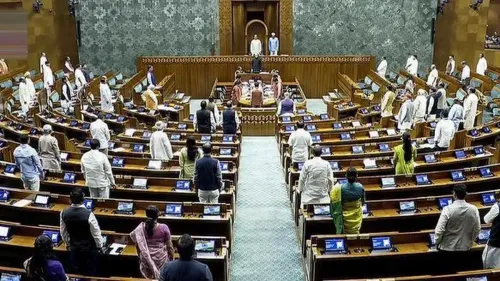
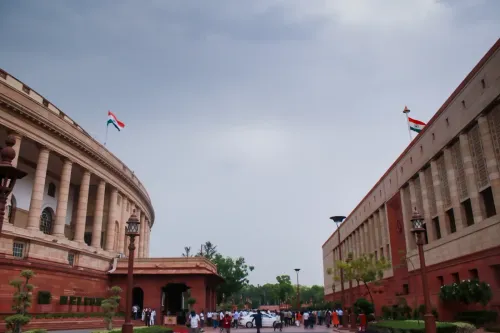
The proposed Delimitation Commission is likely to be headed by a serving or retired Supreme Court judge, government sources indicated in New Delhi on 29 November 2026, arguing that a judicial chair leaves no room for gerrymandering. The assurance comes a day before the Delimitation (Second) Bill, 2026 is tabled in the Lok Sabha on Monday, and as Opposition parties question how the panel will be composed.
The Commission will redraw the boundaries of parliamentary and Assembly constituencies. The bill is linked to a proposal to raise the maximum strength of the Lok Sabha from 550 to 850 seats.
Key Developments
Section 3 of the bill sets out the composition of the Commission. According to people aware of the details, the Chairperson is likely to be a serving or retired Supreme Court judge, appointed by the Central government.
The Chief Election Commissioner (CEC), or an Election Commissioner nominated by the CEC, will be an ex-officio member. The State Election Commissioner will also sit on the panel as an ex-officio member.
The Commission will also include five MPs as associate members, nominated by the Lok Sabha Speaker. In addition, five MLAs, nominated by the respective Assembly Speakers, will serve as associate members.
Opposition Concerns Over the Panel
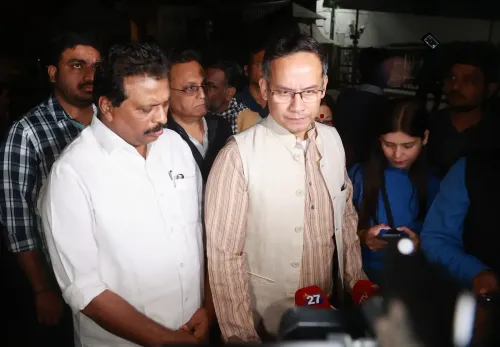
The INDIA bloc has opposed the bill, calling it an attempt to destroy democracy. A section of Opposition leaders has said they oppose the Commission being headed by Chief Election Commissioner Gyanesh Kumar, whom they have accused of “electoral roll manipulation”. The government has not accepted that allegation.
Notably, the composition described by government sources places a judge, not the CEC, in the chair. The CEC or a nominee would sit on the panel as an ex-officio member. Government sources said the bill is designed to ensure fair play.
Opposition parties have also objected to carrying out delimitation without a fresh Census and to changing the country's electoral structure. They have demanded that the existing women's reservation law be implemented instead.
What the Government Says
Ahead of Monday's tabling, the National Democratic Alliance (NDA) has presented the revised legislation as a way to speed up women's representation in elected bodies. It also says the bill will modernise the size of parliamentary and Assembly constituencies.
This comes amid a long-running debate over how seats should be redistributed. The number of Lok Sabha seats allotted to each state has been frozen for decades, which makes any expansion politically sensitive. Population-linked reallocation could shift the balance of representation between states.
Historical Context
Earlier Delimitation Commissions, including the one constituted under the Delimitation Act, 2002, were also chaired by retired Supreme Court judges. They followed a broadly similar model, with election officials as ex-officio members and legislators as associate members.
The women's reservation law passed in 2023 reserves one-third of seats in the Lok Sabha and state Assemblies for women. However, it takes effect only after a delimitation exercise based on the first Census conducted after the law came into force. That sequencing sits at the centre of the current dispute.
What Happens Next
The bill is set to be introduced in the Lok Sabha on Monday, and a sharp floor confrontation between the NDA and the INDIA bloc is likely. Debate is expected to focus on three issues: whether a judge-led panel will satisfy Opposition demands for neutrality, how seats will be reallocated, and how quickly women's reservation can actually take effect.
Point of View
And it follows the precedent of every earlier commission. But it sidesteps the Opposition's more substantive charge: redrawing boundaries and adding up to 300 seats without fresh Census data invites questions about what population base will guide reallocation. The Centre also appoints the chair, and Speakers nominate the associate members, so perceptions of neutrality will depend on who is chosen. If women's representation is the stated goal, the government must explain why this route is faster than simply operationalising the 2023 law.
NationPress
29 Nov 2026
Frequently Asked Questions
Who will head the proposed Delimitation Commission?
A serving or retired Supreme Court judge is likely to head the Commission, according to government sources. The Chairperson will be appointed by the Central government.
What is the Delimitation (Second) Bill, 2026?
It is legislation that sets up a Delimitation Commission to redraw parliamentary and Assembly constituency boundaries. It is linked to a proposal to raise the Lok Sabha's maximum strength from 550 to 850 and is set to be tabled on Monday.
Who are the members of the Delimitation Commission?
Besides the judge-chair, the CEC or a nominated Election Commissioner and the State Election Commissioner will be ex-officio members. Five MPs nominated by the Lok Sabha Speaker and five MLAs nominated by Assembly Speakers will be associate members.
Why is the Opposition against the delimitation bill?
The INDIA bloc has called the bill an attempt to destroy democracy. Opposition parties object to delimitation without a fresh Census and to changes in the electoral structure, and some leaders have opposed any role for CEC Gyanesh Kumar, alleging electoral roll manipulation.
How is the bill linked to women's reservation?
The NDA has presented the bill as a way to speed up women's representation in elected bodies. The Opposition instead wants the existing women's reservation law implemented directly.