Jubo League activist killed in Shariatpur BNP-Awami League clash
Synopsis
A Jubo League activist was killed and two others were shot as BNP and Awami League supporters fought with crude bombs and gunfire near the Padma Bridge, halting the Dhaka-Bhanga Expressway for 90 minutes. It follows a week of attacks on Awami League leaders' homes across at least 12 districts.
Key Takeaways
Jubo League activist Ibrahim Sipahi was killed in a BNP-Awami League clash in Zajira, Shariatpur on 29 November 2026 .
Two others suffered gunshot injuries ; crude bombs, arson and vandalism were reported near the Padma Bridge .
12 to 20 motorcycles of BNP activists, a restaurant and an eatery were reportedly set on fire.
Traffic on the Dhaka-Bhanga Expressway was suspended for around 1.5 hours .
At least four people were killed in violence across 12 districts between 14 and 19 November .
Homes of several Awami League leaders, including former state minister Shahriar Alam , were torched.
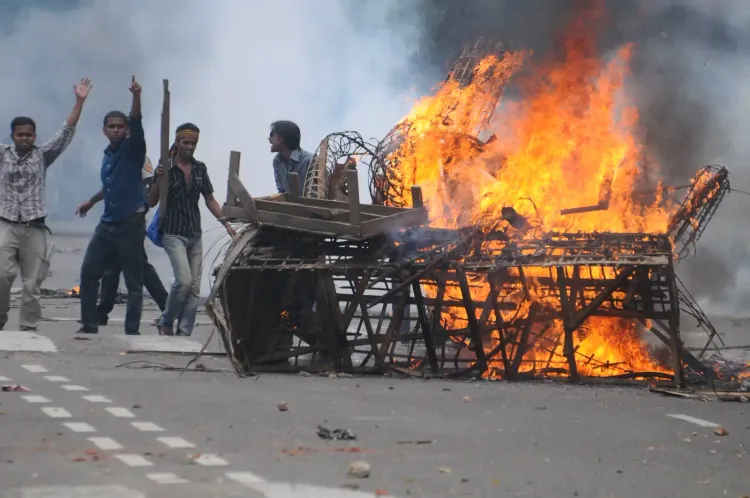
A Jubo League activist was killed and two others suffered gunshot injuries after activists of the Bangladesh Nationalist Party (BNP) and the Awami League clashed in Zajira upazila of Bangladesh's Shariatpur district on Sunday, 29 November 2026, according to local media. The deceased has been identified as Ibrahim Sipahi. The violence, which reportedly involved crude bombs, gunfire, arson and vandalism, disrupted traffic on the Padma Bridge and the Dhaka-Bhanga Expressway.
Key Developments
The clashes broke out on Sunday morning in the Naodoba and Bikenagar areas near the southern end of the Padma Bridge, the Dhaka Tribune reported. Traffic resumed only after the situation was brought under control.
According to police and local sources, Awami League activists moved from Bikenagar towards the southern end of the bridge while BNP activists were present on the expressway at the same time. Both sides initially chased each other before the confrontation escalated into clashes, crude bomb blasts and gunfire. BNP activists later left the spot.
Arson, Vandalism and Traffic Disruption
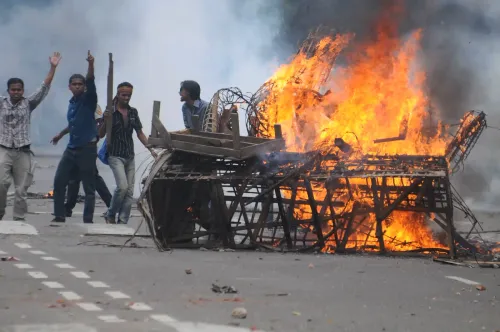
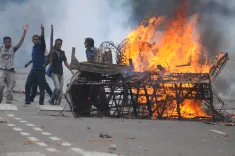
During the violence, the venue of a BNP rally was allegedly vandalised. Between 12 and 20 motorcycles belonging to BNP activists, along with a restaurant and a nearby eatery at the Naodoba roundabout, were reportedly set on fire.
Videos circulating on social media show people carrying locally made weapons, blocking the expressway and setting off crude bombs, according to the Dhaka Tribune. Vehicular movement on the Dhaka-Bhanga Expressway stayed suspended for around one and a half hours, leaving long queues of vehicles on both sides. Police said the situation has since been brought under control.
A Wider Pattern of Political Violence
The Shariatpur clash comes amid a broader wave of unrest across Bangladesh. Earlier, at least four people were killed and several others injured between 14 and 19 November as arson attacks, crude bomb explosions, vandalism, road blockades and clashes gripped the country.
That violence spread across at least 12 districts, targeting police stations, residences of political leaders, public offices, vehicles, transport infrastructure, and financial and educational institutions.
Notably, a series of attacks on residences of Awami League leaders and those affiliated with the party was reported across several districts, with homes vandalised, looted and set ablaze, Bangladeshi daily The Business Standard reported.
Homes of Awami League Leaders Targeted
On 18 November, the residence of Swechchhasebak League President Gazi Mesbaul Hossain Sacchu in the North Ibrahimpur area of Dhaka was attacked. A group of 20-25 people reportedly stormed the house, vandalised it and torched a motorcycle and a sofa in the garage.
Later that night, around 9 pm, the residence of Jubo League General Secretary Mainul Hossain Khan Nikhil in Mallika Housing in Mirpur was attacked, ransacked and set ablaze. Allegations surfaced that workers of Chhatra Dal, the student wing of the ruling BNP, were involved.
Miscreants also set fire to the four-storey residence of former state minister Shahriar Alam in Bagha upazila of Rajshahi district on 18 November after scaling its boundary wall and pouring petrol inside, according to The Business Standard.
In Barishal district, the residences of former minister Jahangir Kabir Nanak and Major General Ziaul Ahsan (retd), former Director General of the National Telecommunication Monitoring Centre, were vandalised and torched. In Patuakhali, attackers set fire to at least seven houses owned by Awami League leaders and affiliates, including former MP Shahjahan Mia, between 18 and 19 November.
The ancestral home of former Feni-3 MP Haji Rahim Ullah in Sonagazi was looted and set ablaze early Thursday, while the residence of former MP AKM Bahauddin Bahar in Cumilla was also targeted.
With the latest death in Shariatpur and disruption on one of the country's most critical transport corridors, attention will now turn to whether authorities can contain the escalating cycle of political violence.
Point of View
A neighbour with deep economic and security stakes in Bangladesh's stability, persistent disorder of this kind is a strategic concern, not merely a domestic Bangladeshi matter. Dhaka's credibility will rest on whether arrests and accountability follow, regardless of party affiliation.
NationPress
29 Nov 2026
Frequently Asked Questions
What happened in Shariatpur, Bangladesh on 29 November 2026?
A Jubo League activist, Ibrahim Sipahi, was killed and two others suffered gunshot injuries in a clash between BNP and Awami League activists in Zajira upazila. The violence involved crude bombs, gunfire, arson and vandalism near the southern end of the Padma Bridge.
How did the clash affect traffic on the Padma Bridge?
Vehicular movement on the Dhaka-Bhanga Expressway was suspended for around one and a half hours, causing long queues on both sides. Traffic resumed after police brought the situation under control.
Who is Ibrahim Sipahi?
Ibrahim Sipahi was the Jubo League activist killed in the Shariatpur clash. The Jubo League is the youth wing affiliated with the Awami League.
How widespread is the recent political violence in Bangladesh?
At least four people were killed and several injured between 14 and 19 November in violence across at least 12 districts. Police stations, public offices, transport infrastructure and homes of political leaders were targeted.
Which Awami League leaders' homes were attacked?
Homes of Gazi Mesbaul Hossain Sacchu, Mainul Hossain Khan Nikhil, former state minister Shahriar Alam, former minister Jahangir Kabir Nanak and several former MPs were reportedly vandalised or set ablaze. Allegations surfaced that the BNP's student wing Chhatra Dal was involved in the Dhaka attacks.