Bangladesh political violence persists under BNP rule: 94 killed in 2026
Synopsis
Bangladesh changed its government, but not its cycle of political bloodshed. ASK data shows 467 incidents of political violence — 94 dead, 3,587 injured — in just nine months of 2026, with BNP factional clashes alone accounting for 18 deaths. The pattern holds across every administration since 2002, raising a hard question: is Bangladesh's violence a governance failure, or something deeper in its political structure?
Key Takeaways
Between January and September 2026 , Ain o Salish Kendra (ASK) recorded 467 incidents of political violence in Bangladesh, resulting in 94 deaths and 3,587 injuries .
112 incidents involved clashes between rival BNP factions , leaving 18 dead and 1,215 injured .
Ripon Mia , a local Jubo Dal leader, was killed on 18 October in Narayanganj amid a dispute over a guest list for a religious event.
During 2002–2006 under the BNP's previous tenure, ASK recorded 284 internal party clashes and 55 deaths ; the pattern repeated under Awami League rule from 2009–2012 .
Prime Minister Tarique Rahman has reportedly warned BNP lawmakers against extortion and land grabbing, pledging accountability for elected representatives.
The August 2024 end of Sheikh Hasina 's 15-year rule raised hopes of a new political culture, but subsequent data suggests ground-level rivalries remain entrenched.
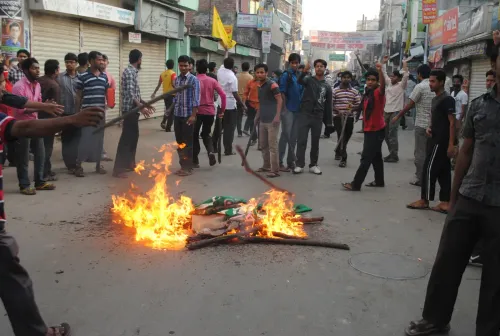
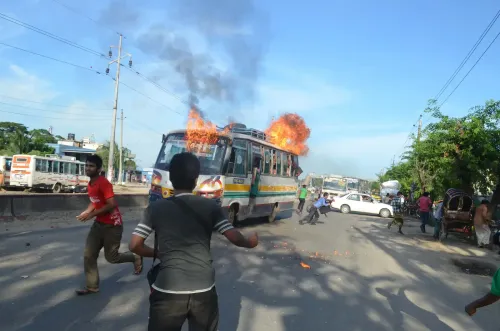
Political violence continues to plague Bangladesh even after a change in national leadership, with clashes among supporters of the ruling Bangladesh Nationalist Party (BNP) exposing deep-rooted rivalries over local influence, political positions, and control of economic resources. Data compiled by Bangladeshi human rights organisation Ain o Salish Kendra (ASK) and examined in a recent report by The Diplomat paints a sobering picture of a cycle that has outlasted multiple administrations.
Recent Incidents Highlight Continuing Threat
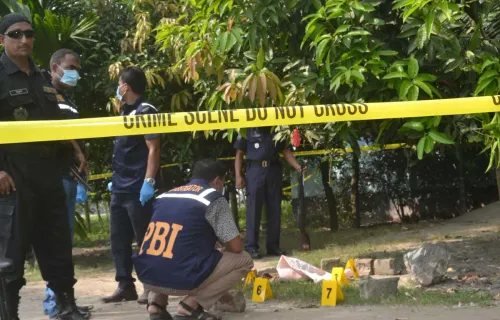
One of the most recent cases occurred on 18 October, when Ripon Mia, a local leader of the BNP's youth wing Jubo Dal, was chased and attacked with sharp weapons in the Paiska area of Narayanganj district. He was rushed to hospital, where doctors declared him dead. His daughter, Shila, told local media that several men had pursued and hacked her father. According to local BNP activists, the dispute had reportedly escalated over whose names were to appear on a guest list for a religious event. The local BNP president reportedly attributed the killing to a struggle for political dominance.
In a separate incident on 28 February — less than two weeks after the BNP returned to elected power — clashes between BNP and Jamaat-e-Islami (JI) supporters in Chuadanga district claimed two lives. Police said an argument following the evening meal during Ramadan spiralled into violence. Hafizur Rahman died hours after the clash; his brother Mofizur Rahman, a local JI leader, succumbed to injuries at a Dhaka hospital on 10 March. Police arrested three suspects, including a local BNP official and a former leader of its volunteer wing.
Scale of Violence in 2026: ASK Data
Between January and September 2026, ASK recorded 467 incidents of political violence across Bangladesh, resulting in 94 deaths and 3,587 injuries. Of these, 112 incidents involved clashes between rival BNP factions, leaving 18 people dead and 1,215 injured. These figures span both the final weeks of the interim administration and the elected government led by BNP chief Tarique Rahman, who assumed office as Prime Minister on 17 February.
A Pattern Stretching Back Decades
The data reveals this is far from a new phenomenon. During 2002–2006, when the BNP was previously in power, ASK recorded 284 internal party clashes, resulting in 55 deaths. Internal clashes within the Awami League (AL) accounted for another 37 deaths during the same period. After the AL returned to power in 2009, ASK documented 799 internal party clashes between 2009 and 2012, leaving 97 people dead. The BNP recorded 229 clashes and 21 deaths during those years in opposition. Notably, violence tied to local elections has also been persistently deadly — ASK recorded 147 deaths linked to Union Parishad election-related violence in 2016, and 113 in 2021.
Drivers: Land, Contracts, and Local Power
Research cited in The Diplomat's report identifies struggles for dominance within political organisations — combined with disputes over contracts, land, property, and employment — as the primary drivers of recurring violence. This comes amid broader expectations that the political upheaval of August 2024, which ended former Prime Minister Sheikh Hasina's 15-year rule, would usher in a new political culture. Subsequent incidents suggest otherwise.
BNP Leadership Responds, But Challenges Remain
The BNP leadership has acknowledged the problem. Prime Minister Tarique Rahman reportedly warned party lawmakers against extortion and land grabbing, stressing that elected representatives would be held accountable. Critics argue, however, that warnings from the top have historically had limited effect on ground-level behaviour. The findings of The Diplomat report underscore a structural challenge — political transitions in Bangladesh have repeatedly changed those holding national office without dismantling the local networks of rivalry and resource competition that repeatedly turn violent.
Point of View
BNP or Awami League, has generated roughly comparable waves of internal and inter-party bloodshed, driven by the same local contests over contracts, land, and patronage. Tarique Rahman's warnings to lawmakers are welcome, but warnings from party headquarters have never reliably reached the ward-level operative who sees a rival's rising influence as an existential threat. What Bangladesh may need is not better rhetoric from the top, but a credible, non-partisan enforcement mechanism at the district and union level — something neither party has been willing to build, because both benefit from the same informal power networks they publicly condemn.
NationPress
8 Nov 2026
Frequently Asked Questions
How bad is political violence in Bangladesh in 2026?
According to data from human rights organisation Ain o Salish Kendra (ASK), Bangladesh recorded 467 incidents of political violence between January and September 2026, resulting in 94 deaths and 3,587 injuries. Of these, 112 incidents involved clashes between rival BNP factions, leaving 18 people dead and 1,215 injured.
Who is Tarique Rahman and when did he become Prime Minister of Bangladesh?
Tarique Rahman is the chief of the Bangladesh Nationalist Party (BNP) and assumed office as Prime Minister on 17 February, following the BNP's return to elected power. He has reportedly warned party lawmakers against extortion and land grabbing, pledging to hold elected representatives accountable.
Is political violence in Bangladesh a new problem under the BNP?
No — ASK data shows the pattern predates the current government. During the BNP's previous tenure from 2002 to 2006, the organisation recorded 284 internal party clashes and 55 deaths. After the Awami League returned to power in 2009, ASK documented 799 internal party clashes between 2009 and 2012, leaving 97 dead.
What was the Chuadanga clash in February 2026?
On 28 February 2026, clashes between BNP and Jamaat-e-Islami (JI) supporters in Chuadanga district killed two brothers — Hafizur Rahman and Mofizur Rahman, the latter a local JI leader who died in a Dhaka hospital on 10 March. Police said an argument after the evening meal during Ramadan escalated into fatal violence, and three suspects were arrested.
What drives political violence in Bangladesh?
Research cited in The Diplomat's report identifies struggles for dominance within political organisations — combined with disputes over contracts, land, property, and employment — as the primary drivers. Violence surrounding local Union Parishad elections is particularly severe; ASK recorded 147 election-related deaths in 2016 and 113 in 2021.