Bangladesh records 915 murders in 3 months amid law-and-order crisis
Synopsis
Bangladesh's police data reveals 915 murders in just three months — more than 10 a day — with Dhaka Range alone accounting for 207 cases. Criminologists allege political patronage is shielding armed criminals released after the August 2024 transition, and over 1,000 weapons remain unrecovered from police stations. The BNP-led government faces mounting pressure to act.
Key Takeaways
Bangladesh Police Headquarters data recorded 915 murder cases in three months — March, April, and May — averaging more than 10 killings per day .
Dhaka Range topped regional counts with 207 cases ; Chattogram followed with 186 .
Analysts attribute the surge to illegal firearms, weak policing, and the return of convicted criminals after the August 2024 political transition.
Criminologist Omar Faruk alleged over 1,000 weapons remain unrecovered from police stations and that criminals operate under political patronage.
The BNP -led government, which assumed office in early 2025, faces intensifying public and expert pressure to restore order.
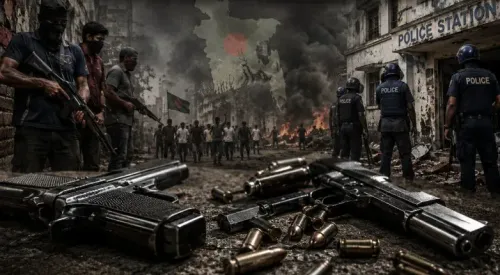
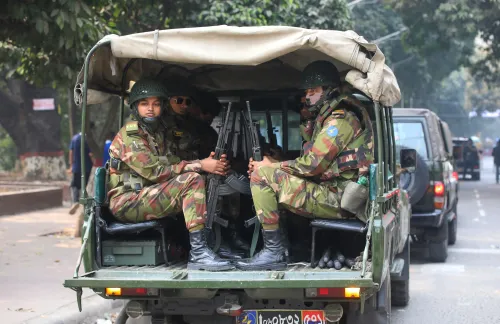
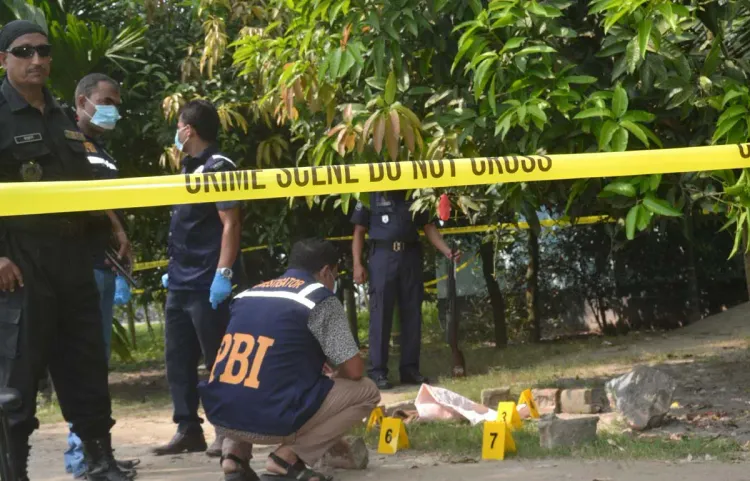
Bangladesh is confronting a deepening law-and-order crisis, with police headquarters data showing 915 murder cases registered across the country over a three-month period — a daily average of more than 10 killings. The surge, reported by local media, is being driven by a volatile mix of political feuds, underworld rivalries, illegal firearms, and the return of convicted criminals to the streets following the country's 2024 political transition.
The Numbers Behind the Crisis
According to Bangladesh Police Headquarters data, 317 murders were recorded in March — shortly after the Bangladesh Nationalist Party (BNP) assumed office — followed by 288 in April and 310 in May. Geographically, Dhaka Range topped the list with 207 cases, trailed by Chattogram with 186, Rajshahi with 106, and Khulna with 84. Among metropolitan regions, the Dhaka metropolitan area recorded the highest count with 57 murder cases.
What Is Driving the Violence
Analysts cited by Bangladesh's The Daily Star point to a convergence of structural failures: the proliferation of illegal firearms, weakened policing capacity, and the re-emergence of notorious gang leaders — some released from prison, others returning from abroad — following the political changeover of August 2024. Political rivalries, they argue, have increasingly weaponised street gangs as instruments of factional power, resulting in brazen targeted attacks in broad daylight.
Omar Faruk, a professor in the department of criminology and police science at Mawlana Bhashani Science and Technology University in Tangail district, was direct in his criticism. 'The law and order situation has not yet reached the level we had expected,' he said, pointing to the absence of meaningful reforms within law enforcement agencies. Faruk further alleged that authorities have failed to recover more than 1,000 weapons reported missing from police stations, while illegal arms smuggling continues unchecked.
Impunity and Political Patronage
Faruk alleged that many criminals released after 5 August 2024 remain armed and continue criminal activities under political patronage. He said law enforcement's lenient posture has emboldened offenders who believe they can act with impunity, and alleged links between these individuals and influential figures at senior levels — though he did not name them specifically.
Law enforcement officials corroborated the broader pattern, noting that violence intensified following the political changeover as several convicted offenders and gang leaders returned to circulation either through prison releases or re-entry from abroad.
Citizens and Experts Sound the Alarm
Khairul Hasan, a resident of Mohammadpur in Dhaka, reflected the public mood. 'We don't feel safe. Killings, shootings, and muggings have become alarmingly frequent. People expect safety and security, but it appears the law-and-order situation has not improved despite repeated assurances,' he was quoted as saying by The Daily Star.
The continued incidence of murders and violent crime has sharpened public anxiety about personal safety and the state's capacity to maintain order. With no immediate policy response announced, the pressure on the BNP-led administration to demonstrate credible action is mounting.
Point of View
000 weapons are missing from police stations, and remain unrecovered, points to institutional rot that predates the current administration but is now its problem to solve. The BNP's return to power was accompanied by the release or return of criminal figures whose activities, analysts allege, are shielded by political connections — a cycle Bangladesh has seen before. If the new government cannot break that patronage chain, the violence figures will not improve regardless of how many assurances are issued.
NationPress
22 Sept 2026
Frequently Asked Questions
How many murder cases were recorded in Bangladesh in the three-month period?
Bangladesh police registered 915 murder cases between March and May, according to Police Headquarters data — an average of more than 10 killings per day. March recorded the highest monthly count at 317 cases.
Which region in Bangladesh had the most murders?
Dhaka Range recorded the highest number of murder cases at 207 during the three-month period, followed by Chattogram with 186 and Rajshahi with 106. The Dhaka metropolitan area led among urban zones with 57 cases.
What is driving the rise in murders in Bangladesh?
Analysts cite the proliferation of illegal firearms, weakened policing, and the re-emergence of gang leaders and convicted offenders released or returned from abroad following the August 2024 political transition. Political rivalries are also reportedly fuelling targeted street violence.
What role does political patronage play in Bangladesh's crime surge?
Criminologist Omar Faruk of Mawlana Bhashani Science and Technology University alleged that criminals released after 5 August 2024 remain armed and operate under political patronage, emboldened by what he described as a lenient law enforcement approach. He also alleged links to influential figures at senior levels.
Has the Bangladesh government responded to the law-and-order crisis?
No immediate policy response has been announced. Law enforcement officials have acknowledged that violence intensified after the 2024 political changeover. Experts and citizens have called for urgent reforms within policing agencies and the recovery of over 1,000 weapons missing from police stations.