Raj Thackeray: Democracy needs Gandhi beyond ceremonial tributes
Synopsis
On Gandhi Jayanti, MNS chief Raj Thackeray turned the occasion into a political offensive — arguing that garlanding statues while silencing dissent is a betrayal of everything Gandhi represented. With an October 4 protest march against the Election Commission already announced alongside Uddhav Thackeray, the speech doubles as ideological ammunition for one of Maharashtra's most closely watched opposition mobilisations in years.
Key Takeaways
MNS chief Raj Thackeray on 2 October criticised the ruling establishment on Gandhi Jayanti , arguing democracy cannot survive on ceremonial tributes alone.
Thackeray said those in power label dissenters as 'anti-national' and use state force to suppress peaceful protests.
He identified Gandhi's greatest legacy as the citizen's right to question authority and the inviolability of individual conscience.
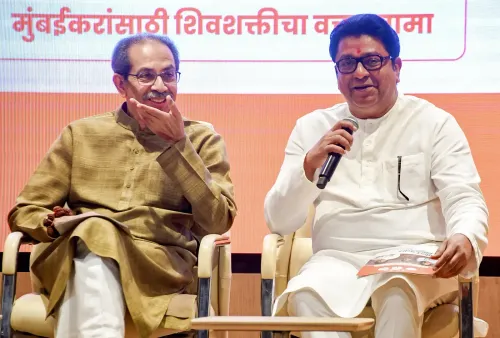
Raj Thackeray and Uddhav Thackeray announced a joint protest march against the Election Commission of India and CEC Gyanesh Kumar on 4 October .
The march targets the Special Intensive Revision (SIR) process and alleged EVM manipulation, with the two Thackeray factions appearing on a joint platform for the first time in recent memory.
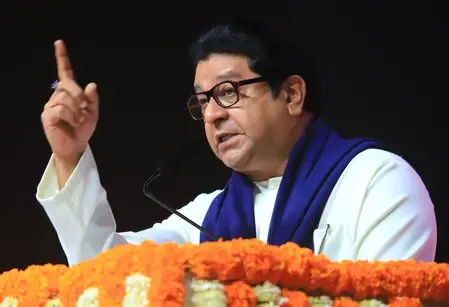
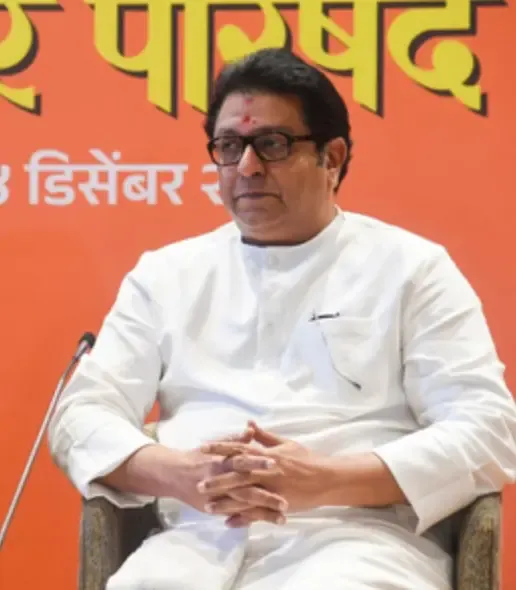
Maharashtra Navnirman Sena (MNS) chief Raj Thackeray on Friday, 2 October, invoked Mahatma Gandhi's birth anniversary to deliver a pointed critique of the ruling establishment, arguing that reducing national icons to photo opportunities and garland ceremonies hollows out the very democracy they symbolise. Speaking through a post on X, Thackeray said Gandhi's relevance today is greater than ever — precisely because the political climate appears to be testing the principles he stood for.
The Ceremonial Tribute Problem
Thackeray opened his broadside by targeting what he described as a culture of shallow commemoration. 'Our remembrance of great figures is often limited to their birth and death anniversaries — garlanding statues and taking photographs. Equating memorials solely with statues and posing next to them has become our new form of paying tribute,' he wrote. His argument was that such rituals allow those in power to appropriate Gandhi's image while sidelining his substantive legacy of moral resistance and accountability.
Dissent, Trolls and the 'Anti-National' Label
The MNS chief trained his sharpest criticism on what he characterised as the systematic suppression of public dissent. He argued that Mahatma Gandhi's primary contribution to India was not just political independence but the ordinary citizen's right to question authority — a right he said is increasingly being curtailed. 'The moment questions are raised, those in power and their army of online trolls are eager to brand you an anti-national,' Thackeray stated. He raised specific concerns over the use of state force against protesters, the stifling of peaceful demonstrations, and what he described as the erosion of autonomy in critical constitutional bodies, including the Election Commission of India (ECI).
Gandhi's True Legacy, as Thackeray Sees It
Defining the Mahatma's enduring significance, Thackeray pointed not to legislation or territorial freedom but to the inviolability of individual conscience. 'The government possesses the law, the brute force of power, and the ability to alter laws to suit its convenience... Yet, Gandhiji demonstrated that despite all this, the government cannot claim ownership over the common person's capacity for rational thought or over their conscience,' he remarked. He also warned citizens against what he called systematic propaganda through digital platforms — often referred to colloquially as 'WhatsApp Universities' — designed, in his view, to erode independent thinking and public awareness.
The October 4 March and the Election Commission Row
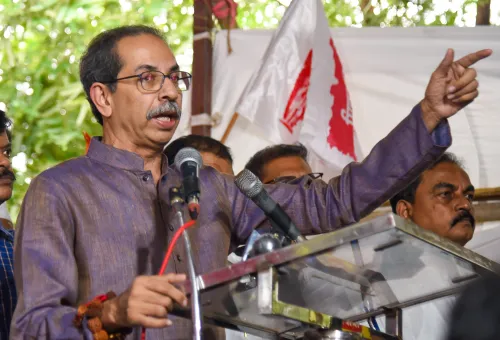
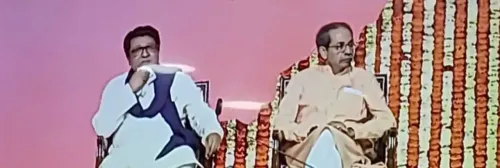
Thackeray's Gandhi Jayanti remarks come days after he and Shiv Sena (UBT) president Uddhav Thackeray held a joint press conference on Tuesday to announce a public protest march scheduled for 4 October. The demonstration targets the Election Commission of India and its chief, Chief Election Commissioner (CEC) Gyanesh Kumar, with both leaders accusing the body of functioning as an 'extension of the ruling party' and allegedly deceiving voters through the Special Intensive Revision (SIR) process. 'We have been consistently raising concerns over EVM manipulation and electoral malpractices for years. Back in 2017-18, I met several political leaders regarding these issues. This march stands against the humiliation of voters and the subversion of our electoral integrity. Whatever we have to say, we will deliver directly from the stage on October 4,' Thackeray stated. This is notably the first such joint platform between the two Thackeray factions in recent memory, signalling a tactical convergence ahead of the protest. The ECI has not yet publicly responded to the allegations.
What Comes Next
With the 4 October march drawing closer, Thackeray's Gandhi Jayanti statement serves both as an ideological framing for the demonstration and as a broader opposition signal ahead of Maharashtra's evolving political calendar. Whether the street mobilisation translates into durable political traction will depend on turn-out and the government's response to the protest's central demands.
Point of View
Not just electoral outcomes, is becoming opposition terrain. The 'anti-national' labelling critique is a well-worn theme, but packaging it in Gandhian idiom on Gandhi Jayanti amplifies its reach. What the movement still lacks is a concrete demand beyond the march itself — and whether that gap is filled will determine whether this is momentum or theatre.
NationPress
2 Oct 2026
Frequently Asked Questions
What did Raj Thackeray say on Gandhi Jayanti 2026?
MNS chief Raj Thackeray on 2 October 2026 criticised the practice of reducing Gandhi's legacy to statue-garlanding and photographs, arguing that true democracy requires upholding Gandhi's core teachings — especially the citizen's right to question authority. He also raised concerns over the labelling of dissenters as 'anti-national' and the use of state force against peaceful protesters.
Why is Raj Thackeray protesting against the Election Commission?
Thackeray, alongside Shiv Sena (UBT) chief Uddhav Thackeray, has accused the Election Commission of India of functioning as an 'extension of the ruling party' and of deceiving voters through the Special Intensive Revision (SIR) process. He also cited long-standing concerns over EVM manipulation and electoral malpractices dating back to 2017-18.
What is the October 4 protest march about?
The protest march on 4 October is jointly organised by the MNS and Shiv Sena (UBT) and is directed against the Election Commission of India and Chief Election Commissioner Gyanesh Kumar. It aims to highlight alleged voter humiliation, electoral malpractices, and what the parties describe as a compromised ECI.
What is the significance of the Uddhav Thackeray and Raj Thackeray joint platform?
The joint press conference and shared protest march mark a notable tactical convergence between two rival Thackeray-led factions that have historically been in competition. It signals that opposition to the current ruling establishment — and specifically concerns about the Election Commission's independence — is creating uncommon political alliances in Maharashtra.
What did Raj Thackeray say about 'WhatsApp Universities'?
Thackeray warned citizens against systematic propaganda spread through digital platforms and social media channels, colloquially referred to as 'WhatsApp Universities.' He argued these channels are designed to erode independent thinking and public awareness, which he sees as essential to a functioning democracy in the Gandhian tradition.