What Impact Does Dense Fog Have on Rajasthan's Visibility?
Synopsis
As dense fog blankets Rajasthan, visibility plummets to critical levels, affecting road travel. The impact on temperatures and weather patterns is also notable. Stay informed about the latest weather updates and how it may affect your travel plans.
Key Takeaways
Dense fog has significantly impacted visibility in Rajasthan.
Visibility has dropped to as low as 5 metres in affected areas.
Maximum temperatures have declined while minimum temperatures have risen.
Fog conditions are expected to persist in certain regions.
Travelers should exercise caution while commuting.
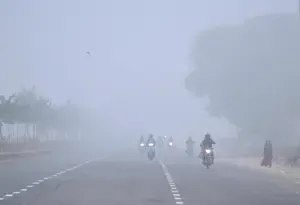
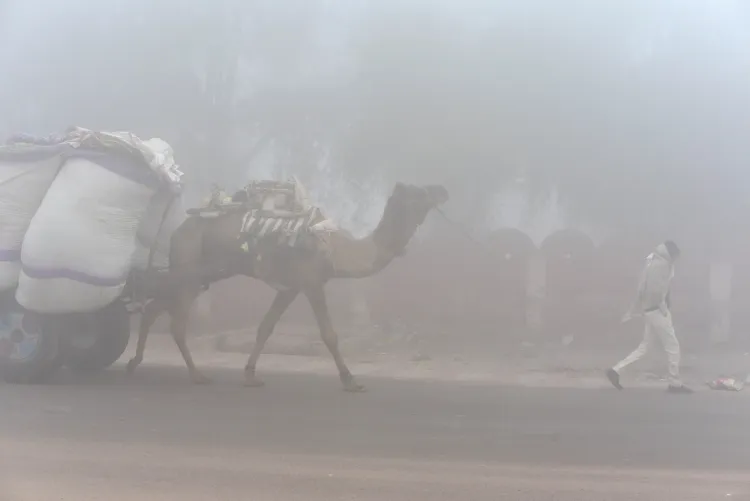
Jaipur, Dec 15 (NationPress) Thick fog enveloped numerous districts in Rajasthan, such as Sri Ganganagar, Jaisalmer, and Alwar, early Monday morning, drastically reducing road visibility and disrupting traffic flow.
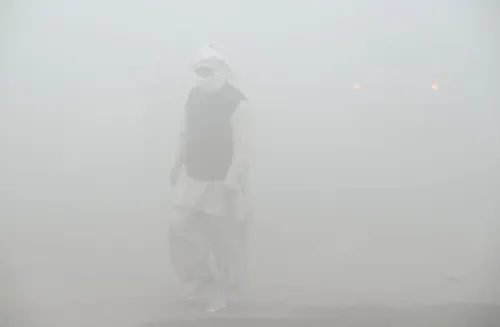
Visibility plummeted to merely 5 metres in Sri Ganganagar and 20 metres in Alwar, resulting in significant challenges for travelers. The influence of the Western Disturbance diminished on Sunday, although light cloud cover lingered over many parts of the Bikaner, Jodhpur, Ajmer, and Jaipur divisions.
This situation led to a drop in maximum temperatures across various cities while minimum temperatures increased due to diminished northerly winds. Light clouds were visible in Jaipur, Sikar, Dausa, Sri Ganganagar, Hanumangarh, Jaisalmer, Jodhpur, Bikaner, Churu, Jhunjhunu, Nagaur, Alwar, Ajmer, and Barmer, with fog persisting in Sri Ganganagar and Hanumangarh until 10-11 am, hampering sunlight.
Maximum temperatures were noted at 26 degrees Celsius in Jaisalmer, 29.4 degrees Celsius in Barmer, 30.5 degrees Celsius in Jodhpur, 29 degrees Celsius in Bikaner, 28.3 degrees Celsius in Churu, 24.5 degrees Celsius in Sri Ganganagar, 28 degrees Celsius in Udaipur, 28.8 degrees Celsius in Chittorgarh, 26.7 degrees Celsius in Kota, 27 degrees Celsius in Sikar, 27.6 degrees Celsius in Pilani, 26.8 degrees Celsius in Jaipur and Ajmer, and 25 degrees Celsius in Alwar.
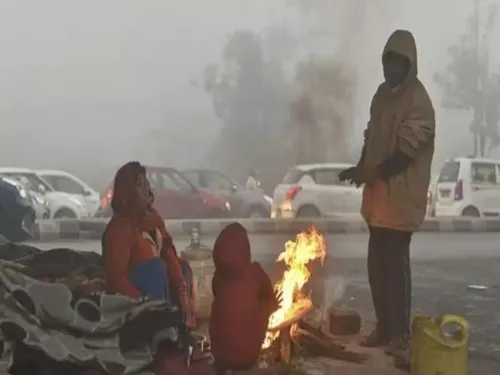
Cloud cover also provided some relief from the intense nighttime cold, especially in the Shekhawati region, as weakened northerly winds caused minimum temperatures to rise by up to 3 degrees Celsius over the last two days. On Sunday, minimum temperatures were recorded at 5.9 degrees Celsius in Fatehpur, 7.0 degrees Celsius in Sikar, 9.1 degrees Celsius in Pilani, 8.6 degrees Celsius in Churu, 8.1 degrees Celsius in Karauli, 6.5 degrees Celsius in Dausa, 6.0 degrees Celsius in Lunkaransar, 5.9 degrees Celsius in Nagaur, 8.0 degrees Celsius in Alwar, 9.6 degrees Celsius in Udaipur, 9.3 degrees Celsius in Chittorgarh, and 7 degrees Celsius in Vanasthali (Tonk) and 9.6 degrees Celsius in Bhilwara.
As per the Meteorological Centre, minimum temperatures dipped below 10 degrees Celsius in 18 cities across the state on Sunday.
Weather experts indicated that dry conditions are expected to persist, with no significant temperature changes anticipated in the coming days, although cool nights will continue in many regions.
Point of View
The dense fog affecting Rajasthan highlights significant weather changes that can disrupt daily life and travel. This situation is a reminder of the unpredictable nature of our climate and the need for preparedness in the face of such weather phenomena.
NationPress
5 Oct 2026
Frequently Asked Questions
How does fog affect visibility and travel?
Fog significantly reduces visibility, making it dangerous for travel. In Rajasthan, visibility has dropped to dangerous levels, impacting road safety.
What are the temperature changes in Rajasthan due to the fog?
The fog has contributed to a decrease in maximum temperatures while increasing minimum temperatures due to reduced northerly winds.
Will the fog conditions improve in the coming days?
Weather officials predict that dry conditions will persist, with no major temperature changes expected, though cool nights will continue.