Developed nations must lead on emissions, support developing world: MEA
Synopsis
As Nepal's catastrophic floods kill over 1,294 people and leave 5,053 missing, Kathmandu is reframing its climate diplomacy — shifting from 'aid' to 'justice and compensation.' India's MEA has responded by doubling down on the CBDR-RC principle, insisting wealthy industrialised nations must lead on emissions cuts and fund the transition. The exchange signals a hardening of South Asian climate positions ahead of COP30.
Key Takeaways
The MEA on 4 September stated that historically high-emitting developed nations must lead emission reductions and support developing countries through finance and technology transfer.
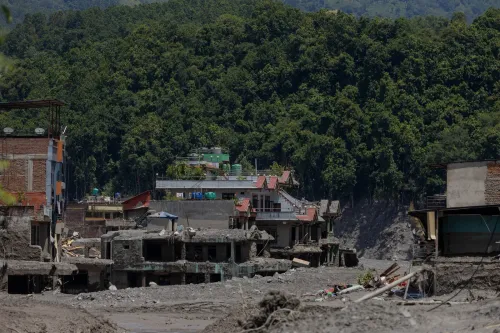
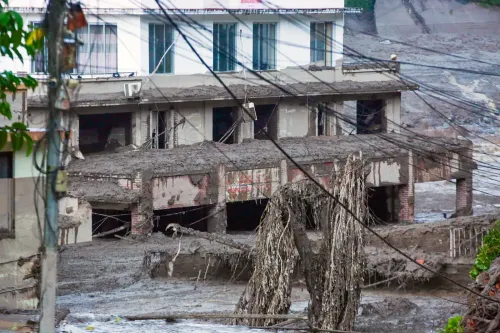
Nepal's floods have killed at least 1,294 people , with 5,053 still unaccounted for as of Friday evening.
MEA spokesperson Randhir Jaiswal reaffirmed India's CBDR-RC principle at a New Delhi media briefing.
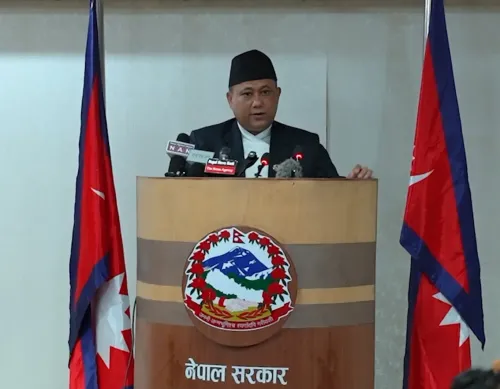
Nepal Foreign Minister Shisir Khanal announced a diplomatic pivot from seeking 'aid' to demanding 'justice and compensation' from major emitters.
PM Modi spoke with Nepal PM Balendra Shah after the disaster; Shah has since thanked India for its prompt relief support.
Nepal's stance mirrors a broader push by climate-vulnerable nations for Loss and Damage mechanisms formalised at COP27 and COP28 .
The Ministry of External Affairs (MEA) on Friday, 4 September asserted that developed countries — historically the largest contributors to global greenhouse gas emissions — bear the primary responsibility to reduce emissions and extend financial and technological support to developing nations. The statement came in response to remarks by Nepalese Foreign Minister Shisir Khanal, who called for a diplomatic shift toward 'justice and compensation' from major industrial emitters in the aftermath of catastrophic floods that have killed at least 1,294 people in Nepal, with 5,053 still unaccounted for as of Friday evening.
India's Position on Climate Responsibility
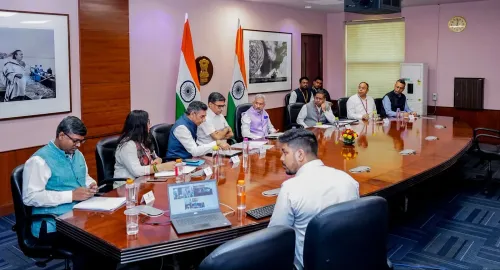
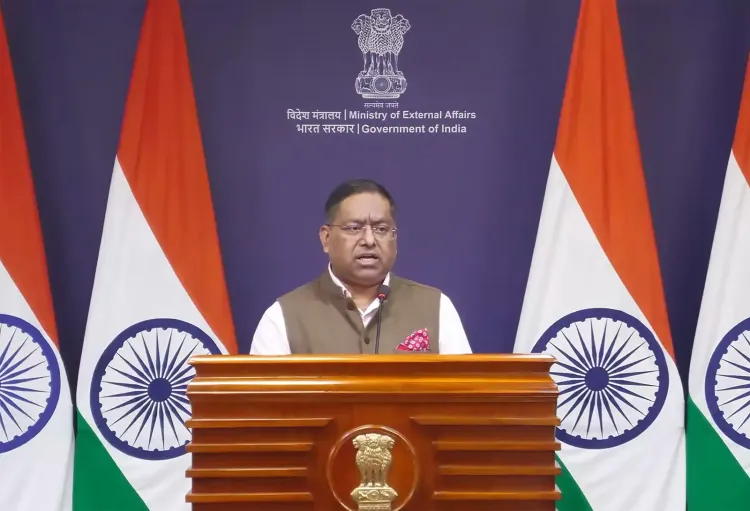
MEA spokesperson Randhir Jaiswal, addressing a media briefing in New Delhi, reiterated India's longstanding climate stance rooted in the principle of common but differentiated responsibilities and respective capabilities (CBDR-RC). 'Developed countries, who historically are responsible for the emissions and have contributed overwhelmingly to this present crisis, must take the lead in reducing emissions and support developing countries by way of finance and technology transfer to meet this challenge,' Jaiswal said.
This position aligns with India's consistent advocacy at global climate forums, including the UNFCCC and successive COP summits, where New Delhi has argued that the burden of transition cannot fall equally on economies that industrialised far later than the West.
India's Solidarity With Flood-Hit Nepal
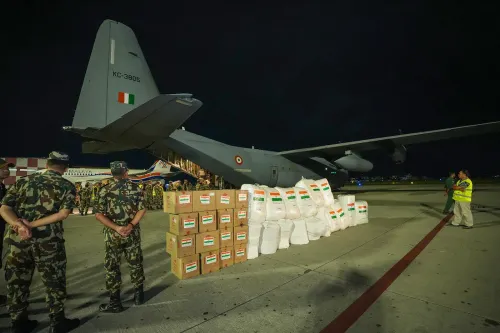
Jaiswal underscored that India has responded swiftly to the humanitarian crisis triggered by the floods. 'In the wake of this tragedy, we have extended our solidarity and support to the government and people of Nepal. As a close friend and partner, India responded promptly, and we continue to support rescue, relief, reconstruction and recovery efforts in the country,' he stated.
Prime Minister Narendra Modi spoke directly with Nepal Prime Minister Balendra Shah after the disaster struck, conveying that 'India stands shoulder to shoulder' with Nepal. Jaiswal noted that PM Shah has since thanked India for its support — a gesture New Delhi described as a reflection of the two countries' deep bilateral ties.
Nepal's Diplomatic Shift: From Aid to Justice
The backdrop to the MEA's statement is a notable rhetorical shift from Kathmandu. Earlier this week, Foreign Minister Khanal said Nepal is reframing its approach from seeking 'aid' to demanding 'justice and compensation' from major industrial emitters, according to local media reports from Kathmandu. Khanal reportedly argued that the devastating floods are a direct consequence of climate change driven by wealthy, high-emission nations — and that Nepal's losses constitute a climate debt owed by those countries.
This framing echoes a broader movement among climate-vulnerable nations — particularly small island states and Himalayan countries — pushing for Loss and Damage mechanisms, a concept that gained formal recognition at COP27 in 2022 and saw a dedicated fund established at COP28 in 2023. Nepal's pivot signals that even India's immediate neighbours are hardening their positions ahead of future climate negotiations.
Context: Himalayan Floods and Climate Vulnerability
Nepal is among the world's most climate-exposed nations. The Hindu Kush Himalaya region has seen accelerated glacial melt and increasingly erratic monsoon patterns, both linked to rising global temperatures. Scientists have long warned that high-emission industrialised economies are disproportionately responsible for these changes, while countries like Nepal contribute a negligible share of global emissions yet bear outsized consequences.
The current flood toll — 1,294 confirmed deaths and 5,053 missing — underscores the scale of vulnerability. As climate diplomacy intensifies ahead of COP30 in Belém, Brazil, Nepal's shift in framing and India's reaffirmation of CBDR-RC are likely to shape South Asian positioning in global negotiations.
Point of View
And India's CBDR-RC reaffirmation, while consistent, does not fully address the question of whether New Delhi itself will back Loss and Damage claims from its neighbours. India sits in an awkward middle position: a developing nation by its own framing, yet a significant emitter in absolute terms. As Himalayan nations grow more assertive, India's climate diplomacy will need to reconcile its domestic emissions trajectory with its role as the region's dominant power and first responder. The silence on specific compensation mechanisms is notable.
NationPress
4 Sept 2026
Frequently Asked Questions
What did India's MEA say about developed countries and climate emissions?
The MEA stated on 4 September that developed nations, which are historically responsible for the bulk of global emissions, must take the lead in cutting emissions and support developing countries through finance and technology transfers. The statement reiterated India's long-held CBDR-RC principle.
What is Nepal's new diplomatic stance on climate change?
Nepal Foreign Minister Shisir Khanal announced a shift from seeking 'aid' to demanding 'justice and compensation' from major industrial emitters, arguing that the country's devastating floods are a consequence of climate change caused primarily by wealthy, high-emission nations.
How many people have died in Nepal's floods?
At least 1,294 people have been confirmed dead in Nepal's floods as of Friday evening, 4 September, with 5,053 people still out of contact, according to available figures at the time of the MEA briefing.
How has India responded to Nepal's flood crisis?
India responded promptly with rescue, relief, reconstruction, and recovery support. Prime Minister Narendra Modi personally spoke with Nepal PM Balendra Shah to convey solidarity, and Nepal's PM has since publicly thanked India for its assistance.
What is the CBDR-RC principle that India references?
CBDR-RC stands for Common But Differentiated Responsibilities and Respective Capabilities — a foundational UN climate principle holding that while all nations share responsibility for addressing climate change, wealthier, historically high-emitting countries bear a greater burden to act and to fund the transition for developing nations.